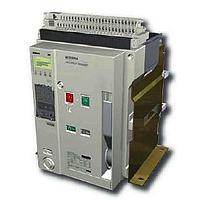
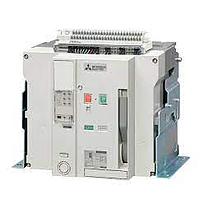
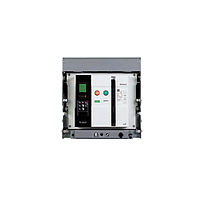
Air circuit breaker
Reliable power distribution starts with protection devices that can isolate faults quickly and safely under high current conditions. In large switchboards, industrial plants, commercial buildings, and infrastructure projects, selecting the right air circuit breaker is not only about current rating, but also about interruption capacity, system voltage, installation style, and long-term maintainability.
This category brings together air circuit breakers used for low-voltage power protection where high breaking performance and dependable operation are required. It is especially relevant for main incoming panels, generator connections, bus couplers, and other distribution points where protection against overload and short circuit events is critical.
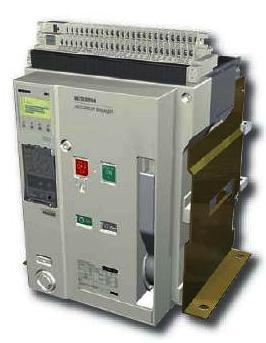
Where air circuit breakers are typically used
An ACB is commonly chosen for applications with higher current levels than typical molded case devices. These breakers are often installed as the main protective device in low-voltage switchgear, where they help disconnect the circuit during overload, short circuit, or abnormal operating conditions.
In practical projects, this means use in manufacturing plants, building electrical rooms, utility distribution panels, and backup power systems. For engineers and procurement teams comparing options across a broader range of protection devices, this air circuit breaker category serves as the central reference point for available models.
What matters when choosing an ACB
The first specification most buyers review is the rated current. In this category, representative models range from 630A to 2500A, which reflects the typical needs of main distribution and high-capacity feeders. However, current rating alone is not enough; the breaker must also match the system’s prospective fault level.
A second key point is breaking capacity. Depending on the installation, available examples here include 65kA, 85kA, and 100kA classes. Higher fault current environments may require stronger interruption performance, while voltage and pole configuration also need to align with the actual switchboard design.
Buyers should also check whether a fixed or stationary type is suitable for the panel arrangement. In many projects, installation details, coordination studies, and maintenance access influence the final choice just as much as electrical ratings.
Representative Mitsubishi models in this range
This category prominently features products from MITSUBISHI, a manufacturer widely used in industrial electrical systems. The available examples illustrate a broad current range for different panel capacities and protection requirements rather than a single one-size-fits-all configuration.
For higher-capacity systems, models such as the Mitsubishi AE2500-SW ACB 3P, 2500A, 85KA stationary type and the MITSUBISHI AE2500-SW 4P 2500A Air circuit breaker show the upper end of the range. Mid-range selections include the Mitsubishi AE2000-SW ACB 3P, 2000A, 85KA stationary type, the MITSUBISHI AE2000-SW 3P 2000A 100kA Circuit-Breaker, and the Mitsubishi AE1600-SW ACB 3P, 1600A, 65KA stationary type.
Where lower current but still substantial main protection is needed, examples such as the Mitsubishi AE1250-SW ACB 3P, 1250A, 65KA stationary type, Mitsubishi AE1000-SW ACB 3P,1000A,65KA stationary type, and Mitsubishi AE630-SW ACB 3P, 630A, 65KA stationary type help define the category scope. These references are useful for understanding the available capacity bands within the ACB family.
3-pole and 4-pole considerations
One of the practical selection points in this category is the number of poles. A 3P breaker is commonly used in three-phase systems where neutral switching is not required at the breaker. A 4P breaker may be preferred in installations that need neutral isolation as part of the protection and switching scheme.
This distinction becomes important in generator systems, transfer arrangements, and certain building distribution designs. The right choice depends on the grounding method, neutral management strategy, and local engineering practice rather than on breaker current alone.
How ACBs fit into a wider automation and electrical system
Although an air circuit breaker is a protection device, it sits inside a larger electrical and automation environment. In many facilities, protection status, trip conditions, and operating states are monitored alongside supervisory platforms and control architecture. Teams working on integrated monitoring may also review related SCADA components when building a complete power management solution.
For projects where event recording and operating history are important, supporting tools from the wider automation ecosystem can also help with analysis and maintenance planning. In that context, it may be useful to explore solutions such as data logger equipment for automation systems to complement the electrical protection layer.
Common purchase criteria for industrial buyers
B2B buyers usually compare more than just price and availability. A technically sound selection often includes current rating, short-circuit capability, pole configuration, system voltage, mounting style, and compatibility with the intended switchboard design. For replacement projects, matching the existing panel footprint and operational requirements may also be a deciding factor.
It is also good practice to confirm whether the breaker is intended for new installation, retrofit, or spare stock. In large facilities, standardization across multiple panels can simplify maintenance, reduce training effort, and support more consistent spare parts planning over time.
Choosing the right model for your application
If the breaker will be used as a main incomer or bus tie, engineers typically start by reviewing load current, fault level, and protection coordination requirements. From there, the selection can be narrowed by pole count, interruption class, and panel integration details. For example, a 2000A or 2500A model may be more suitable for large distribution boards, while 630A to 1250A options may fit smaller but still demanding installations.
Where comparison across manufacturers is part of the procurement process, some buyers also review broader electrical portfolios such as Siemens electrical and automation products. The final decision should always reflect the actual operating conditions of the site and the protection study of the system.
Final notes
A well-matched air circuit breaker helps protect equipment, reduce fault impact, and support safer operation of low-voltage distribution systems. Whether you are specifying a new main breaker, evaluating replacement options, or comparing current and breaking capacity ranges, this category is designed to help you review suitable ACB models with clearer context.
Use the available product range to compare ratings, pole configurations, and installation types, then shortlist the model that fits your electrical design and maintenance priorities. In industrial power systems, the right breaker is not just a component selection—it is a core part of system reliability.
Get exclusive volume discounts, bulk pricing updates, and new product alerts delivered directly to your inbox.
By subscribing, you agree to our Terms of Service and Privacy Policy.
Direct access to our certified experts