
CB Motor
Protecting a three-phase motor starts with choosing the right switching and protection device for the load, operating current, and installation conditions. In industrial panels, CB Motor devices are commonly used to help safeguard motors against overload and short-circuit conditions while keeping control cabinets compact and serviceable.
This category focuses on Siemens motor protection circuit breakers used across a wide current range, from small motors in light-duty machinery to higher-power motors in pumps, fans, conveyors, and other industrial drive applications. For buyers, maintenance teams, and panel builders, the key is not just finding a compatible part number, but selecting a device that matches the motor rating and the protection philosophy of the system.
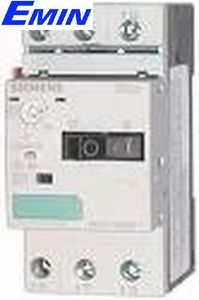
Where motor circuit breakers fit in a control panel
A motor protection circuit breaker typically combines manual switching, thermal overload protection, and magnetic short-circuit protection in one unit. This makes it a practical choice for motor feeders where space efficiency, straightforward wiring, and coordinated protection are important.
In many machine and process applications, these devices are installed upstream of contactors and motor starters to isolate the motor branch and protect the cable and motor windings. If you are also building a broader Siemens automation cabinet, related items such as bus connectors may be part of the same system architecture, especially in PLC-based control panels.
Siemens range in this category
This selection is centered on SIEMENS motor protection breakers with models covering multiple frame sizes and adjustment ranges. The available products in the category span from compact lower-current units such as the 3RV1011-1AA10, suitable for smaller three-phase motors, up to larger S2 and S3 frame devices intended for significantly higher motor loads.
Examples in the range include the Siemens 3RV1031-4DA15 for 11 kW applications, 3RV1031-4EA15 for 15 kW motors, and 3RV1031-4GA15 for 18.5 kW duty. At higher capacities, models such as 3RV1041-4JA10, 3RV1041-4LA10, and 3RV1041-4MA10 illustrate how the category supports motors from around 30 kW up to 45 kW, depending on the selected adjustment range and installation design.
How to choose the right CB Motor device
The first step is to match the breaker’s adjustable current range to the motor’s full-load current, not just the motor power in kW. Motor power is a useful reference, but actual current depends on supply voltage, efficiency, and application conditions. A properly selected breaker should allow the protection setting to sit within the device’s adjustment window rather than at the extreme edge.
It is also important to consider the frame size and whether the application needs built-in auxiliary contacts. Some models in this category are supplied without auxiliary contacts, while others include 1NO + 1NC configurations that can support status indication, interlocking, or alarm logic inside the control system.
For example, a smaller motor may be well served by the 3RV1011-1AA10 with a 1.1 A to 1.6 A adjustment range, while larger installations may require S2 or S3 units such as the 3RV1031 or 3RV1041 series. Selection should always reflect the actual motor current, starting behavior, coordination with contactors, and the fault level at the installation point.
Understanding the available current and motor coverage
The product examples in this category show a broad usable range, from around 1.6 A for compact motor circuits up to 100 A for much larger three-phase motors. This makes the category relevant for OEM machinery, HVAC systems, pumping stations, and general factory power distribution where motors of different sizes are installed in separate feeders.
Several listed Siemens models are designed around common industrial motor ratings such as 11 kW, 15 kW, 18.5 kW, 30 kW, 37 kW, 39 kW, and 45 kW. Rather than treating these values as the only selection criterion, buyers should use them as a practical guide and then confirm the protection setting range, short-circuit performance at 400 VAC, and any signaling requirements before ordering.
Why auxiliary contacts may matter
For many control schemes, the protection device is not only a safety component but also part of the monitoring logic. Models with auxiliary contacts can provide remote indication of trip or switching status, which helps in maintenance diagnostics and machine interlocking.
In this category, some Siemens motor protection breakers include 1NO + 1NC contact arrangements, while others are basic versions without auxiliaries. If the panel design needs feedback to PLC or HMI, choosing a version with suitable signaling capability can simplify wiring and reduce the need for additional accessories. In systems with operator interface integration, it may also be useful to review compatible HMI solutions for S7-1200 or HMI products for S7-200/300/400.
Typical applications in industry
Motor protection circuit breakers are widely used in applications where operators need a dependable combination of isolation and protection in one device. Typical examples include pump motors, ventilation fans, small compressors, packaging machinery, belt conveyors, and workshop equipment with direct-on-line motor starters.
They are also suitable for panel builders standardizing Siemens-based motor control sections across multiple machines. When the same project includes PLC communication and commissioning tools, related categories such as programming and HMI cables can become relevant during installation and service, even though they serve a different role from motor protection hardware.
What to review before ordering
Before finalizing a part number, check a few practical points: motor full-load current, supply voltage, expected starting current, breaker adjustment range, available panel space, and whether auxiliary signaling is required. It is also good practice to verify coordination with the contactor and the overall protection concept of the feeder.
- Match the device setting range to the motor’s actual running current.
- Confirm whether the application needs 1NO + 1NC auxiliary contacts or a standard version.
- Check the intended motor power only as a reference, then validate by current.
- Review installation fault level and the breaker’s short-circuit capability at the system voltage.
- Consider future maintenance and part standardization across similar panels.
Choosing with confidence
This Siemens CB Motor category is built for users who need practical motor feeder protection across a wide current and power range. Whether the requirement is for a compact breaker for a small 0.55 kW motor or a higher-capacity unit for 30 kW to 45 kW three-phase motors, the available models provide options for different panel designs and operational needs.
Taking time to align the breaker with motor current, control requirements, and panel architecture will help create a safer and more maintainable installation. If you are comparing models in this category, focus on adjustment range, contact configuration, and application fit rather than choosing only by motor kW label.
Get exclusive volume discounts, bulk pricing updates, and new product alerts delivered directly to your inbox.
By subscribing, you agree to our Terms of Service and Privacy Policy.
Direct access to our certified experts
