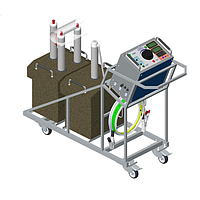
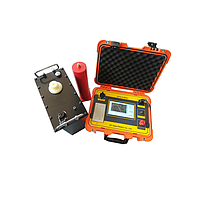
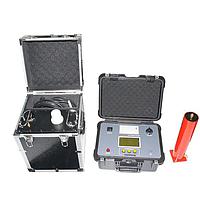
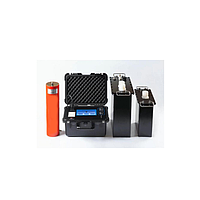
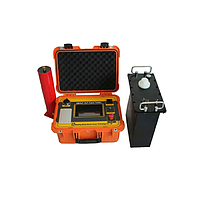
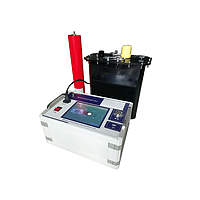
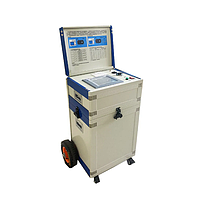
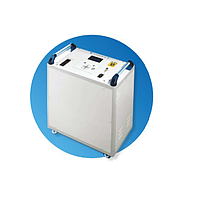
Very low frequency tester (VLF)
When cable insulation needs to be checked without the complexity of full power-frequency high-voltage testing, a very practical option is to use Very low frequency tester (VLF) equipment. In utility maintenance, industrial plants, and field service work, VLF systems are widely used to apply controlled high voltage at low frequency so technicians can evaluate insulation condition with lower power demand and better portability than many conventional test setups.
On this page, you can explore VLF test instruments suited to medium- and high-voltage cable testing, along with representative solutions from MOTWANE, DTE, and EPHIPOT. The category is relevant for users looking for compact field-ready equipment, selectable test frequencies, and voltage ranges suitable for routine maintenance, commissioning, and insulation verification.
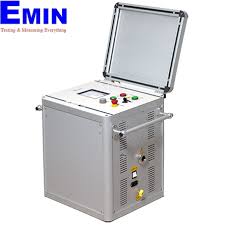
Why VLF testing is used in cable insulation work
VLF testing is commonly selected for power cable diagnostics and withstand testing because it reduces the size and power requirements of the test system compared with 50/60 Hz high-voltage sources. This makes it especially useful for on-site work, where transportability, setup time, and stable output matter as much as the voltage level itself.
In practice, these instruments are used to verify the insulation integrity of cables after installation, repair, or during preventive maintenance programs. Many systems provide selectable output frequencies such as 0.1 Hz, 0.05 Hz, or 0.02/0.025 Hz, helping users match the test method to cable length, capacitance, and site conditions.
Typical features found in this category
Products in this category are designed around controlled high-voltage output, low waveform distortion, and field usability. Depending on the model, users may find sine, square, or similar waveform options, selectable polarity in DC mode, and multiple low-frequency settings to support different test procedures.
Another important characteristic is load capacity. Since cable capacitance directly affects test performance, a VLF tester should be chosen with enough capacity for the cable length and voltage class involved. Portability also remains a key factor, with many systems built as separate control and high-voltage units for easier transportation and safer operation in the field.
Representative VLF test systems in this range
For lower and mid-voltage applications, the MOTWANE MVLF-20 and MOTWANE MVLF-40 provide examples of compact VLF high-voltage generators with selectable low-frequency operation and controlled output accuracy. These models illustrate the type of equipment often chosen for cable maintenance teams that need practical transport weight, standard AC supply compatibility, and repeatable test conditions.
For higher output requirements, the EPHIPOT EPVLF-80/1.1 shows how this category extends into 80 kV testing, with selectable frequencies and stated load capability for different operating points. The DTE DTE-40 VLF is another example of a field-oriented testing device that combines VLF operation with additional output modes, which can be useful where service teams need more flexibility from a single test platform.
How to choose the right VLF tester
The first selection point is test voltage range. Your chosen system should align with the cable type, insulation class, and the test method used by your maintenance or commissioning procedure. Choosing too little voltage may limit suitability, while overspecifying can increase cost and reduce portability without a clear operational benefit.
The second point is cable capacitance and corresponding load capability. Long cables or certain insulation systems can place a greater demand on the instrument, so it is important to compare the tester’s supported load at each output frequency. Frequency selection, waveform stability, and output accuracy are also worth checking when repeatable results are required across multiple field jobs.
Finally, consider deployment factors such as total system weight, separate control and HV units, power supply requirements, and environmental conditions. These details often have a direct impact on whether the instrument is practical for substation work, plant shutdown maintenance, or outdoor cable testing.
Where VLF testers fit within a broader test workflow
A VLF unit is rarely used in isolation within a complete electrical maintenance program. Depending on the job, it may be paired with equipment for related insulation assessment, commissioning, or high-voltage verification. For users comparing test methods, it can be helpful to review broader withstand voltage test equipment when defining a suitable procedure.
In some applications, especially where insulation condition and dielectric behavior are being assessed in more detail, teams may also work alongside a capacitance and tan delta meter. Where a separate high-voltage source is required for other test setups, a high-voltage step-up transformer may also be relevant within the same maintenance ecosystem.
Common applications in industrial and utility environments
VLF testers are commonly used for medium-voltage cable acceptance testing, post-repair verification, preventive maintenance, and outage-based inspection programs. Utility contractors, industrial electrical departments, and specialist testing companies often rely on these systems because they are easier to deploy in the field than large conventional AC test arrangements.
They are particularly relevant where test teams need controlled high voltage, manageable transport weight, and a practical balance between performance and site logistics. For this reason, VLF equipment is often seen in substations, manufacturing plants, infrastructure projects, and service operations handling installed cable networks.
Brand options and buying considerations
This category includes solutions from established manufacturers such as MOTWANE, DTE, and EPHIPOT, each represented here by models suited to different voltage levels and deployment needs. Rather than focusing only on brand preference, most buyers benefit more from matching the device to the application: required output voltage, cable capacitance, available power supply, and the expected frequency settings for the test routine.
If you are comparing systems for routine service work or project-based cable testing, it is worth reviewing whether the unit is intended primarily for portability, broader functionality, or higher voltage output. That approach usually leads to a more practical selection than comparing model names alone.
Find the right VLF test solution for your application
The right very low frequency tester depends on the insulation system being tested, the voltage level required, and the realities of field deployment. A compact 20 kV or 40 kV unit may be suitable for many routine cable jobs, while higher-output systems are more appropriate when the test scope demands additional voltage headroom.
By comparing output range, frequency options, load capability, and portability, buyers can narrow the category to equipment that fits real maintenance conditions instead of only headline specifications. If you are building out a complete electrical test workflow, this category also connects naturally with related high-voltage and insulation measurement equipment used before, during, or after cable testing.
Get exclusive volume discounts, bulk pricing updates, and new product alerts delivered directly to your inbox.
By subscribing, you agree to our Terms of Service and Privacy Policy.
Direct access to our certified experts