Shim
Accurate spacing and alignment often depend on very small components. In assembly, maintenance, and machine setup, Shim products help technicians correct gaps, support positioning, and achieve more consistent mechanical fit without complex rework.
For maintenance teams and industrial buyers, selecting the right shim is usually less about theory and more about practical fit: size, thickness, repeatability, and availability. This category focuses on standard shim options used in mechanical work where controlled adjustment matters.
Why shims matter in mechanical work
A shim is a thin spacer inserted between parts to compensate for clearance, improve alignment, or support assembly accuracy. Even though it is simple in form, it can affect how evenly loads are distributed, how components sit against each other, and how reliably a machine is reassembled after service.
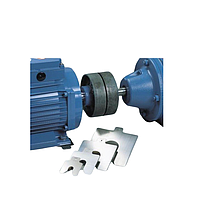
In many industrial situations, shims are used during equipment installation, bearing arrangement, machine frame leveling, and general corrective maintenance. When technicians need to make small mechanical adjustments without machining a new part, standardized shims are often the fastest and most controlled solution.
Typical selection criteria for this category
The first point to check is thickness. Thickness has a direct impact on the final gap or offset, so the chosen shim should match the required adjustment as closely as possible. In practical maintenance work, accurate measurement before installation is essential, especially where alignment tolerance is tight.
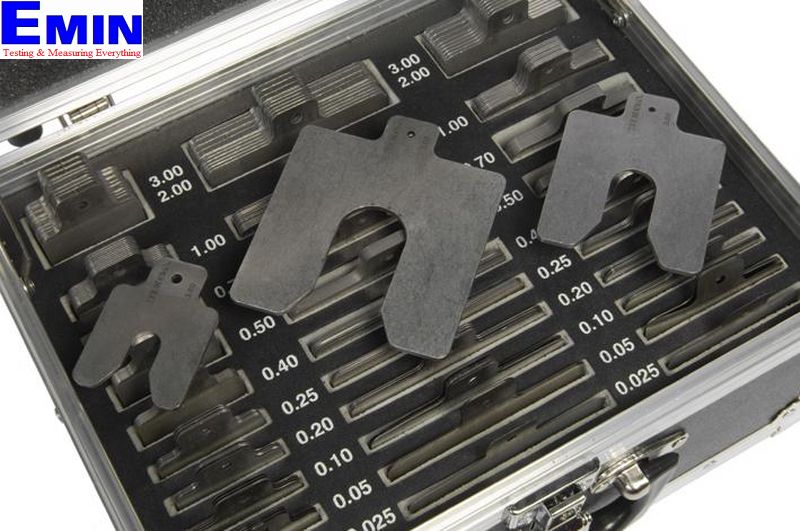
The second factor is the overall sheet size. This category includes common formats such as 50 x 50 mm, 75 x 75 mm, and 100 x 100 mm, making it easier to choose a shim that fits the contact area or can be adapted for the job. To verify dimensions before installation, many teams pair shim selection with tools such as callipers or external micrometers.
Another practical criterion is consistency across replacement cycles. Standardized shim sizes are useful when a machine must be serviced repeatedly, because they help reduce guesswork and make future maintenance easier to document.
Available BEGA shim examples in this range
This category includes standard shim options from BEGA, with several thicknesses and sheet sizes suited to routine industrial adjustment work. Rather than relying on improvised spacers, buyers can select from established sizes that are easier to manage in workshop inventory.
Examples in the range include BEGA 50-100AW SHIMS, BEGA 50-200AX SHIMS, and BEGA 50-300AY SHIMS for 50 x 50 mm applications. For larger contact areas, there are also 75 x 75 mm and 100 x 100 mm variants such as BEGA 75-070BV SHIMS, BEGA 75-200BX SHIMS, BEGA 100-025CS SHIMS, and BEGA 100-300CY SHIMS. These options illustrate how the category supports both small adjustments and thicker spacing requirements within a standard format.
How to choose the right shim thickness
The correct shim thickness depends on the actual gap to be compensated and on how the components behave under assembly load. If the shim is too thin, it may not provide the intended correction. If it is too thick, it can introduce unwanted stress, tilt, or uneven contact between mating parts.
In maintenance practice, the usual approach is to measure the gap first, then select the nearest suitable thickness based on the required final position. For this reason, related measuring tools such as Panme and dial indicators are often part of the same workflow when checking alignment or displacement.
Where exact fit is critical, technicians should also consider assembly conditions such as clamping force, contact flatness, and whether the adjustment is temporary or intended for long-term operation.
Common applications in maintenance and assembly
Mechanical shims are widely used wherever a controlled offset or spacing correction is needed. This may include aligning machine elements, compensating for minor dimensional differences, and improving fit during equipment overhaul. In workshop environments, pre-sized shims can save time compared with fabricating spacers manually.
They are also useful when repeatability matters. A standard shim sheet helps create a more traceable maintenance process, especially if the same machine family is serviced regularly. When thickness confirmation is needed after fitting, some users also refer to a thickness meter as part of final verification.
Should shims be reused?
Reuse depends on the condition of the shim after removal and on the required accuracy of the application. If a shim has been compressed, bent, scratched, or damaged during disassembly, replacing it is usually the safer choice. This is especially true in assemblies where small dimensional changes can affect alignment or load distribution.
Using standard replacement shims simplifies maintenance planning because the required size can be identified and installed without additional fabrication. For industrial teams, this improves consistency and helps reduce downtime during service work.
Why standard shim sizes are practical for B2B purchasing
For procurement teams, standardized shim dimensions help streamline stock control and reorder planning. Instead of handling many custom-made parts, maintenance departments can keep a defined selection of commonly used sizes on hand for faster intervention.
This is particularly useful for plants that maintain multiple machines or perform preventive maintenance on a schedule. A category built around repeatable sheet sizes and thickness options supports more predictable purchasing, easier storage, and simpler communication between engineering and purchasing teams.
Choosing from this shim category
This shim range is suited to buyers who need straightforward, standard mechanical spacing components for installation and maintenance work. The available BEGA models cover multiple thickness levels and sheet sizes, helping users select according to the physical adjustment required rather than relying on improvised solutions.
When choosing, focus on the real assembly gap, the contact area, and the level of precision needed for the task. A well-matched shim may be a small part of the system, but it plays an important role in achieving stable assembly, repeatable maintenance, and more controlled mechanical performance.
Get exclusive volume discounts, bulk pricing updates, and new product alerts delivered directly to your inbox.
By subscribing, you agree to our Terms of Service and Privacy Policy.
Direct access to our certified experts