Callipers
Accurate dimensional inspection starts with a measuring tool that is easy to read, stable in the hand, and suitable for the tolerance you need to control. In workshops, maintenance departments, machining lines, and quality rooms, Callipers remain one of the most practical instruments for checking outside dimensions, inside dimensions, step measurements, and depth with a single tool.
This category brings together common caliper formats used in mechanical measurement, from classic vernier styles to analog and digital designs. Whether the task involves routine shop-floor checks or more repeatable inspection work, selecting the right caliper depends on measuring range, readability, resolution, and the working environment around the operator.
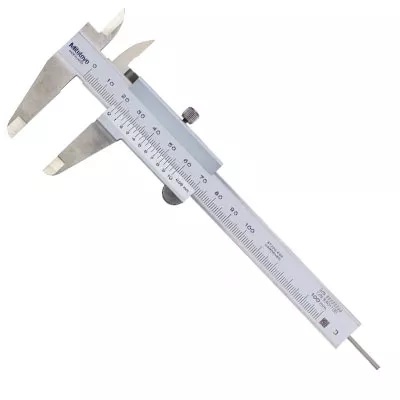
Where calipers fit in mechanical measurement
A caliper is often the first instrument chosen when speed and versatility matter. One tool can measure shaft diameters, slot widths, internal bores, shoulder steps, and depth, which makes it especially useful in machining, fabrication, assembly, and incoming inspection. Compared with more specialized gauges, calipers offer a broad measuring capability without requiring a complex setup.
They are also a practical bridge between basic shop tools and higher-precision inspection devices. For example, a caliper may be used for quick size verification before moving to dial indicators for runout or displacement checks, or to a micrometer range when tighter tolerance confirmation is required.
Main caliper types in this category
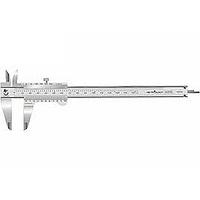
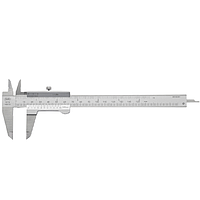
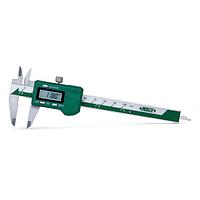
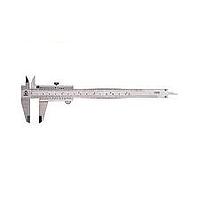
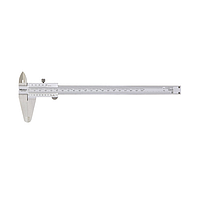
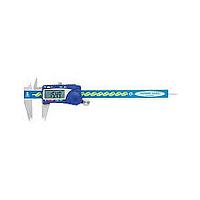
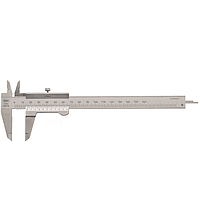
This category typically covers several familiar formats, each suited to a slightly different working preference. Vernier calipers are valued for their simplicity and independence from batteries, making them dependable in general workshop use. Analog display versions provide a mechanical reading format that some users prefer for fast visual interpretation, while digital calipers improve readability and unit conversion for routine production checks.
The best choice is not always the most advanced display type. In oily, dusty, or heavy-use environments, some users still prefer traditional mechanical reading systems. In inspection processes where quick reading and reduced operator interpretation are more important, digital models can help improve consistency.
Typical measuring ranges and practical selection logic
One of the most important decisions is the measuring span. In many applications, 0-150 mm models cover everyday part inspection, including small machined components, fittings, brackets, and general assembly work. For larger parts or more flexible workshop use, 0-200 mm and 0-300 mm options provide additional reach without moving immediately to a different measuring instrument.
Examples in this category include MOORE & WRIGHT workshop vernier calipers such as the MW100-15B, MW100-20B, and MW100-30B, covering 150 mm, 200 mm, and 300 mm ranges. From Mahr, models such as the 4100400, 4100401, and 4100402 illustrate analog display options across similar capacities, while digital versions like the 4103013, 4103206, and 4103307 support users who need clear numerical readout for daily inspection routines.
Range should be selected with a margin that matches the largest expected workpiece, but excessive size can reduce handling comfort for small parts. In practice, many users keep a shorter caliper for fast bench work and a longer unit for larger components or occasional setup tasks.
What to compare beyond the measuring range
Good caliper selection involves more than capacity alone. Resolution and readability affect how quickly an operator can interpret the result, especially during repetitive inspection. Mechanical vernier models commonly support straightforward manual reading, while digital calipers can provide finer displayed increments and easier switching between metric and inch values when mixed-standard work is involved.
Accuracy and error limit also matter, but they should be considered in relation to the actual tolerance band of the part being checked. For general workshop control, a robust and repeatable caliper may be more useful than a feature-rich tool that is not well suited to the environment. Features such as a friction wheel, depth rod design, and the overall feel of the slider can also influence usability during continuous measurement.
Brand preference may play a role as well. Alongside Mahr and MOORE & WRIGHT, this category sits within a broader measuring ecosystem that may include established names such as MITUTOYO, Sylvac, Niigata Seiki, and others depending on user standards and purchasing policy.
Examples of calipers for different working styles
For straightforward shop-floor dimensional checks, workshop vernier models remain a practical choice. The MOORE & WRIGHT MW100 series demonstrates this well, with commonly used ranges from 150 mm to 300 mm and a conventional mechanical reading approach suited to everyday measurement tasks.
Users who prefer analog display calipers may look at Mahr 16GN and 16FN series examples such as the 4100650, 4100651, 4100652, 4100400, 4100401, and 4100402. These are relevant when operators want a familiar mechanical format while covering both metric-only and metric/inch measurement needs across standard workshop ranges.
Where quick numerical interpretation is preferred, digital models such as the Mahr 4103013, 4103206, and 4103307 are useful references. These options are especially relevant in production environments where multiple operators perform repeated checks and readable digital values can help reduce interpretation time.
Using calipers effectively in production and inspection
Even a well-made caliper depends on correct handling. Measuring faces should be clean, the workpiece should be free from burrs where possible, and the instrument should be applied with consistent contact pressure. Small differences in operator technique can influence readings, especially on thin-wall parts, soft materials, or components with uneven surfaces.
Calipers are ideal for fast dimensional verification, but they should be matched to the inspection objective. For thickness-specific checks, a thickness meter may be more convenient. For features that demand dedicated geometry analysis, other instruments in the mechanical measurement range may provide better repeatability than a general-purpose caliper.
How to choose the right option for your application
Start by identifying the largest dimension you need to measure, the tolerance you need to monitor, and whether readings will be taken occasionally or all day long. Then consider who will use the tool. Skilled inspectors may be fully comfortable with vernier reading, while mixed-user production environments often benefit from a more direct display format.
Measurement environment also matters. Battery-free mechanical calipers are often preferred for simple and durable shop use, while digital types are attractive when fast reading, unit conversion, and reduced reading ambiguity are priorities. If your workflow includes several dimensional checks, it can also be useful to view this category together with related caliper options and other inspection tools to build a more complete measurement setup.
Frequently asked questions
When is a vernier caliper a better choice than a digital one?
Vernier calipers are often preferred when users want a simple mechanical tool with no battery dependency and reliable workshop durability.
Is a 150 mm caliper enough for most tasks?
For many common machining, maintenance, and assembly jobs, 0-150 mm is sufficient. If you regularly inspect larger parts, 200 mm or 300 mm models are usually more practical.
Can one caliper replace a micrometer?
Not in every case. A caliper is more versatile, but for tighter tolerance work a micrometer is often the better choice.
Choosing the right caliper is mainly about matching the tool to the measurement task, operator preference, and required level of control. A well-selected model supports faster inspection, more reliable dimensional checks, and smoother day-to-day work across workshop and quality applications.
Get exclusive volume discounts, bulk pricing updates, and new product alerts delivered directly to your inbox.
By subscribing, you agree to our Terms of Service and Privacy Policy.
Direct access to our certified experts