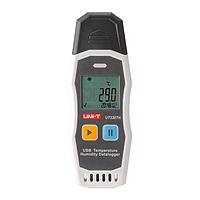
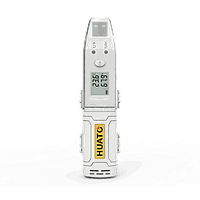
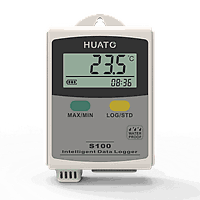
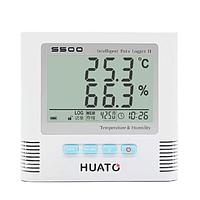
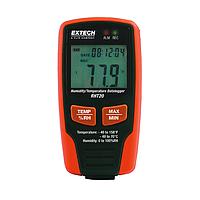
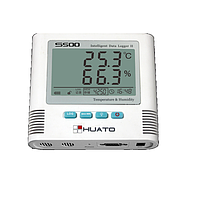
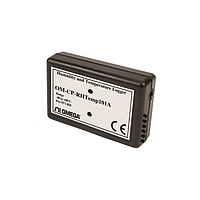
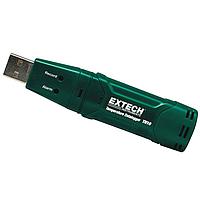
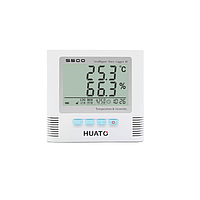
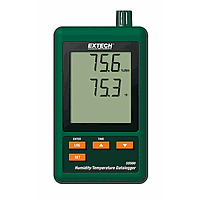
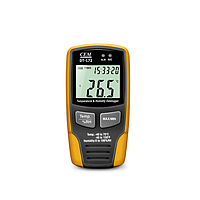
Data Loggers
Capturing process data over time is essential when spot measurements are not enough. In production, facilities management, laboratories, storage environments, and commissioning work, Data Loggers help teams document trends, verify operating conditions, investigate faults, and maintain records for quality and compliance workflows.
This category covers instruments designed to record measurement values automatically at defined intervals or events. Depending on the application, that may involve temperature, humidity, voltage, current, carbon monoxide, or multi-channel signals in a broader test and measurement setup. For users building a wider monitoring architecture, it can also be useful to compare standalone recorders with IIoT and wireless systems when remote connectivity is part of the requirement.

Where data loggers fit in real monitoring workflows
A data logger is typically chosen when measurements need to be stored continuously without requiring an operator to remain on site. This is especially useful for environmental monitoring, utility verification, equipment performance checks, and troubleshooting intermittent issues that may not appear during a short manual test.
In practical terms, these devices support trend analysis rather than one-time readings. A temperature excursion in a warehouse, a drifting 4 to 20 mA loop in process instrumentation, or a voltage fluctuation in a panel can often be understood more clearly when values are recorded over hours, days, or longer periods.
Common measurement types in this category
The range in this category includes compact loggers for focused tasks as well as modular solutions for broader acquisition needs. For environmental applications, temperature and humidity models are often selected for HVAC validation, storage areas, clean spaces, and general facility monitoring. Examples include the Dwyer DW-USB-1 for temperature-only recording and the Dwyer DW-USB-2 or DW-USB-2-HA for temperature, humidity, and dew point tracking.
Other applications require electrical or process-oriented logging. The Dwyer DW-USB-3 is intended for voltage monitoring, while the DW-USB-4 supports 4 to 20 mA current logging for common industrial signal loops. For gas exposure monitoring, the DW-USB-5 and DW-USB-5-LR provide carbon monoxide logging in compact USB form factors. If the job involves wider channel counts in a bench or lab environment, the KEITHLEY 7700 Multiplexer Module extends a DAQ6510-based system with multi-channel measurement capability, including resistance-related configurations.
Standalone USB loggers vs. connected monitoring systems
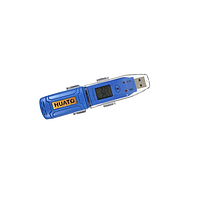
One of the most important selection points is how data will be retrieved. USB data loggers are often a practical choice for portable deployments, periodic audits, and simple long-term recording. They are straightforward to place in the field, collect data locally, and download readings later for analysis.
Where faster visibility is needed, connected devices can reduce the delay between measurement and response. The Dwyer DW-WIFI-TH, DW-WIFI-TH-HA, and DW-WIFI-TP-HA illustrate the role of Wi-Fi-enabled logging for applications that benefit from configurable alarms, larger memory, and scheduled transmission behavior. If your project depends on networked monitoring rather than local retrieval, you may also want to review wireless monitoring platforms alongside standard logging hardware.
How to choose the right data logger
The best fit usually depends less on the product format and more on the signal type, logging duration, and operating environment. Start by identifying what needs to be measured and whether the logger is intended for environmental variables, electrical signals, gas monitoring, or a mixed-channel acquisition task. The required memory depth, recording interval, and data transfer method should be considered early because they affect how long the device can run unattended.
It is also important to check the input style and installation context. For example, an external thermocouple model such as the Dwyer DW-USB-6 may be more suitable when the sensor needs to be positioned away from the device body. In harsher areas or temporary deployments, enclosure protection matters as well, and compact IP67-style loggers can be attractive for field use. For higher channel counts or more configurable test setups, modular measurement hardware from KEITHLEY may be a better match than a single-purpose recorder.
Key features that matter in industrial and technical use
Although product details vary, several features are consistently relevant when comparing options. Memory capacity determines how much data can be retained before download, while alarm functions can help flag out-of-range conditions during unattended operation. Resolution and accuracy should be aligned with the application rather than treated as isolated numbers; a facility check, a calibration-related task, and a process diagnostics job may all require different performance levels.
Power method and communication interface are also part of the decision. Battery-powered loggers are often convenient for distributed or temporary measurement points. USB is common for direct local access, while Wi-Fi supports more connected workflows. In larger measurement chains, related products such as signal conditioners may be needed to stabilize, convert, or adapt field signals before they are logged.
Representative brands and solutions in this category
This category includes products from recognized instrumentation manufacturers used across industrial, laboratory, and facilities applications. Dwyer is especially visible here through compact USB and Wi-Fi loggers that cover temperature, humidity, voltage, current, and CO monitoring in straightforward deployment formats.
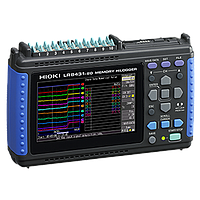
For more advanced acquisition and switching environments, KEITHLEY is relevant where multi-channel measurement expansion is required. Other manufacturers in the broader ecosystem, such as HIOKI, Jumo, NI, OMEGA, PICO, KEYSIGHT, BYK, and KYOWA, provide context for users comparing logging, acquisition, and instrumentation platforms across different technical requirements.
Applications across maintenance, validation, and troubleshooting
Data logging is widely used in preventive maintenance and fault investigation because it reveals changes over time that a handheld meter may miss. Engineers can monitor a current loop, capture a temperature profile during machine warm-up, or document humidity variation in a controlled area without needing to take manual readings throughout the day.
These tools are also helpful for validation and reporting. Environmental logging supports storage and room-condition records, while electrical logging can assist with commissioning checks and process verification. In applications where a visual paperless record is preferred for temperature history, some users may also compare data loggers with a temperature chart recorder depending on how the record needs to be viewed and archived.
Choosing with the full measurement system in mind
A good logger should fit the workflow around it, not just the signal being measured. That includes where the device will be installed, how often readings will be reviewed, whether alarms need to be acted on quickly, and how the recorded data will be used afterward. A compact single-input logger may be ideal for routine monitoring, while a modular or connected system may be better for broader diagnostics and integration.
For that reason, this category is most useful when viewed as part of a larger measurement strategy. Whether you need a simple standalone recorder or a more expandable acquisition setup, the right choice comes from matching the input type, communication method, memory, and deployment environment to the actual operating task.
Get exclusive volume discounts, bulk pricing updates, and new product alerts delivered directly to your inbox.
By subscribing, you agree to our Terms of Service and Privacy Policy.
Direct access to our certified experts