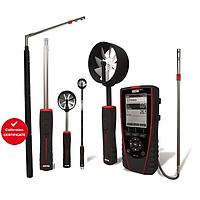
Air Flow Meter Calibration Service
Accurate airflow measurement is critical in HVAC balancing, cleanroom verification, laboratory ventilation, and industrial process control. When an instrument begins to drift, even small errors can affect compliance records, energy performance, and process stability. A professional Air Flow Meter Calibration Service helps restore confidence in measurement results and supports more reliable day-to-day operation.
This category focuses on calibration support for air flow meters used to measure gas or air movement in technical environments. Whether the instrument is used for routine maintenance, commissioning, environmental testing, or production checks, calibration helps confirm that readings remain traceable, consistent, and suitable for the application.

Why airflow meter calibration matters
Air flow instruments are often used in applications where decisions depend on measured values rather than rough estimates. In ventilation systems, incorrect readings can lead to improper balancing. In controlled environments, they may affect airflow verification, safety checks, or documentation quality.
Regular calibration is important because sensors and measuring elements can change over time due to normal use, environmental exposure, handling, or aging. A properly managed calibration interval helps reduce uncertainty and makes it easier to trust measurement data during inspections, troubleshooting, and performance validation.
Typical instruments and use cases covered
This service category is relevant for air flow meters used in commercial buildings, industrial plants, testing laboratories, and technical service work. Depending on the instrument design, airflow measurement may be part of duct testing, ventilation analysis, filter performance checks, fume extraction verification, or process gas monitoring.
One representative example in this category is the KIMO Gas Flow Meter Calibration Service. It illustrates the type of support required for instruments that monitor gas or air flow where reliable readings are essential for maintenance teams, contractors, and quality-focused operations.
What to consider when selecting a calibration service
Not all airflow measurement tasks have the same level of sensitivity, so it is important to match the service to the instrument and the operating context. Buyers typically look at the instrument type, expected measurement range, usage frequency, and whether the device supports compliance-driven reporting or internal preventive maintenance.
It is also useful to consider turnaround expectations, service documentation, and manufacturer familiarity. For users working with instruments from Sauermann, calibration support aligned with the brand ecosystem can be a practical starting point when maintaining continuity across installed measurement tools.
Benefits of calibration for maintenance, quality, and compliance
A calibrated meter supports more dependable decisions across service and production environments. Technicians can compare airflow values with greater confidence, quality teams can maintain cleaner records, and facility managers can reduce the risk of acting on inaccurate measurements. In many cases, calibration also helps identify whether an instrument is still suitable for use or should be adjusted, repaired, or replaced.
For organizations with documented quality systems, calibration is also part of broader measurement control. Keeping airflow instruments within a defined calibration program can improve audit readiness and simplify asset management across multiple locations or departments.
Calibration in the wider specialty measurement workflow
Air flow measurement rarely exists in isolation. Many facilities manage a mixed fleet of specialty instruments that support environmental control, process verification, and technical inspection. That is why calibration planning is often handled at a category level rather than one device at a time.
If your team also works with related gas measurement equipment, you may want to review calibration services for compressed air and gases testers. In applications where coating validation is also part of the workflow, coating thickness meter calibration may be relevant within the same maintenance or quality program.
When to send an air flow meter for calibration
Many organizations calibrate on a scheduled basis, such as annually or according to internal quality procedures. However, interval decisions often depend on usage intensity, environmental conditions, transport frequency, and the consequences of measurement error. Instruments used in critical verification work may need closer attention than those used for occasional trend checks.
Calibration should also be considered after impact, unusual readings, long storage periods, or whenever measurement results no longer align with expected system behavior. Acting early can help prevent downstream issues in balancing, validation, and troubleshooting activities.
Choosing the right service path for your application
The right calibration approach depends on how the instrument is used in practice. A contractor commissioning ventilation systems may prioritize reliable field performance and service continuity, while a laboratory or regulated facility may place more emphasis on documentation and consistency across multiple instruments. Understanding the operating context helps narrow the most suitable service option.
This category is designed for buyers who need a clear route to air flow meter calibration without unnecessary complexity. If your operation depends on dependable airflow data, selecting an appropriate calibration service is a practical step toward better measurement confidence, more stable processes, and easier long-term instrument management.
Get exclusive volume discounts, bulk pricing updates, and new product alerts delivered directly to your inbox.
By subscribing, you agree to our Terms of Service and Privacy Policy.
Direct access to our certified experts