
Metal content meter
When weld quality, phase balance, or material verification matter, having a reliable way to check ferrite or metal-related content can support faster decisions without cutting, polishing, or destroying the part. In fabrication, maintenance, and quality control environments, these instruments are often used to confirm whether a component stays within the required process window and whether the finished result is suitable for service conditions.
Metal content meters in this category are typically selected for non-destructive checks where portable measurement, repeatability, and practical use on real components are important. They are especially relevant in industries working with stainless steel welds, alloy verification, and inspection routines that need traceable measurement records rather than simple visual judgment.
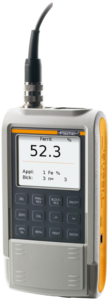
Where metal content measurement is used
In many production and inspection workflows, the goal is not only to detect visible defects but also to evaluate whether the material structure meets process expectations. A metal content meter can be useful when checking ferrite-related values in welds and deposited metal, helping inspectors assess consistency across batches, joints, or repair points.
This type of measurement is commonly relevant in sectors such as power generation, process piping, chemical plants, and metal fabrication. It can also complement broader inspection methods used in non-destructive testing, especially where the material condition must be verified alongside crack detection or flaw evaluation.
Why this category matters in non-destructive testing
Material verification and flaw detection often work best together. A component may appear acceptable on the surface, yet its internal quality or metallurgical balance may still need confirmation. That is why metal content measurement is often considered part of a wider inspection strategy that may also include ultrasonic flaw detection for internal discontinuities or magnetic flaw detection for surface and near-surface crack checks.
Rather than replacing those methods, a metal content meter adds a different layer of information. It supports decisions related to weld procedure control, acceptance checks, maintenance assessment, and documentation of measured values over time.
Typical features buyers look for
For technical buyers, portability is usually one of the first priorities. A field-ready instrument should be practical to carry, easy to operate on site, and capable of storing results for later review. In many cases, users also look for a clear display, simple calibration workflow, and stable readings across repeated measurements.
Another important factor is the measurement range and how it aligns with the materials and applications being inspected. Depending on the task, buyers may need coverage for ferrite content percentage, FN values, memory for multiple readings, and a probe design suitable for the geometry of the test point. Operating temperature, battery arrangement, and probe construction can also influence suitability for workshop or field use.
Example instrument in this category
A representative product in this range is the Mashproject MF-71L FerriteMeter, designed for ferrite content measurement with portable operation in mind. Based on the available product data, it offers multiple measuring ranges, FN measurement capability, onboard memory, a color display, and a magnetic induction transducer format for practical inspection work.
Its configuration suggests a tool intended for routine industrial use where inspectors need a balance of mobility, data storage, and straightforward measurement handling. For buyers already standardizing around this manufacturer, the Mashproject product range may also be relevant when comparing related instruments and support options.
How to choose the right metal content meter
The right selection usually starts with the actual inspection objective. If the requirement is ferrite verification in welds, buyers should first confirm the expected measurement range, the reporting format used by the quality procedure, and the type of surfaces or component shapes to be measured. Probe size and measurement locality can become important when access is limited or when readings must be taken on small areas.
It is also worth considering how the instrument will fit into the wider inspection process. If measurement records need to be stored, reviewed, or transferred, memory capacity and connectivity become more important. For teams working across multiple NDT methods, it may also be useful to compare whether a broader toolkit is needed, for example alongside X-ray flaw detection systems in applications where internal structure analysis is part of the same quality workflow.
Practical considerations for day-to-day use
In real operating conditions, ease of use often affects measurement consistency as much as the technical specification itself. A compact device with replaceable or rechargeable power options can be easier to deploy during inspections in workshops, fabrication yards, or shutdown environments. Clear menus and readable screens help reduce operator error, particularly when several measurements must be recorded in sequence.
Users should also pay attention to calibration practice and reference standards supplied with the instrument. In applications where measurement results support formal quality documentation, repeatability and correct verification routines are just as important as the headline range shown on the datasheet.
Building a more complete inspection workflow
Metal content measurement is most valuable when it is treated as part of an overall quality assurance approach rather than a standalone checkpoint. In some cases, the measured ferrite-related result may be used to support welding procedure validation, repair confirmation, or material acceptance before the component moves to the next stage of production or service.
For this reason, buyers often evaluate these instruments not only by price or portability, but by how well they fit their inspection method, reporting needs, operator skill level, and the criticality of the assets being checked. A well-matched meter can help improve consistency, reduce uncertainty, and make routine inspection work easier to manage.
Conclusion
This category is intended for professionals who need a practical way to verify metal or ferrite-related content within a non-destructive testing workflow. Whether the focus is weld inspection, process control, or maintenance assessment, choosing the right instrument means balancing range, usability, data handling, and application fit. Reviewing the available models in this category is a good starting point for selecting a solution that matches your inspection environment and quality requirements.
Get exclusive volume discounts, bulk pricing updates, and new product alerts delivered directly to your inbox.
By subscribing, you agree to our Terms of Service and Privacy Policy.
Direct access to our certified experts
