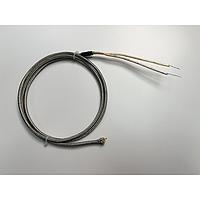
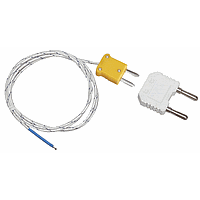
K-Type Temperature Sensor
When a process needs fast, wide-range temperature measurement, a K-type sensor is often one of the most practical choices. It is widely used across maintenance, laboratories, HVAC, electronics work, and industrial heating applications because it can handle both low and high temperatures while remaining compatible with many handheld meters, data loggers, and control instruments.
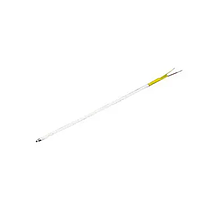
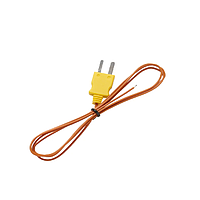
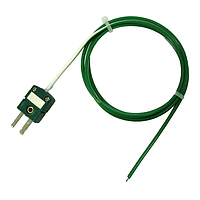
K-Type Temperature Sensor products in this category are suited to users who need flexible probe options, replacement sensing elements, or thermocouple wire for custom measurement points. Depending on the installation and measuring task, the right option may be a handheld contact probe, an immersion probe, a penetration probe, or bulk thermocouple wire for assembly and integration.

Why K-type sensors are widely used
A thermocouple measures temperature by generating a small voltage from the junction of two dissimilar metals. In practical use, K-type thermocouples are valued for their broad operating range, relatively fast response, and suitability for many general industrial and field measurement tasks.
This makes them a common fit for surface checks, air and gas measurement, immersion testing, machine diagnostics, oven inspection, and process troubleshooting. If your application requires a different sensing principle for control boards or embedded electronics, you may also want to review board-mount temperature sensors or thermistor sensor options.
Typical product formats in this category
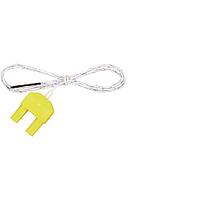
This category includes several product forms rather than one fixed sensor design. For portable measurement, users often choose ready-to-connect probes such as the FLUKE 80PK-24 contact temperature probe for high-temperature surface work or the FLUKE 80BK-A integrated DMM temperature probe for general meter-based measurements.
For liquid, semi-solid, or insertion-based measurement, models such as the TESTO 0609 1273 immersion / penetration probe Pt100 illustrate how probe geometry matters just as much as temperature range. Flexible probe styles are also available, including the TESTO 0602 0644 flexible Type K probe, which is useful where access is limited or the measuring point is difficult to reach directly.
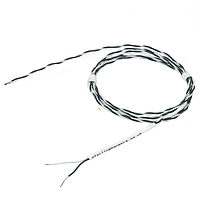
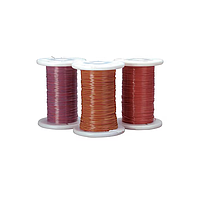
The category also covers sensor building materials such as thermocouple wire and thermocouple elements. Examples include OMEGA TT-K-24-SLE-100 and TT-K-24-SLE-500 duplex wire, as well as OMEGA XC-14-K-120 insulated thermocouple elements for higher-temperature environments. These products are especially relevant for OEM work, maintenance replacement, and custom sensor fabrication.
How to choose the right K-type temperature sensor
The first selection point is the measurement environment. Surface measurement, immersion measurement, penetration into soft materials, and air or exhaust monitoring all require different probe tips, sheath materials, and cable constructions. A wire thermocouple intended for assembly will not be the best choice for repeated handheld inspection, while a finished probe may not suit permanent installation.
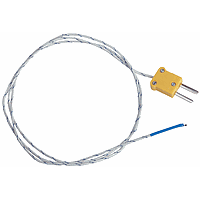
The second factor is temperature range. Some products in this category are intended for moderate temperatures, while others are designed for much hotter applications. For example, the Chauvin Arnoux P03652903 Type K wire thermocouple probe supports a high range up to 1000°C, while OMEGA XC-14-K-120 thermocouple elements extend even further into high-temperature use cases.
Connection style is also important. Many portable instruments accept miniature thermocouple connectors, while some digital multimeters use dedicated probe interfaces. Before choosing, confirm compatibility with the meter, logger, or controller already in use. If you are comparing broader sensing options for fixed installations, industrial temperature sensors can provide additional context.
Probe, wire, and element: understanding the differences
A finished probe is usually the best option when you need a ready-to-use sensor for inspection, maintenance, or routine testing. These products are built for direct connection and repeated field handling, making them suitable for service engineers, technicians, and quality control teams.
Thermocouple wire is more appropriate when the sensor must be fabricated, extended, or routed into equipment. Products such as OMEGA TT-K-36-100, TT-K-36-500, or GG-K-30-1000 support different wire gauges and insulation styles for varying installation conditions. Fine gauge wire may suit compact or sensitive measurement points, while more robust constructions may be preferred for harsher environments.
Thermocouple elements sit between these two use cases. They are useful when the sensing junction is needed but the final assembly will be completed by the user or integrator. This can be practical in furnaces, experimental setups, pilot lines, or maintenance replacement work where standard finished probes do not match the mounting requirement.
Common applications across industry and testing
K-type sensors are commonly used in process heating, HVAC servicing, machinery diagnostics, electronics assembly, and laboratory support. They are often selected for spot checks on pipes, tanks, hot plates, molds, ducts, motors, and thermal systems where a fast and reasonably rugged temperature reading is needed.
In testing and maintenance work, portability matters. Probes such as the FLUKE 80PK-24 or FLUKE-SOL-COUPLE-K are practical examples of sensors used with handheld instruments for on-site measurement. In production and engineering environments, duplex wire from OMEGA may be more relevant when building custom sensing points, harnesses, or replacement assemblies.
Where the application specifically calls for the same thermocouple family but different packaging or mounting styles, it may also help to browse the broader K-type temperature sensor range on this page and compare probes versus bulk wire based on installation method.
Points to check before ordering
Before selecting a model, confirm the required temperature span, probe length, cable length, insulation type, and connector format. These details affect not only measurement performance but also whether the sensor can physically reach the test point and survive the working environment.
It is also worth checking response time expectations and mechanical exposure. A flexible, fine probe may be easier to position but less suitable for rough handling. A heavier or insulated assembly may tolerate higher temperatures or more demanding conditions, but may respond differently depending on the application.
- Choose a finished probe for routine handheld measurement.
- Choose duplex wire for custom fabrication or sensor extension.
- Choose insulated thermocouple elements for custom high-temperature assemblies.
- Match the sensor connection to your meter, logger, or control device.
Choosing with confidence
The right K-type sensor depends less on the label and more on the measuring task. Probe shape, cable construction, temperature capability, and connection method all need to align with how and where the sensor will be used.
This category brings together practical options for field testing, maintenance, OEM assembly, and industrial temperature measurement. By comparing probe style, construction, and intended use, it becomes easier to narrow down a suitable K-type temperature sensor for reliable day-to-day work.
Get exclusive volume discounts, bulk pricing updates, and new product alerts delivered directly to your inbox.
By subscribing, you agree to our Terms of Service and Privacy Policy.
Direct access to our certified experts