T-Type Temperature Sensor
When stable temperature measurement is needed in low to medium ranges, a T-type thermocouple is often a practical choice for laboratories, food processes, autoclaves, and general industrial monitoring. Its copper-constantan construction is widely used where good sensitivity and reliable performance are important, especially in applications that do not require the higher temperature capability of other thermocouple families.
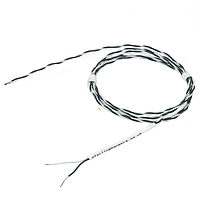
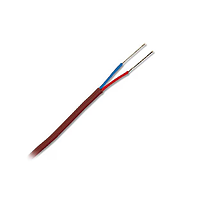
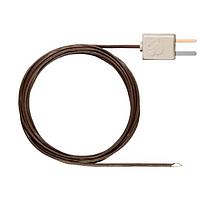
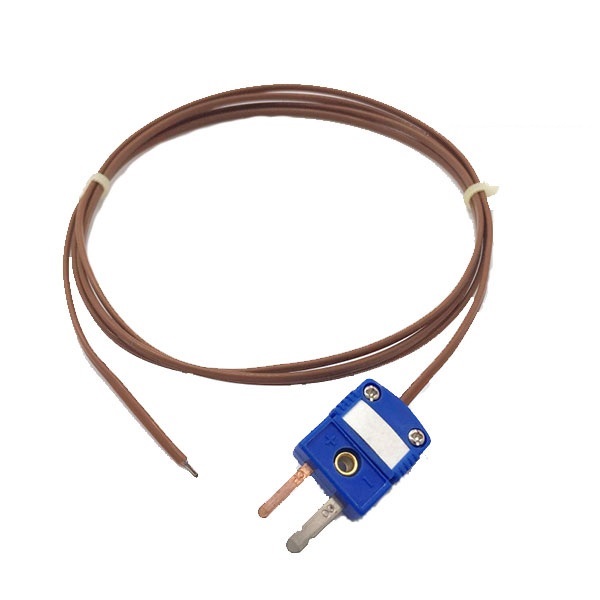
T-Type Temperature Sensor products in this category cover both complete probes and thermocouple wire for system integration, maintenance, and OEM use. The range includes immersion and insertion probes, mineral insulated assemblies with process fittings, and duplex wire for custom sensor builds or extension work.
Where T-type sensors are commonly used
T-type sensors are a strong fit for processes that operate in moderate temperature ranges and where repeatable contact measurement matters. Typical use cases include food handling, sterilization equipment, autoclaves, environmental chambers, test benches, and machinery with metal-surface or insertion-point measurement requirements.
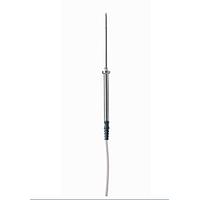
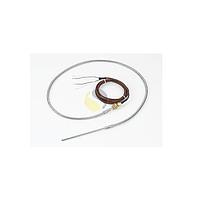
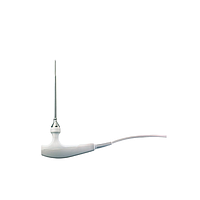
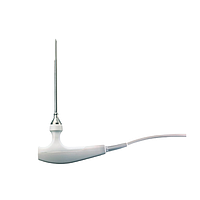
In this category, that application spread is reflected by products such as the TESTO 0603 2192 stainless steel food probe, designed for probe-based measurement, and Sterling Sensors autoclave probes built for more specialized process environments. For broader plant and machine applications, users may also compare these options with industrial temperature sensors when selecting a sensing format for fixed installation.
Probe assemblies, mineral insulated designs, and thermocouple wire
Not every T-type sensor is packaged the same way, and choosing the right construction is just as important as choosing the thermocouple type itself. Ready-to-use probes are suitable when fast deployment, portability, or direct compatibility with handheld instruments is required. Wire products are more suitable for panel builders, test engineers, and OEM teams that need to fabricate or replace sensing points.
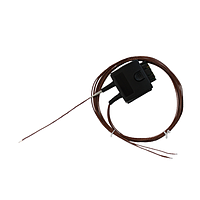
For example, OMEGA products in this category include T-type duplex thermocouple wire in several gauges and spool lengths, as well as ready-made insulated thermocouples. By contrast, Sterling Sensors mineral insulated thermocouples with standard head and process fitting are better aligned with mounted industrial measurement points where mechanical protection and installation stability are priorities.
What to consider when selecting a T-type temperature sensor
A good selection process usually starts with the measurement task rather than the part number. Think about whether the sensor will be used for immersion, surface contact, air measurement, insertion into a product, or fixed mounting in a vessel or pipe. Then review the required temperature range, response time, sheath size, cable length, connection style, and environmental protection.
Probe diameter and construction affect both durability and thermal response. A smaller probe can react more quickly, while a more robust sheath may be preferred in demanding process conditions. For installation work, users should also check whether they need a simple cable probe, a connectorized assembly, or a head-mounted mineral insulated sensor with a process fitting.
Accuracy class and wire specification also matter for system builds. Several OMEGA wire options in this category are available with different wire gauges and special limits of error, which can be relevant for users building custom assemblies or replacing damaged thermocouple runs without changing the measurement principle.
Examples from leading manufacturers in this range
This category includes products from established instrumentation brands such as TESTO, OMEGA, and Sterling Sensors. Each serves a slightly different need within the same T-type ecosystem.
TESTO examples include the 0603 2192 stainless steel food probe and the 0603 0646 Type T temperature probe, both suitable for users who need compact probe-based measurement in everyday inspection or process verification. OMEGA contributes wire-focused options such as TT-T-30-SLE-50, TT-T-36-1000, TT-T-30-SLE-500, and TT-T-24-SLE-1000, which are useful for custom thermocouple construction, replacement work, or test setup development. Sterling Sensors adds specialized assemblies such as TGLOST5.51502MLE for autoclaves and TMNPIT6MM series mineral insulated thermocouples for installed process measurement points.
T-type vs other temperature sensor options
T-type sensors are often selected when users want a thermocouple solution for relatively lower temperature ranges and stable measurement performance. However, they are not always the only option. In applications with different temperature ceilings, material compatibility, or existing instrument standards, another sensor family may be more appropriate.
For example, users working with higher-temperature thermocouple applications may also review K-type temperature sensors. If the project involves electronic sensing, compact embedded measurement, or resistance-based response characteristics, other categories such as thermistors or board-level sensors may be more suitable than a thermocouple probe.
Integration and replacement planning
Many buyers in this category are not choosing a sensor in isolation; they are matching a replacement or expanding an existing measurement setup. In those cases, it is important to confirm the thermocouple type, connector compatibility, insulation material, mounting format, and installation length before ordering. A mismatch in thermocouple type can lead to incorrect readings even when the probe appears mechanically compatible.
Wire gauge, sheath length, and process connection details become especially important in maintenance and OEM environments. A replacement probe for an autoclave or installed vessel must fit the original mounting arrangement, while a spool of thermocouple wire must align with the intended routing, insulation requirements, and expected operating conditions.
Choosing the right format for your application
If you need a portable measurement solution, a complete probe with cable is usually the fastest route. If your project involves fabrication, panel integration, or long cable runs, thermocouple wire may be the better fit. For fixed industrial installations, mineral insulated assemblies with a head and process fitting can provide a more structured and durable installation path.
This category is designed to support those different buying intents within one T-type selection. Whether the priority is food probing, autoclave monitoring, custom thermocouple wiring, or installed process sensing, reviewing the mechanical format alongside the temperature range will usually narrow the shortlist quickly and more accurately than comparing product names alone.
Choosing a T-type sensor is ultimately about matching the sensing format to the process, not just picking a temperature range. By focusing on application conditions, installation method, and instrument compatibility, buyers can identify a sensor or thermocouple wire option that fits both current measurement needs and long-term maintenance plans.
Get exclusive volume discounts, bulk pricing updates, and new product alerts delivered directly to your inbox.
By subscribing, you agree to our Terms of Service and Privacy Policy.
Direct access to our certified experts