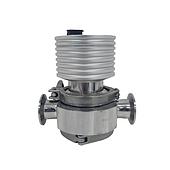
Brewery fermentation is a changing process, and timely measurement can make a meaningful difference to process oversight. When teams depend only on manual samples, the available information reflects isolated points in time rather than the complete progression of a batch. An inline refractometer for brewery fermentation is intended to provide continuous optical measurement at the process line, helping operators review changing conditions as fermentation develops.
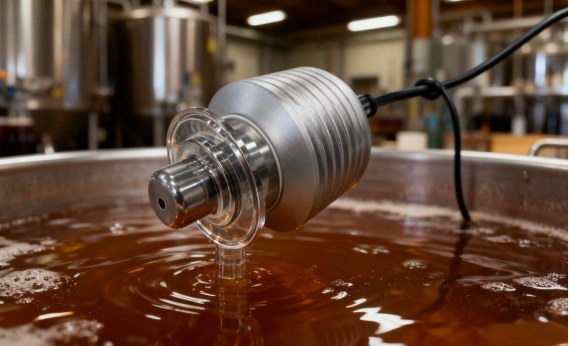
For breweries seeking more consistent process control, the value of an inline approach is not limited to a single reading. It is the ability to observe a trend, identify changes sooner, and compare current conditions with internal operating targets. This can support more informed decisions around fermentation management while maintaining a clearer record of the process.
Why Manual Fermentation Checks Can Leave Gaps
Fermentation conditions can evolve between scheduled laboratory checks. Manual sampling may be performed at intervals, which can leave operators without immediate visibility into changes that occur between tests. Sampling also requires a repeatable procedure so that results can be compared meaningfully across a batch.
An inline refractometer addresses this monitoring gap by measuring the refractive index of the fermentation liquid in place. According to the supplied product information, the measurement is used to convert refractive-index data into alcohol-content values. This makes the instrument relevant where teams need a continuously updated view of fermentation rather than relying solely on periodic samples.
Real-Time Data for Fermentation Oversight
The supplied information states that the CHN SPEC inline refractometer has a data update cycle of up to five seconds and an alcohol-content accuracy stated as ±0.1%. These figures should be considered alongside the application-specific conversion model, installation conditions, and a brewery’s own verification practices.
Real-time data can be sent to a central control system through 4–20 mA signals or USB interfaces, as described in the source material. On a monitoring screen, operators can review alcohol-content trend curves and set thresholds for alerts and control guidance. This supports a shift from reviewing results after a change has already occurred to monitoring the process while it is underway.
Hygienic Design Considerations for Brewing Lines
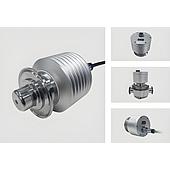
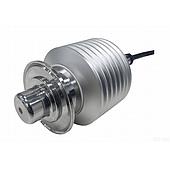
Brewing environments require equipment that is appropriate for frequent cleaning and contact with process liquids. The source describes a 316L stainless-steel body and a polished probe surface with roughness stated as Ra ≤ 0.8 μm. These characteristics are presented as measures that can help limit residue accumulation and reduce the potential for microbial buildup on the measurement surface.
The stated IP68 sealing design is intended for operation in demanding tank conditions, including temperatures of 85°C and humidity of 95%. The product information also describes an automatic cleaning system for the detection window, operating on preset cycles. For viscous fermentation liquids, maintaining a clean optical window is an important practical consideration because buildup may affect measurement stability.
Adapting Refractometer Measurement to Beverage Types
Refractive-index measurement depends on the composition of the liquid being monitored. The supplied information notes that calibration can be adapted for different alcoholic beverages, including spirits, beer, and fruit wine. Establishing a refractive-index-to-alcohol-content conversion model for a specific beverage can improve the correlation between the displayed value and the actual alcohol content.
This application-specific approach is relevant because raw materials and product formulations can differ. Beer malt concentration, for example, may not behave in the same way as another fermented beverage. A brewery should therefore assess calibration requirements for its own process rather than treating one conversion model as universal.
Using Inline Monitoring as Part of Process Control
An inline refractometer is most useful when its data is incorporated into a defined operating workflow. Teams can review trends, investigate unexpected movements, and use internal thresholds to guide action. The instrument can also be installed at a fermentation tank outlet pipeline, according to the supplied material, enabling in-situ monitoring without relying on a separate sampling point for every reading.
For breweries focused on process visibility, an inline refractometer for brewery fermentation offers a practical route to continuous optical measurement. Its role is to provide timely, process-level data that can complement established sampling, quality, and control procedures.