
Dry Bath
When sample preparation depends on repeatable heating, a liquid-free temperature control method can make daily lab work simpler and cleaner. A Dry Bath is widely used for warming, incubating, and holding tubes at stable temperatures without the handling and maintenance demands of water or oil baths.
For laboratories working with centrifuge tubes, PCR tubes, conical tubes, or small test tubes, this category brings together equipment designed for controlled thermal processing in a compact format. It is especially relevant where users need reliable temperature uniformity, straightforward operation, and easy adaptation to different tube sizes through interchangeable blocks.
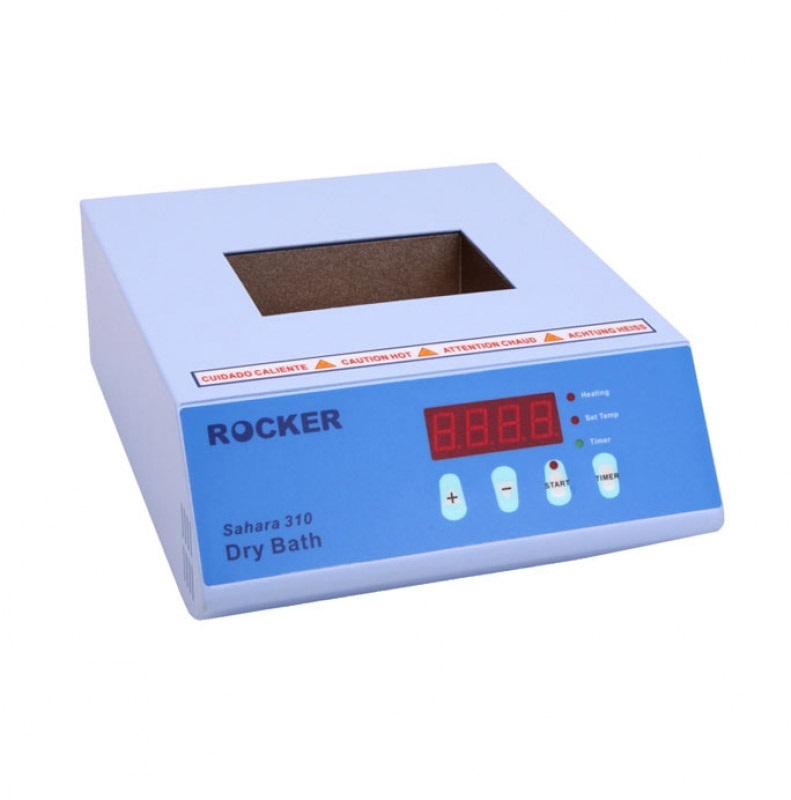
Why dry baths are widely used in laboratories
A dry bath heats samples through a metal block rather than a liquid medium. This approach helps reduce contamination risk, shortens cleanup time, and supports routine workflows where multiple tubes need to be processed under the same thermal conditions.
In practical terms, these systems are often chosen for sample incubation, enzyme-related workflows, tube warming, reaction preparation, and other procedures that require stable temperature control. Compared with general heating methods, a dedicated dry block design also improves contact between the tube and the heating surface, which contributes to better consistency across repeated runs.
Common configurations in this category
The range includes compact single-block units, dual-block systems for higher throughput, and models that can both heat and cool within a defined range. This gives labs flexibility when they need anything from simple warming to more controlled thermal steps for sensitive samples.
Examples in this category show that block format matters as much as temperature range. The Giorgio Bormac HB 120-C Dry bath is suited to routine heating up to 120°C, while models such as the WITEG HB-48 and HB-96D are built around interchangeable blocks for different tube formats. For workflows that require cooling as well as heating, the WITEG HB-R48 and DaiHan HB-R48 series extend capability down to -5°C.
Choosing by sample format and throughput
One of the first selection points is the type of tube used most often in the lab. Some blocks are optimized for 1.5/2 ml centrifuge tubes, while others are intended for PCR tubes, 15 ml conical tubes, 50 ml conical tubes, or standard test tubes. Matching the block to the vessel geometry is important for efficient heat transfer and for reducing variation between samples.
Capacity also affects workflow efficiency. A smaller setup may be enough for low-volume analytical work, but labs processing larger batches may benefit from higher-density options such as 48-hole or dual 48-hole arrangements. The DaiHan DH.WHB531515 Heating Block, for example, is a block configuration intended for 15 ml conical tubes, showing how accessories and replacement blocks play a key role in adapting one platform to different tasks.
Temperature range, accuracy, and control logic
Not every application needs the same thermal profile. Some procedures only require moderate heating, while others demand operation near 150°C or controlled cooling below ambient. Reviewing the operating range first helps narrow the choice quickly and avoids over-specifying the equipment.
Accuracy and stability are equally important, especially in workflows where reaction quality depends on a narrow temperature window. Several products in this category specify performance around 37°C and 90°C, which is useful when comparing units for biologically relevant incubation or higher-temperature sample treatment. Features such as PT100 sensing, digital controllers, timer functions, alarms, and over-temperature protection also support repeatable laboratory operation rather than simple heating alone.
Representative brands and product options
This category includes well-known laboratory equipment manufacturers such as DaiHan, WITEG, and Giorgio Bormac. Each brand represented here contributes different strengths, from compact dry baths for routine use to higher-capacity incubator-style systems with interchangeable block ecosystems.
For example, the DaiHan HB-96D and HB-96D-set are designed for larger sample loads with dual-block capability, while the HB-R48 line is more suitable when heating and cooling are both required. WITEG offers similar logic across HB-48, HB-R48, and HB-96D configurations, making it easier for laboratories to scale from standard heating tasks to broader sample handling requirements without changing the overall operating concept.
Where dry baths fit in a broader lab workflow
Dry baths are often used alongside other bench equipment rather than as stand-alone instruments. In many labs, they support preparation steps before analysis, storage transfer, reagent conditioning, or controlled incubation between process stages. That makes them a practical part of the wider laboratory equipment ecosystem, particularly where bench space and process consistency both matter.
They also pair naturally with handling and support items used around the workstation. Depending on the setup, labs may also review related categories such as protective laboratory apparel for safer routine operation when handling heated samples and blocks.
What to check before ordering
Before choosing a model, it is worth confirming a few practical points: the tube types used most often, the number of samples processed per batch, the highest and lowest temperatures required, and whether interchangeable blocks are necessary. These factors usually have more impact on long-term suitability than headline power or size alone.
It is also useful to check whether the unit is intended as a complete set or as a base instrument that may need a specific block configuration. In categories like this, accessories are not secondary details; they define how well the dry bath matches real laboratory routines. A careful match between block design, temperature performance, and daily sample volume will generally lead to smoother operation and fewer workflow compromises.
Conclusion
A well-chosen dry bath helps laboratories maintain cleaner temperature control, support repeatable sample handling, and adapt to different tube formats without unnecessary complexity. Whether the requirement is straightforward heating, higher-capacity processing, or combined heating and cooling, this category covers a practical range of solutions for routine and specialized lab work.
By comparing sample format compatibility, control performance, and block configuration, buyers can identify the most suitable system for their workflow and build a more efficient bench setup over time.
Get exclusive volume discounts, bulk pricing updates, and new product alerts delivered directly to your inbox.
By subscribing, you agree to our Terms of Service and Privacy Policy.
Direct access to our certified experts
