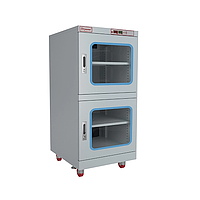
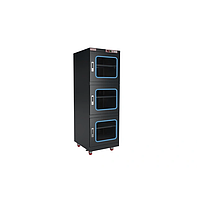
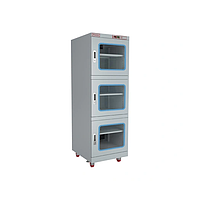
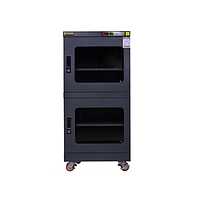
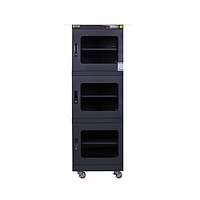
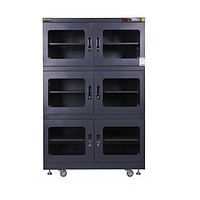
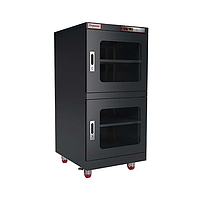
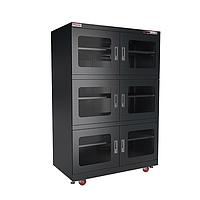
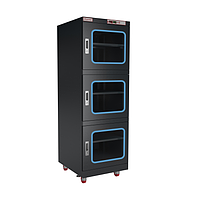
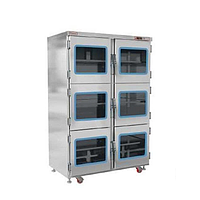
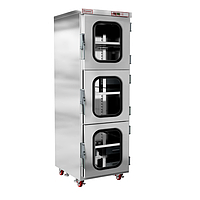
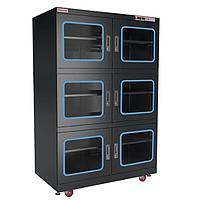
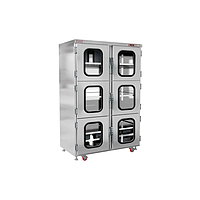
Dry cabinet
Controlling moisture is a practical requirement in many laboratories, inspection rooms, and technical storage areas. Sensitive materials such as electronic components, optical devices, reagents, samples, and precision tools can degrade when exposed to unstable humidity, so a dry cabinet helps create a more controlled storage environment for day-to-day work.
Within laboratory and industrial settings, these cabinets are used to reduce the risk of corrosion, mold, condensation, and performance drift caused by excessive moisture. This category brings together storage solutions designed for different humidity targets, capacities, and cabinet formats, making it easier to match the cabinet to the application rather than choosing only by size.
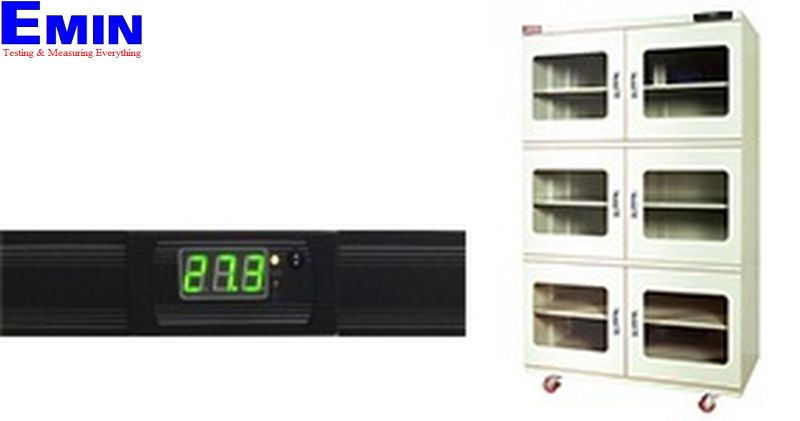
Why humidity-controlled storage matters
Moisture can affect products and materials in different ways depending on their composition. Metal parts may corrode, optical surfaces can develop haze or fungus, and electronic assemblies may suffer from oxidation or insulation issues over time. In laboratories, poor storage conditions can also reduce the stability of samples, chemicals, or measurement-related accessories.
A dry cabinet is intended to maintain a lower and more stable relative humidity inside the enclosure than the surrounding room. Compared with general shelving or sealed boxes with desiccant only, this approach offers more repeatable storage conditions and is better suited to environments where items are frequently accessed, organized on shelves, and stored over longer periods.
Common dry cabinet and desiccator options in this category
The range includes both cabinet-style and desiccator-style solutions. Cabinet models are typically selected when users need larger storage volume, multiple shelves, and easier organization for routine access. Desiccator formats are often preferred for compact storage, benchtop use, or applications that require a sealed chamber, including vacuum-based storage in some workflows.
Examples from this category include larger humidity-controlled cabinets such as the JEIOtech DC2-41 Dry Cabinet with 480 L capacity, as well as more compact models like the JEIOTECH DC2-21L and DC2-21LA. For smaller-scale storage or special handling conditions, DaiHan vacuum PMMA desiccators such as DH.DeVW, DH.DeVLH, DH.DeVL, and DH.DeVM provide sealed storage options in multiple chamber sizes.
There are also auto-dry desiccator types for general moisture-sensitive materials. Models such as the DaiHan DH.DeADDSS and DH.DeADDBG1K are designed for users who need larger enclosed storage with controlled humidity, while UV protection desiccators like DH.DeADLL.UV and DH.DeADLH.UV are suitable when light protection is also a consideration.
How to choose the right solution for your application
The first factor is the required humidity range. Some applications only need moderate moisture reduction for routine storage, while others require tighter control to protect more sensitive contents. It is also important to distinguish between the set range and the practical operating range achievable under real installation conditions.
Capacity is the next major point. A 240 L or 480 L cabinet may be more suitable for laboratories storing multiple trays, instruments, or batches of material, while a 7 L to 48 L desiccator is often enough for benchtop storage, short-term handling, or isolating a smaller group of components. Shelf count, door configuration, and load capacity per shelf also influence how efficiently the internal space can be used.
Users should also consider whether they need standard dry storage, anti-static storage, vacuum capability, or UV protection. For example, JEIOtech DC2-21LA is described as an anti-static version, which can be relevant for electrostatic-sensitive components. Vacuum PMMA desiccators from DaiHan fit applications where a sealed chamber and vacuum handling are part of the process rather than simple ambient dry storage.
Typical use cases in laboratory and technical environments
In laboratory practice, dry cabinets are widely used to store moisture-sensitive consumables, analytical accessories, electronic modules, optics, and documentation materials that should not be exposed to damp air. Research and quality-control teams also use them for pre-conditioning or holding items before testing, especially when environmental consistency supports better repeatability.
These systems are also relevant in electronics assembly, service centers, camera and lens storage, and technical workshops. Components such as PCBs, sensors, connectors, and precision instruments can all benefit from lower humidity during storage. In environments where operators move materials frequently between benches and storage, cabinet-style units are generally more convenient than passive containers.
Where smaller samples or specialized materials are involved, desiccators may be a better fit. If your workflow also includes related laboratory support items, you may want to review categories such as laboratory apparels or material handling solutions like carts and trolleys to build a more practical storage and handling setup.
Key features worth comparing before purchase
When comparing products, it helps to look beyond the headline volume. The usable internal dimensions, number of shelves, and maximum shelf load will affect whether the cabinet can actually accommodate your instruments, trays, or sample containers. Door quantity also matters in larger units because it influences access and organization.
Display and monitoring style can be another selection point. Some desiccators in this category use an analog hygrometer for a quick visual check, while larger auto-dry units may include digital humidity display. Vacuum desiccators add another layer of control through vacuum valves and pressure indication, which is important when the application involves evacuation rather than simple dry storage.
Brand preference may also influence selection, especially when buyers need consistency across multiple labs or sites. This category includes products from JEIOtech and DaiHan, along with broader manufacturer options such as Dry Cabi, SH Scientific, Dr.Storage, and others depending on stock and project requirements.
Good practice for installation and daily use
Performance depends not only on the cabinet itself but also on how it is installed and used. Place the unit in a clean, ventilated area away from direct heat sources and unnecessary exposure to ambient humidity swings. Opening the door too frequently or keeping it open for long periods can slow humidity recovery and reduce storage stability.
It is also good practice to organize stored items so that air circulation is not overly blocked by densely packed contents. Avoid using a controlled cabinet as a general-purpose storage box for unrelated items, especially packaging materials that take up space without adding value. Periodic checks of seals, indicators, and chamber cleanliness help maintain reliable operation over time.
For users evaluating more equipment from the same supplier ecosystem, the DaiHan product range may be useful when standardizing across laboratory storage and handling equipment.
Choosing between a dry cabinet and a desiccator
A full-size dry cabinet is usually the better choice when you need frequent access, larger storage volume, and easier shelf-based organization. It suits laboratories and technical rooms where many items must be kept under controlled humidity as part of routine operations.
A desiccator is often more appropriate when the priority is a compact chamber, smaller stored quantity, or a specific storage method such as vacuum or UV-protected holding. In practice, many facilities use both: larger cabinets for daily storage and smaller desiccators for task-specific materials, temporary isolation, or bench-level workflows.
Final considerations
Selecting the right humidity-controlled storage solution starts with understanding what you need to protect, how often it will be accessed, and how stable the internal environment needs to be. A well-matched dry cabinet or desiccator can improve material protection, reduce avoidable damage, and support more consistent laboratory or technical operations.
If you are comparing cabinet capacity, humidity range, or chamber style, this category provides a practical starting point for evaluating JEIOtech and DaiHan models alongside other relevant brands. Focusing on application fit rather than only cabinet size will usually lead to a more efficient and reliable storage setup.
Get exclusive volume discounts, bulk pricing updates, and new product alerts delivered directly to your inbox.
By subscribing, you agree to our Terms of Service and Privacy Policy.
Direct access to our certified experts