
Flame photometer
Fast, selective measurement of sodium, potassium, lithium, and calcium is still essential in many analytical workflows. When routine testing needs a practical balance between speed, simplicity, and repeatability, a Flame photometer remains a dependable choice for laboratories and industrial users working with aqueous samples.
This category brings together instruments and related accessories used for flame emission analysis, with a focus on systems suited to laboratory operation, automated sample handling, and process-oriented measurement. It is relevant for users in clinical and biomedical labs, food and beverage testing, agriculture, water analysis, and production environments where alkali and alkaline earth metal monitoring is part of daily control.
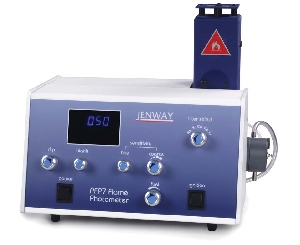
Where flame photometers fit in the lab
A flame photometer is designed for elemental determination based on atomic emission. After the sample is aspirated into a flame, specific elements emit light at characteristic wavelengths, and the instrument translates emission intensity into concentration. In practice, this makes the technique especially useful for routine analysis of Na, K, Li, and Ca in liquid samples.
Compared with more complex elemental techniques, flame photometry is often chosen when the target analytes are well defined and the workload is repetitive. It supports straightforward operation, short response times, and consistent throughput, particularly in laboratories that prioritize routine control over broad multi-element screening.
Typical applications and measurement tasks
Many users approach this category when they need stable monitoring of electrolytes or dissolved metal ions in prepared solutions. Common applications include water and environmental testing, fertilizer and agricultural analysis, food sample preparation workflows, and laboratory support for industrial process control.
It can also be a practical option where operators need regular checks of sodium, potassium, lithium, or calcium without moving to more advanced spectroscopy platforms. For process and sample preparation environments, related tools such as burner and torch equipment may also be relevant as part of the wider laboratory setup, although the flame photometer itself remains the dedicated analytical instrument.
Instrument configurations available in this category
The products shown here illustrate several ways flame photometry can be implemented. For laboratory use, the KRUSS FP8400 is positioned as a basic laboratory model for Na, K, Li, and Ca measurement, while the KRUSS FP8600 adds an automatic sampling arrangement without dilution. For workflows that benefit from reduced manual preparation, the KRUSS FP8700 extends automation further with dilution support.
Where the requirement moves closer to continuous or integrated operation, the KRUSS FP8500 is intended for process-oriented measurement. This makes it more relevant in production or online monitoring contexts where sample routing and external control can matter as much as analytical performance. These examples help show that selection is not only about detection capability, but also about sample handling, automation level, and how the instrument fits into the daily workflow.
Other solutions in the category include products from PG instruments, such as the FP910 Flame Photometer, which highlights touchscreen operation, rapid response, and an integrated printer. Accessories are also important in long-term operation; for example, the JENWAY I/500 019 Nebuliser and JENWAY 025171 Rinse Solution support routine maintenance and stable aspiration performance.
What to consider when selecting a flame photometer
The right system depends first on the analytes and concentration range expected in your application. In this category, representative models support measurement of Na, K, Li, and Ca, with low detection limits and calibration options suited to both simple and more demanding workflows. If your samples vary widely in concentration, dilution capability and calibration flexibility become especially important.
Another major factor is the way samples are introduced. Basic laboratory instruments may be sufficient for low-volume routine use, while automatic samplers and external dilution systems are more appropriate for higher throughput. Sample volume, drift performance, and available interfaces such as USB, Ethernet, or RS-232 can also influence instrument choice, especially when results need to be recorded in a controlled lab environment.
Users should also consider the fuel gas arrangement and element type. In the product range shown here, propane, butane, LPG, and acetylene are referenced depending on the application and target elements. That means the analytical requirement should always be evaluated together with the practical setup of the lab, operator training, and gas supply conditions.
Good operating practice for reliable results
Even a capable instrument depends on careful routine use. Stable flame conditions, clean aspiration components, and properly prepared standards have a direct effect on repeatability. Deionized water, contamination-free glassware, and standards matched to the expected concentration range all help produce more reliable calibration curves and reduce avoidable background effects.
Before each measurement session, it is good practice to verify zero and calibration with suitable standards, then confirm that the signal has stabilized before recording results. If the sample matrix differs significantly from the standards, dilution strategy and recovery checks become more important. This is one reason some users prefer systems with built-in or external automation, as they help standardize repetitive preparation steps and improve consistency across batches.
Maintenance, accessories, and long-term performance
Flame photometers operate in a demanding environment because samples are continuously aspirated and exposed to a flame. Over time, salt deposits and residue can affect the nebulizer, tubing, and burner area, leading to unstable signals or reduced sensitivity. Regular rinsing after use and scheduled cleaning of aspiration parts are therefore part of normal operation rather than optional maintenance.
Accessories in this category reflect that reality. The JENWAY I/500 019 Nebuliser is a good example of a component that supports proper aerosol generation, while the JENWAY 025171 Rinse Solution is relevant for cleaning and preserving measurement stability in compatible systems. In broader laboratory environments, suitable JENWAY products and manufacturer-specific consumables can help maintain compatibility and reduce downtime caused by incorrect replacement parts.
Flame photometer or another elemental technique?
For routine alkali and alkaline earth determination, flame photometry remains attractive because it is focused and efficient. However, some laboratories eventually require broader elemental coverage, lower detection levels for other metals, or a different analytical principle. In those cases, a more advanced spectroscopy platform may be worth evaluating.
That is why some buyers compare flame photometers with systems from KRUSS or with alternative instrument families offered by other brands in the analytical portfolio. The key difference is usually application scope: flame photometers are well suited to targeted routine testing, while more advanced instruments are selected when method requirements expand beyond a limited group of elements.
Choosing the right solution for your workflow
This category is most useful when the goal is clear: reliable measurement of Na, K, Li, and Ca with an instrument configuration matched to your sample volume, automation needs, and operating environment. A basic laboratory model may be enough for standard bench work, while automated or process-ready systems make more sense for repeated batches, integrated sampling, or production monitoring.
By comparing instrument format, calibration approach, interfaces, and maintenance needs, buyers can narrow the selection to a solution that supports both analytical quality and day-to-day usability. A well-matched flame photometer is not simply an instrument purchase; it becomes part of a repeatable analytical workflow that helps keep routine elemental testing efficient and consistent.
Get exclusive volume discounts, bulk pricing updates, and new product alerts delivered directly to your inbox.
By subscribing, you agree to our Terms of Service and Privacy Policy.
Direct access to our certified experts
