
Desiccators
Moisture control is a routine requirement in laboratories, electronics handling, sample preparation, and storage workflows where ambient humidity can quickly affect material quality. A well-chosen desiccator helps protect hygroscopic samples, dried materials, sensitive components, and test specimens by creating a controlled low-moisture environment, with some configurations also supporting vacuum use for faster and more stable preservation.
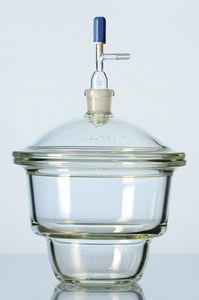
On this page, buyers can explore desiccators used for day-to-day laboratory storage as well as vacuum-compatible models suited to more demanding handling tasks. The range includes compact and larger-volume units, along with practical accessories that support operation, pressure control, and internal sample organization.
Where desiccators fit in laboratory workflows
Desiccators are commonly used after drying, weighing, conditioning, or sample preparation steps, especially when materials should not be re-exposed to room humidity. In many labs, they serve as a simple but essential buffer between processing and analysis, helping preserve consistency before inspection, testing, or packaging.
This makes them relevant across chemical, pharmaceutical, academic, industrial, and electronics-related environments. In broader lab setups, desiccators are often used alongside consumables and storage items from the laboratory supplies range when building a complete sample handling workflow.
Standard and vacuum desiccator options
A key selection point is whether the application requires only passive drying with desiccant or a vacuum desiccator configuration. Vacuum models help remove air from the chamber, which can improve drying efficiency and reduce moisture exposure for sensitive materials. This is particularly useful for powders, substrates, electronic parts, or prepared samples that must remain stable before use.
Within this category, several JEIOtech units illustrate the available format range. For smaller batches or limited bench space, the JEIOTECH VDR-20G Vacuum Desiccator offers a compact 6 L chamber. Mid-size options such as the JEIOTECH VDC-11U and JEIOTECH VDR-25UG support routine laboratory handling, while larger models like the JEIOTECH VDC-21U and JEIOTECH VDC-31U are better aligned with higher sample loads or multi-shelf organization.
Choosing capacity, layout, and visibility
Capacity should be matched to both sample size and working frequency. Small chambers are practical for individual materials, reference specimens, or low-throughput use, while larger chambers support batch storage, tray separation, and improved workflow efficiency when multiple items must be kept dry at the same time.
Physical layout also matters. Some models in this category use a cylindrical form, while others provide a box-style chamber that can be easier to organize with shelves or trays. Units such as the JEIOTECH VDC series are useful where internal volume, shelf loading, and separation between samples are important, whereas VDR series models can be attractive when compact footprint and direct access are priorities.
For some applications, body transparency and UV-block characteristics may also influence the choice. These details can help users monitor stored items visually while considering whether light-sensitive materials need additional protection.
Materials and accessories that support daily use
Desiccator performance is not only about chamber size. Material selection, sealing, and internal accessories all affect practical use in the lab. In the listed JEIOtech examples, components such as polycarbonate bodies, silicone sealing parts, and internal trays reflect the kind of construction often preferred for repeated routine handling.
Accessories can be just as important as the main unit. A perforated sample tray helps organize items and maintain airflow around stored materials, while a drying agent tray supports effective placement of desiccant. For vacuum setups, components such as the JEIOTECH AAAD1521 3-way valve or the JEIOTECH VC-20 vacuum gauge with regulator can help users manage chamber pressure more precisely and integrate the desiccator more effectively into the surrounding setup.
Examples from JEIOtech in this category
JEIOtech is one of the visible manufacturers in this category, with products covering multiple chamber sizes and accessory options. Representative models include the compact JEIOTECH VDR-20G, the 10 L JEIOTECH VDR-25UG, the 20 L JEIOTECH VDR-30U and VDR-30UG, and rectangular higher-capacity units such as the JEIOTECH VDC-21U and VDC-31U.
For users comparing brands more broadly, this category also sits within a wider labware ecosystem that may include manufacturers such as DURAN and other laboratory equipment suppliers. The right choice depends less on brand name alone and more on the required chamber size, pressure handling, storage duration, and the physical nature of the samples being protected.
What to consider before ordering
Before selecting a desiccator, it is worth checking a few practical points: chamber volume, whether vacuum operation is required, the number of shelves or trays needed, and whether the stored items need visual inspection without opening the chamber. Users should also consider how the desiccator will connect to the existing vacuum source and whether additional regulation or valve accessories will be required.
Handling conditions matter as well. Fragile samples, powders, coated parts, and moisture-sensitive components may each need a different internal arrangement. If the application includes transfer, portioning, or packaging steps after storage, related labware such as sample bags can also be relevant within the same procurement workflow.
Common questions about desiccators
When is a vacuum desiccator preferred over a standard desiccator?
A vacuum desiccator is usually preferred when samples are especially moisture-sensitive, when faster moisture removal is helpful, or when the process requires reduced-pressure storage rather than passive drying with desiccant alone.
How do trays and shelves affect usability?
They improve separation, loading, and access. This is useful when storing multiple samples at once or when preventing contact between different materials is important.
Are accessories worth considering at the time of purchase?
Yes. Valves, gauges, drying agent trays, and sample trays can directly affect how easily the desiccator fits into the intended workflow, especially for vacuum-operated systems.
Find the right desiccator for your lab setup
The most suitable desiccator is the one that matches the real handling conditions of your samples, not simply the largest or most complex model. By comparing chamber format, vacuum capability, internal organization, and accessory compatibility, buyers can narrow the selection to a practical solution for moisture-controlled storage and routine laboratory use.
This category brings together desiccators and related components that support stable sample protection across a range of bench environments. If you are planning a new lab setup or refining an existing process, reviewing the available sizes and accessories here is a practical starting point.
Get exclusive volume discounts, bulk pricing updates, and new product alerts delivered directly to your inbox.
By subscribing, you agree to our Terms of Service and Privacy Policy.
Direct access to our certified experts