Reservoirs
Handling liquids safely and consistently is a routine requirement in laboratories, pilot plants, and controlled production areas. When the workflow involves storing, transferring, or dispensing chemicals and process solutions, the right Reservoirs help reduce spills, improve operator control, and support cleaner day-to-day handling.
In this category, reservoirs are used as practical liquid-holding components within a broader labware setup. They are especially useful where users need a stable container for repeated dispensing, temporary storage, or integration with tubing and transfer accessories during laboratory and industrial work.
Designed for controlled liquid handling
A reservoir is more than a simple storage container. In many lab environments, it acts as an intermediate vessel between bulk chemical supply and the final point of use, helping operators dispense liquids in a more controlled way. This is particularly relevant when accuracy, cleanliness, and chemical handling discipline matter.
Compared with general-purpose containers, dedicated reservoir products are often selected for features such as dispensing compatibility, easier filling access, and materials suited to routine contact with laboratory solutions. For applications that require manual transfer from a bench-top container, these details can make daily work more efficient and safer.
Typical uses in laboratories and technical facilities
Reservoirs are commonly applied in solution dispensing, reagent handling, sample preparation support, and temporary liquid staging. They may be used in chemical laboratories, educational labs, QC areas, and research settings where liquids need to be transferred in a repeatable manner without relying on improvised containers.
They also fit naturally into workflows that involve related consumables and protective items. For example, users managing spill-sensitive liquids may also review products for bags and containment accessories or pair reservoir handling procedures with dedicated cleanup and protection equipment where appropriate.
Material and format considerations
One of the key selection points is material compatibility. In the products highlighted here, HDPE appears as a practical option for plastic dispensing ware. HDPE is widely used in laboratory containers because it offers good chemical resistance for many routine applications, while remaining lightweight and easy to handle.
Format also matters. Round-type reservoirs are often preferred where easy filling, cleaning access, and compact placement are important. Container volume should be chosen based on actual dispensing frequency and bench space, rather than simply selecting the largest option available.
Representative products in this category
For liquid dispensing tasks, the JEIOtech range provides clear examples of reservoir-style plastic ware. The JEIOTECH DBR-10 Plastic ware for dispensing solution is suited to users who need a compact reservoir for smaller batches or tighter workspaces, while the JEIOTECH DBR-20 Plastic ware for dispensing solution offers a larger capacity for longer runs between refills.
These products illustrate how reservoir choice often comes down to practical operating conditions: how much liquid is handled per cycle, what tubing arrangement is used, and how often the container will be moved or refilled. In dispensing setups where tubing connection is part of the workflow, users may also compare alternatives such as a bottle top solvent pump depending on the transfer method they prefer.
Reservoirs within a broader safety workflow
Liquid handling does not stop at storage and dispensing. In real laboratory use, reservoirs are often part of a broader spill control and operator protection workflow. That is why this category context also includes items such as chemical-resistant arm covers and aprons, goggles, and spill control kits.
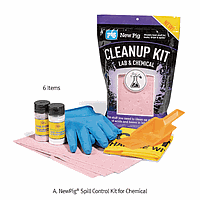
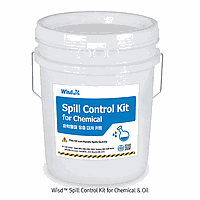
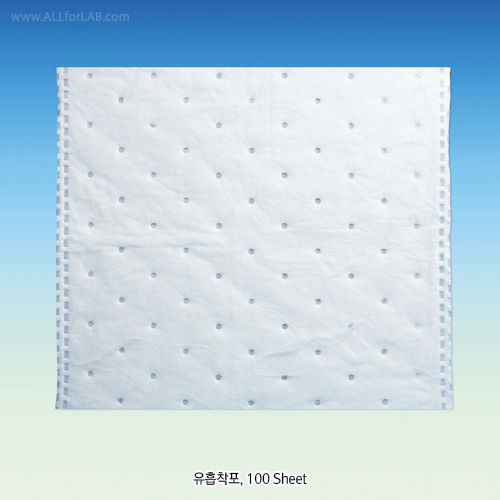
Examples from DaiHan include the DH.Spi3001 Spill Control Kit for Chemical and the DH.Spi3002 Spill Control Kit for Oil, which are relevant where liquid transfer carries a risk of accidental release. Related products such as oil sorbent pads, chemical sorbent mini-booms, or biohazard bags support containment and cleanup around the reservoir handling area rather than replacing the reservoir itself.
How to choose the right reservoir
The first question is what liquid will be handled and how the reservoir fits into the process. Users should consider chemical compatibility, required working volume, refill frequency, tubing or outlet requirements, and whether the reservoir will remain stationary or be moved during operation. A reservoir used only for temporary transfer may be selected differently from one used for repeated daily dispensing.
The second question is how the reservoir interacts with surrounding labware. If the application involves labeling, contamination control, or bundled consumables, neighboring categories such as adhesives for identification or sealing-related tasks may also be relevant. Looking at the full handling process usually leads to a better product choice than focusing on volume alone.
Practical value for B2B procurement
For purchasing teams, maintenance staff, and laboratory managers, reservoirs are typically selected as part of a repeatable operating setup rather than as standalone items. Standardizing reservoir size, material, and dispensing method can simplify replenishment, reduce handling variation between users, and support more consistent lab procedures.
This is especially important in environments where multiple operators share the same workstation or where chemical handling must align with internal safety practices. Choosing a reservoir that matches both the liquid and the workflow can help improve usability without overcomplicating the setup.
Finding a suitable reservoir for your application
This category is intended for users who need dependable containers for liquid dispensing and handling in laboratory and technical environments. Whether the requirement is a compact HDPE dispensing reservoir such as the JEIOTECH DBR-10, a larger DBR-20 format, or supporting safety items from DaiHan for spill response and operator protection, the best option depends on how the reservoir will actually be used.
By evaluating capacity, material, dispensing method, and surrounding safety needs together, buyers can narrow the selection to products that fit their process more naturally. A well-matched reservoir supports cleaner handling, smoother dispensing, and a more organized liquid management workflow.
Get exclusive volume discounts, bulk pricing updates, and new product alerts delivered directly to your inbox.
By subscribing, you agree to our Terms of Service and Privacy Policy.
Direct access to our certified experts