Stoppers
Reliable sealing is a small detail that has a major impact on laboratory workflow. Whether you are closing sample containers, protecting reagents from contamination, or preventing evaporation during storage and handling, the right stoppers help maintain consistency, cleanliness, and safer day-to-day operation across many lab environments.
On this category page, you can explore stopper and cap options used in general labware applications, including plug-type designs and snap-cap styles. These products are commonly selected for compatibility with different opening diameters, handling preferences, and routine laboratory tasks where dependable closure matters.
Why stoppers matter in laboratory use
In practical lab settings, closure components are often overlooked until leakage, contamination, or material loss becomes a problem. A properly chosen stopper supports sample integrity by reducing exposure to dust, moisture, and airborne contaminants while also helping limit spills during transport or temporary storage.
Stoppers are also important for workflow efficiency. When operators can quickly identify the right size and closure style for a vessel, routine handling becomes faster and more repeatable. This is especially useful in environments that process multiple containers in parallel or require frequent opening and closing during testing, preparation, or storage.
Common stopper styles in this category
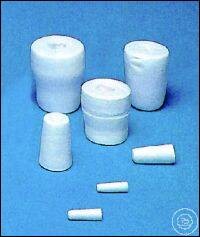
This selection includes both plug-type stoppers and snap caps, two closure formats widely used in laboratory applications. Plug-type designs are typically chosen when a secure inserted fit is needed for an opening, while snap caps are often preferred when users want quick placement and removal with a cap-style form factor.
Examples from this category include the ShinEtsu H21.T22, H21.T28, H21.T32, H21.T38, and H21.T66 stopper models, along with snap-cap variants such as ShinEtsu H21.C30, H21.C40, H21.C55, SL3.Sto6001, and SL3.Sto6004. These examples illustrate that stopper selection is often driven by opening size, closure geometry, and how the container is used in the lab.
Material and application considerations
Several featured products in this category are described as Silicosen types, which points to the importance of material choice when selecting a stopper. In laboratory work, closure materials can influence fit, handling feel, flexibility, and suitability for repeated use. Material selection also matters when labs aim to maintain clean contact surfaces and consistent sealing performance over time.
When reviewing options, buyers should consider the actual application rather than choosing only by diameter. A stopper used for sample storage may have different practical requirements than one used during preparation, temporary transfer, or covering a container between process steps. In some workflows, supporting items such as bags or adhesives may also be relevant depending on packaging, labeling, or auxiliary handling needs.
How to choose the right stopper
The first step is to confirm the container opening and the preferred closure method. Diameter-related dimensions shown in product names are useful for narrowing the selection, but buyers should also look at the overall shape and intended fit. A stopper that is too loose may fail to protect contents effectively, while an unsuitable cap profile may slow handling or create inconsistency across batches.
It is also worth considering whether the stopper will be removed frequently, whether the container will be moved after sealing, and whether the closure is being used for short-term handling or longer-term storage. In many procurement contexts, standardizing a few stopper sizes across common vessel types can reduce ordering errors and simplify lab operations.
Featured brands and product examples
This category includes products from ShinEtsu, with multiple stopper and snap-cap references covering a range of dimensions. Models such as ShinEtsu SL3.Sto6015 and H21.T66 show options for larger openings, while H21.T22 or SL3.Sto6001 are more aligned with smaller closure points. These examples are helpful for buyers who need a practical starting point when comparing formats.
Within the wider labware ecosystem, buyers may also be familiar with manufacturers such as DURAN and Pyrex for laboratory containers and related handling components. That broader context matters because stopper selection is rarely isolated; it is usually part of an overall container, storage, and sample-handling setup.
Stoppers within the broader labware workflow
Stoppers are often used alongside bottles, tubes, ampoules, bowls, and other labware where temporary or repeated sealing is required. In many labs, the closure component has to support not only containment but also smooth manual work during filling, sampling, and transport between benches or process stations.
For teams working with small-volume containers or sealed sample formats, related categories such as ampoule products may also be useful to review. Looking at the broader workflow helps ensure that the selected stopper matches the actual vessel type and the way materials are stored, dispensed, or transferred in practice.
What to review before ordering
For B2B purchasing, it is useful to check a few points before finalizing a stopper order: closure style, nominal dimensions, intended container type, and expected handling frequency. This helps reduce mismatch between the stopper and the application, especially when ordering for multiple departments or standardizing consumables across a facility.
It is also a good idea to compare a small number of representative models instead of scanning only by name. For example, plug-type options such as the ShinEtsu H21.T38 and H21.T32 may suit one sealing approach, while snap-cap types like H21.C40 or SL3.Sto6002 may better fit another. Choosing based on workflow reality usually leads to better long-term usability than selecting on size alone.
Find stopper options that fit your lab routine
A well-matched stopper supports cleaner handling, more reliable storage, and smoother daily lab work. By comparing closure style, dimensions, and intended use, buyers can narrow this category to the options that best suit their containers and operating procedures.
If you are building out a complete labware setup, this category can be reviewed together with related storage and handling items to create a more consistent workflow. A careful choice here helps avoid avoidable sealing issues later and makes routine laboratory tasks easier to manage.
Get exclusive volume discounts, bulk pricing updates, and new product alerts delivered directly to your inbox.
By subscribing, you agree to our Terms of Service and Privacy Policy.
Direct access to our certified experts