
Syringes
Accurate liquid handling often depends on small details such as tip style, material compatibility, sterility, and volume control. In laboratory and industrial workflows, Syringes are used not only for transfer and dosing, but also for sampling, filtration support, and controlled dispensing where repeatability matters.
This category brings together syringe options suited to different lab tasks, from general-purpose PP models to glass syringes for more specific handling requirements. Whether the priority is clean sample collection, compatibility with luer connections, or reliable manual metering, choosing the right format helps reduce waste, improve consistency, and support safer handling.
Where laboratory syringes are commonly used
In practice, syringes appear across a wide range of environments including analytical labs, QA/QC stations, production support, R&D, and general sample preparation. They are commonly selected when operators need controlled liquid transfer in small to medium volumes, especially in tasks where pouring is impractical or precision is more important than speed.
Common uses include sample withdrawal from bottles or containers, reagent dispensing, filtration with attached needle assemblies, and manual transfer into vials, ampoules, or test vessels. In workflows that involve solvents or aggressive media, teams may also compare syringe handling methods with equipment such as a bottle top solvent pump when selecting the most suitable dispensing approach.
Key syringe types in this category
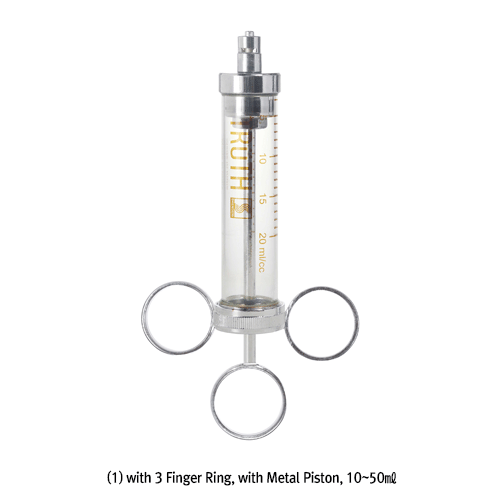
This category includes several practical configurations rather than a single one-size-fits-all format. Polypropylene syringes are widely used for routine laboratory work because they are lightweight, easy to handle, and suitable for many standard transfer and sampling tasks. Glass syringes are often preferred when dimensional stability, visibility, or material compatibility is especially important in the application.
You will also find differences in tip connection style, such as luer tip and luer lock tip versions. Luer tip designs can be convenient for straightforward attachment, while luer lock versions provide a more secure connection in processes where accidental loosening is a concern. Some models also integrate filter needle configurations for sample-related work that benefits from combined transfer and filtration functionality.
Representative products and how they fit real workflows
For users looking for a glass option, the WGM WGM 100 100 ml Glass Syringe offers a clear example of a larger-capacity format intended for measured manual dispensing. Its stated 100 ml nominal volume and graduation design make it relevant for applications where operators need visible volume reference and repeatable draw-and-dispense handling.
Within polypropylene formats, DaiHan provides several variations that reflect different connection and volume needs. Examples include the DH3.Syr3012 syringe luer lock tip 3ml for smaller measured handling, the DH3.Syr3015 luer lock tip 20ml for mid-range transfer work, and larger luer tip models such as DH3.Syr3007 or N7.A50 in 50 ml format.
For sample-focused tasks, the Burkle BK.5325.0100 PP sterile syringe is relevant where cleanliness and sampling workflow are priorities. DaiHan filter needle variants such as DM.Syr3074 and DM.Syr3077 illustrate another use case: combining syringe handling with a filtering element to support cleaner sample preparation in one manual step.
How to choose the right syringe
A practical selection process usually starts with volume. Small-capacity syringes can provide finer control for measured dispensing, while larger sizes improve efficiency when more liquid must be transferred in fewer strokes. The required graduation resolution, the acceptable tolerance in the process, and operator handling comfort should all be considered together rather than in isolation.
Material is the next major factor. PP syringes are commonly chosen for routine laboratory tasks and single-use or general transfer applications, while glass syringes may be preferred when the media, cleaning practice, or process expectations call for a different construction. Tip style also matters: use luer tip when standard attachment is sufficient, and consider luer lock when a firmer connection is needed with needles, tubing, or accessories.
If the application involves sterile sampling or contamination-sensitive work, it is worth reviewing whether a sterile syringe format or a filter needle design is more appropriate. For labs handling packaged samples or prepared aliquots, related consumables such as bags or ampoules may also be part of the broader workflow.
Why connection style and accessories matter
Syringe performance is not only about barrel size. In many applications, the reliability of the connection between the syringe and the attached component directly affects operator confidence and sample integrity. A loose interface can lead to leaks, air ingress, or inconsistent delivery, especially during repeated manual use.
That is why product naming details such as luer tip, luer lock tip, and filter needle should be read carefully. These features help indicate how the syringe is intended to interact with the rest of the setup. In a lab environment, selecting the proper combination can be just as important as choosing the nominal volume.
Manufacturers commonly associated with this category
This category includes recognized names used in laboratory environments, with examples from Burkle, DaiHan, and WGM represented in the featured products. Depending on the application, buyers may also already be familiar with manufacturers such as SGE, HSW, SciLab, and Aqualabo when comparing sourcing options across lab consumables and handling tools.
Rather than choosing by brand alone, it is usually more effective to compare the intended use, material, connection type, and size range first. Brand preference becomes more meaningful once those technical and workflow requirements are clear.
Integrating syringes into a broader lab handling setup
Syringes are often part of a larger liquid handling chain rather than a standalone purchase. A sampling process may involve containers, storage formats, transfer tools, and downstream preparation steps. Looking at the whole workflow helps avoid mismatches between syringe volume, receiving vessel, and required connection method.
For example, if the process also includes sealing, bonding, or assembly steps around sample preparation or device setup, related lab consumables such as adhesives may be relevant elsewhere in the operation. This kind of broader view is useful for purchasing teams that want fewer compatibility issues across routine laboratory tasks.
Final considerations before ordering
When comparing options in this category, focus on the actual handling requirement: volume range, material, sterility, connection type, and whether filtration is needed at the point of use. Those criteria will usually narrow the selection more effectively than starting with model names alone.
A well-matched syringe supports cleaner transfer, more consistent manual dosing, and smoother day-to-day lab work. If you are building or refining a sampling and dispensing process, this category offers practical formats for everything from general PP use to more specialized glass and filter-equipped syringe applications.
Get exclusive volume discounts, bulk pricing updates, and new product alerts delivered directly to your inbox.
By subscribing, you agree to our Terms of Service and Privacy Policy.
Direct access to our certified experts