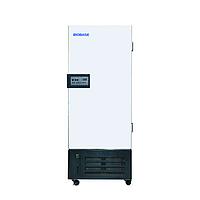
Plant growth cabinet
Controlled growing conditions are essential when plant research, seed testing, tissue culture, and agricultural development need repeatable results. In these environments, a plant growth cabinet helps create a stable combination of temperature, humidity, and light so experiments are less affected by seasonal or room-level fluctuations.
For laboratories, universities, research centers, and industrial R&D teams, this category is designed for users who need reliable environmental control for cultivation, observation, and testing. Depending on the workflow, a cabinet may be used for germination studies, plant physiology work, crop response testing, or other applications where chamber consistency matters as much as chamber volume.
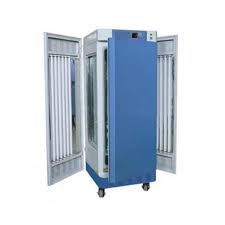
Why plant growth cabinets are used in laboratory and research settings
Unlike general storage or standard incubators, these systems are built to manage multiple environmental variables together. That includes temperature control, humidity regulation, and programmed illumination, allowing users to simulate day-night cycles or maintain stable conditions for sensitive plant materials.
This level of control is useful for seed germination, seedling development, stress-response studies, and plant cultivation under predefined test conditions. It also supports comparative work, where samples must be exposed to the same light intensity and atmospheric conditions over time to keep data consistent across runs.
Typical features that matter when selecting a chamber
Most buyers compare plant growth cabinets by looking first at the working volume, environmental range, and programmability. In this category, available models span from more compact systems around 300 L up to large-capacity chambers near 1000 L, which can be important when moving from pilot-scale testing to higher sample throughput.
Another key point is the balance between light performance and environmental stability. Cabinets in this range may offer multi-bank illumination, broad humidity control, and PT100 or capacitive sensing for monitoring chamber conditions. For many applications, users also review recovery behavior after door opening, because fast stabilization helps reduce disturbance during routine access.
Examples available in this category
Several product lines illustrate the range of configurations available. From DaiHan, the DH.SWGC60450 and DH.SWGC61000 SMART Plant Growth Chamber models provide 432 L and 864 L capacities, with controlled temperature, humidity, and staged illumination suited to laboratory growing protocols.
WITEG also offers comparable plant growth chamber options such as the SWGC-450 and SWGC-1000, along with broader growth chamber models including the STH-E305, STH-E420, and STH-E800 series. These examples show how users can choose between classic plant growth setups and wider temperature-range chamber configurations, depending on whether the priority is cultivation, incubation, or environmental simulation.
For applications that call for controlled humidity and advanced chamber management in different capacity classes, JEIOtech provides models such as the GC-300TLH and GC-1000TLH. These systems are relevant when users need a more defined environmental control platform for plant-related studies and similar laboratory workflows.
How to choose the right plant growth cabinet
The most practical starting point is sample size. A smaller chamber can be easier to place in an existing lab and may be sufficient for routine germination or early-stage plant development, while larger 800 L to 1000 L class cabinets are better suited to higher batch volumes, larger trays, or projects that require multiple conditions to be repeated with consistent chamber loading.
Next, check the operating range needed for your protocol. Some models in this category are designed for typical plant growth conditions, such as around 5°C or 10°C up to 50°C or 60°C, while others extend further for broader environmental testing. Humidity range, illumination intensity, power supply, and shelf loading should also be reviewed early, especially for facilities with installation or utility constraints.
Control flexibility is another important factor. If your work involves repeated test cycles, photoperiod scheduling, or different growth stages in one protocol, it is worth prioritizing cabinets with programmable patterns and clear controller interfaces. This can reduce manual intervention and improve repeatability across long test periods.
Matching chamber capacity to real applications
In practical terms, a 300 L class cabinet is often considered for smaller research tasks, benchtop-adjacent workflows, or limited sample sets. Mid-range sizes around 420 L to 432 L can offer a useful balance between footprint and usable interior volume, making them suitable for many standard lab cultivation programs.
Larger systems such as 800 L, 864 L, or 1000 L models are more appropriate when users need to process more trays, separate sample groups across shelves, or scale up experimental throughput. These higher-capacity chambers can also be helpful in shared facilities where multiple users need access to one controlled environment platform.
Related equipment and broader lab setup considerations
A plant growth cabinet is usually part of a wider laboratory workflow rather than a standalone purchase decision. Users may also consider material handling and room organization around the chamber, especially for loading samples, transporting trays, or supporting routine maintenance. In that context, related lab utilities such as carts and trolleys can be relevant in larger facilities.
Where the buying decision is focused on a preferred manufacturer ecosystem, it can also be useful to review nearby product groups such as other DaiHan laboratory equipment. This helps buyers compare chamber options alongside compatible instruments or other equipment already used within the same lab environment.
What to review before ordering
Before selecting a cabinet, confirm the required power supply, installation space, and door clearance. This category includes both 1-phase and 3-phase configurations in some product families, so utility compatibility should be checked before procurement, especially for larger-capacity systems.
It is also wise to compare internal dimensions instead of relying only on total chamber volume. Shelf quantity, shelf load, and usable height can affect whether a model is suitable for trays, pots, culture containers, or custom holders. For long-duration testing, users should additionally review sensor type, controller format, and maintenance access as part of the total ownership decision.
Finding a suitable solution for controlled plant studies
This category brings together chamber options for users who need repeatable plant growth conditions across research, testing, and cultivation-related applications. With a range of capacities, control formats, and environmental capabilities from manufacturers such as DaiHan, WITEG, and JEIOtech, buyers can compare solutions based on actual laboratory requirements rather than generic product descriptions.
If you are planning a new installation or replacing an older chamber, focus on the environmental range, illumination needs, chamber size, and available power at your site. A well-matched plant growth cabinet can improve consistency, support more reliable plant studies, and make routine laboratory work easier to manage over the long term.
Get exclusive volume discounts, bulk pricing updates, and new product alerts delivered directly to your inbox.
By subscribing, you agree to our Terms of Service and Privacy Policy.
Direct access to our certified experts