
Protein Distillers
Accurate nitrogen and protein determination remains a routine requirement in food testing, feed analysis, environmental laboratories, and many quality control workflows. When a method based on distillation is needed, Protein Distillers play a central role in preparing samples for reliable Kjeldahl and related analyses, helping laboratories handle repetitive testing with better consistency and safer operation.
On this page, you can explore equipment designed for protein and nitrogen distillation tasks in laboratory settings. These systems are typically selected by teams that need dependable performance for regulated methods, practical day-to-day usability, and compatibility with common sample types such as food, feed, soil, fertilizer, wastewater, and other chemical matrices.
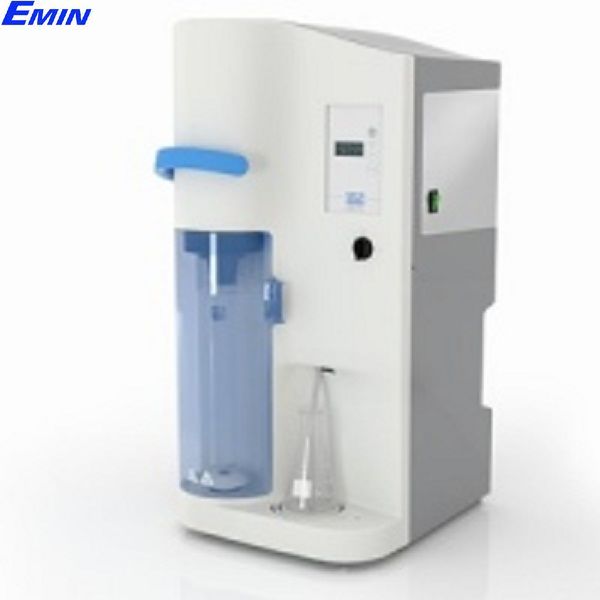
Where protein distillers are used in laboratory analysis
In many laboratories, the distillation step is part of a broader analytical workflow for determining nitrogen-containing compounds and converting those results into protein values where appropriate. This is especially common in food and feed laboratories, where protein content is a critical quality parameter for raw materials, finished products, and process control.
Beyond food applications, these instruments are also relevant in environmental and industrial testing. Typical use cases include analysis of soil, fertilizers, wastewater, sludge, volatile compounds in specific procedures, and other matrices where a controlled distillation step is required before titration or subsequent quantification.
Why automated and semi-automated distillation matters
A modern protein distiller is not simply a heating device. It is a laboratory distillation system designed to automate repetitive steps such as reagent dosing, dilution water addition, steam generation, and condensate handling. This can reduce operator variability and make routine analysis more manageable when sample throughput increases.
Semi-automatic systems are especially useful for laboratories that need a balance between process control and budget. Features such as automatic NaOH addition, programmable methods, LCD parameter display, and automatic draining help shorten training time and support more standardized operation across different users and shifts.
Typical selection criteria for protein distillers
When comparing instruments in this category, laboratories usually focus first on method compatibility and application range. A suitable unit should align with the analytical procedures used in the lab, whether for Kjeldahl protein determination, ammonia nitrogen, TKN, or other related distillation-based tests.
Operational details also matter. Cooling water consumption, distillation time, reagent handling, supported tube sizes, and data connectivity can affect both running cost and convenience. In routine environments, easy parameter setting and repeatable operation are often just as important as headline performance figures.
Another practical consideration is construction. Systems built with corrosion-resistant materials and robust condensers are better suited to regular exposure to alkaline reagents and demanding lab use. If your workflow includes sample preparation before distillation, related tools such as a laboratory blender may also be part of the broader setup.
Representative solutions from VELP
Among the brands featured in this category, VELP is a notable option for laboratories looking for dedicated nitrogen and protein distillation equipment. The product range shown here includes semi-automatic solutions intended for routine analysis, with attention to practical operation, method storage, and laboratory safety.
Examples include the VELP UDK139 and VELP UDK129, both positioned for protein and nitrogen distillation tasks in analytical laboratories. Based on the available product information, these models support applications involving food, feed, soil, fertilizer, wastewater, and similar sample types, while also offering features such as LCD-based setup, controlled reagent addition, and short distillation cycles.
For laboratories interested in minimizing water use and maintaining stable condensation performance, the use of a titanium condenser is a relevant design point. Compared with traditional glass-based approaches, this type of construction is intended to improve heat exchange efficiency and support lower cooling water demand in routine operation.
Practical features that improve daily workflow
In real laboratory use, small design details often make a significant difference. Programmable methods can help teams repeat validated procedures without re-entering settings each time, while interface options such as RS232 may support data handling and documentation in line with established lab practices.
Automatic water control and automated alkali dosing are also valuable because they reduce manual intervention during distillation. This is particularly helpful in labs processing multiple samples per day, where consistency and time savings are more important than simply having a unit that can complete a single test.
Because these systems operate in wet chemistry environments, surrounding laboratory organization should not be overlooked. Depending on the setup, accessories from categories such as lab carts and trolleys can help move bottles, glassware, and consumables more safely between workstations.
Performance considerations in regulated testing
For many buyers, the key question is whether a protein distiller can support reliable, repeatable results in a regulated environment. Product information in this category highlights alignment with commonly referenced standards such as AOAC, EPA, DIN, and ISO, which is an important consideration when methods need to fit established laboratory procedures.
Recovery, repeatability, and detection capability are also central to instrument evaluation. Rather than looking at a single specification in isolation, it is better to assess how the full system performs in your actual workflow: sample type, operator routine, reagent handling, water availability, and throughput expectations all influence the practical outcome.
How to choose the right unit for your lab
If your laboratory handles moderate sample volumes and routine protein or nitrogen testing, a semi-automatic distillation unit can be a sensible starting point. The right choice usually depends on how much automation you need, what sample tubes are already used in your lab, and whether method storage or external connectivity is required.
It is also worth considering maintenance expectations and utility requirements before purchase. Power supply, cooling water conditions, and available bench space should be checked early, especially if the instrument will be installed alongside other wet chemistry equipment. In workflows involving heating steps elsewhere in the lab, related tools such as a burner or torch may be relevant in separate preparation or support tasks.
Choosing protein distillers with the application in mind
The most effective way to evaluate this category is to start from the analytical task rather than the model name alone. A laboratory focused on food protein testing may prioritize fast routine cycles and method repeatability, while an environmental lab may place more value on matrix flexibility and dependable operation across varied sample types.
This category brings together protein distillation equipment intended for laboratories that need structured, repeatable distillation as part of nitrogen analysis. By comparing workflow features, construction, and application fit, buyers can select a system that supports both current testing needs and future expansion without adding unnecessary complexity.
Get exclusive volume discounts, bulk pricing updates, and new product alerts delivered directly to your inbox.
By subscribing, you agree to our Terms of Service and Privacy Policy.
Direct access to our certified experts