Water Distiller
Reliable distilled water is a basic requirement in many labs, from media preparation and glassware rinsing to routine analytical work. Choosing the right Water Distiller helps maintain consistent water quality while matching the throughput, installation space, and operating conditions of your facility.
On this page, you can explore laboratory water distillers designed for continuous or routine distilled water production. The available range includes compact units for smaller workloads as well as higher-output systems for laboratories that need stable daily supply, with representative options from Lauda, DaiHan, and WITEG.
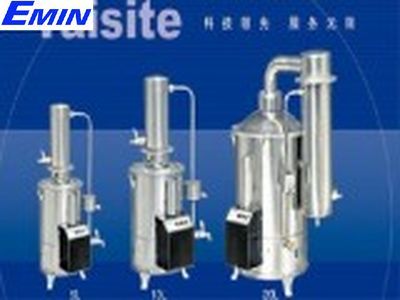
Why water distillation is still relevant in the laboratory
Distillation remains a practical method for producing purified water by heating feed water into steam and then condensing it back into liquid form. This process helps separate water from many dissolved solids and a wide range of impurities, making it suitable for laboratories that need dependable distilled water without relying only on consumable-based filtration systems.
In day-to-day use, distilled water is commonly selected for washing, reagent preparation, general laboratory procedures, and applications where mineral content in tap water may interfere with equipment or results. For users comparing purification approaches, it can also be useful to evaluate the wider laboratory equipment environment and how water preparation fits into the overall workflow.
Typical water distiller configurations in this category
The product mix in this category shows several common configurations. Single-stage distillers are often chosen for general-purpose distilled water production, especially where moderate conductivity levels are acceptable for routine lab tasks. Examples include Lauda models such as PD 4 and PD 12 R, which are built around steady output and stainless-steel construction.
For applications requiring improved purity, two-stage distillation is also represented. A model such as the Lauda PD 4 D Puridest Water still illustrates this approach, with stage-based conductivity performance suitable for more demanding laboratory use. In practical terms, the right configuration depends less on product naming and more on your target water quality, daily volume, and service conditions.
How to choose the right production capacity
Capacity is one of the first selection criteria because it directly affects workflow efficiency. Smaller laboratories may find 4 L/h units sufficient for routine rinsing and general preparation, while busier labs often need 8 L/h or 12 L/h systems to avoid waiting between batches or interrupting work schedules.
Within this category, the available examples cover a useful range. DaiHan electric classic water stills are available in 4, 8, and 12 Lit./hr versions, while Lauda offers both compact and higher-output solutions such as PD 4, PD 8 D, and PD 12 R. When sizing a unit, it is generally better to estimate real daily consumption rather than selecting only by peak purity expectations. That approach helps balance footprint, power demand, and operating cost.
Construction materials, prefiltration, and operating details
Material selection matters in a water distiller because it affects durability, maintenance, and compatibility with regular laboratory use. Several products here use stainless-steel components for key sections such as the boiler and condenser, a common choice where corrosion resistance and cleaning convenience are important.
Some DaiHan models also include prefiltration options, either with a PP 1 µm pore prefilter cartridge or a stainless-steel mesh prefilter. These features help reduce incoming particles and scale-forming impurities before the distillation process, which can support more stable operation and easier maintenance over time. For users already working with other thermal lab tools, related handling and bench setup considerations may overlap with equipment found in categories such as Burner & Torch.
Examples of products for different laboratory needs
For compact, routine distilled water generation, the Lauda PD 4 Puridest Still and Lauda PD 4 R Puridest Still are relevant examples. Both represent mono distillation designs with 4 L/h output, suitable for smaller labs, educational facilities, or support applications where a modest but stable supply is enough.
When higher throughput is required, models such as the Lauda Puridest PD 12 R and DaiHan DH.WWS02012 provide 12 L/h output, making them more appropriate for labs with heavier daily demand. The Lauda PD 8 D Puridest Water still, with 8 L/h production and two-stage conductivity values listed in the product data, fits between compact and higher-capacity setups. WITEG Biostill 4 is another option for users looking at around 4.3 l/h output in a water distillation apparatus format.
Installation and utility considerations before purchase
A water distiller should not be selected by output alone. Power requirement, cooling water demand, ambient operating range, and available installation space all need to be checked in advance. The products shown in this category include different electrical configurations and power consumption levels, from smaller 230 V units to higher-power systems intended for more demanding laboratory infrastructure.
Cooling water flow and pressure are equally important because condenser performance directly affects stable distillation. If the site has limited utilities or a compact bench layout, dimensions and service access should be reviewed carefully before purchase. In larger laboratories, moving or positioning heavier units may also involve suitable support equipment such as carts and trolleys.
Maintenance and daily operation points
Like most thermal water treatment systems, distillers need regular cleaning to manage scale buildup and maintain stable output. Feed water quality has a direct effect on service intervals, so users in hard-water areas usually benefit from checking boilers, condensers, and prefilters more frequently.
Models in this category also show practical control features such as automatic on/off by water level sensor on several DaiHan systems. These functions can simplify routine operation and reduce the risk of dry running or overflow in normal lab use. Even so, scheduled descaling, inspection of water connections, and review of electrical requirements remain essential for long-term reliability.
Which type of laboratory user is this category suitable for?
This category is relevant for quality control labs, academic laboratories, hospitals, industrial testing environments, and general research facilities that need an on-site source of distilled water. The available range supports both smaller workstations and more established laboratories that require higher hourly output.
If your application involves standard rinsing, media preparation, or general-purpose distilled water, a mono distillation unit may be sufficient. If you need lower conductivity performance or more controlled purification stages, a two-stage model may be the better fit. Reviewing the balance between purity target, daily volume, and installation conditions is usually the fastest path to a suitable selection.
Frequently asked questions
What output should I choose for a laboratory water distiller?
That depends on daily water demand. A 4 L/h unit is often enough for lighter routine use, while 8 L/h or 12 L/h models are more suitable for laboratories with continuous or multi-user demand.
Is a prefilter important in a water distiller?
It can be. Prefilters help reduce particles and scale-forming impurities in incoming water, which may support cleaner operation and reduce maintenance frequency.
When is a two-stage distiller worth considering?
A two-stage design is typically considered when the application requires better water purity than standard single-stage distillation can provide for general lab tasks.
A good laboratory water distiller should fit your real operating conditions as well as your purity target. By comparing capacity, utility requirements, materials, and control features across brands such as Lauda, DaiHan, and WITEG, you can narrow the range to a system that supports stable day-to-day water production without unnecessary complexity.
Get exclusive volume discounts, bulk pricing updates, and new product alerts delivered directly to your inbox.
By subscribing, you agree to our Terms of Service and Privacy Policy.
Direct access to our certified experts