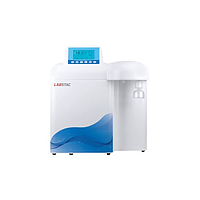
Water purification system
Reliable water quality is a basic requirement in many laboratories, yet the purity target can vary widely from routine washing and media preparation to analytical work and life science applications. Choosing the right Water purification system helps control contamination risk, supports repeatable results, and reduces the time spent managing water manually.
On this page, you can explore laboratory water systems designed for different purity levels and production needs, from classic water still units to RO and ultra-pure water platforms. The range includes solutions for general lab use as well as more demanding workflows that require stable resistivity, integrated monitoring, and replaceable purification consumables.
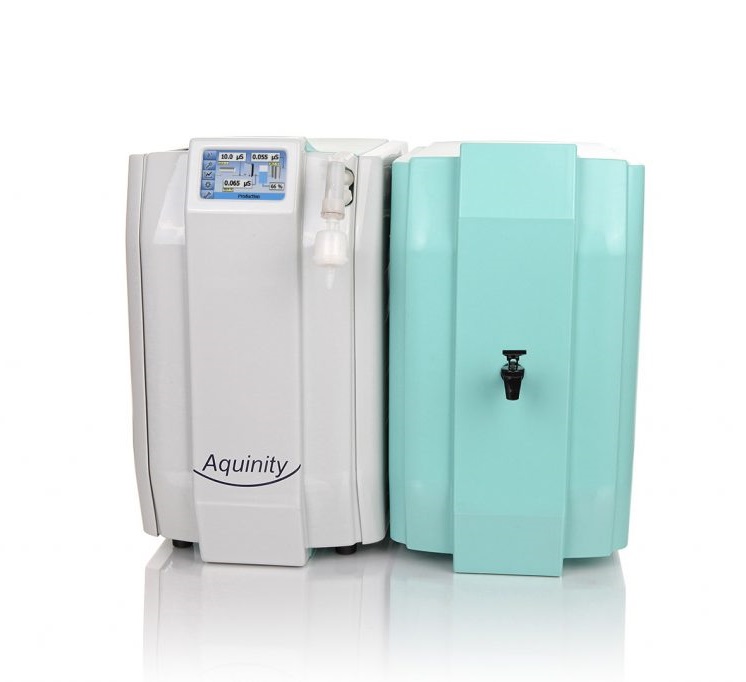
Why water purity matters in laboratory work
Water is often treated as a utility, but in practice it is also a critical reagent. Impurities such as ions, organic residues, particles, microorganisms, and dissolved gases can affect sample preparation, instrument performance, cleaning quality, and the consistency of experimental results.
A suitable laboratory water purification setup is therefore not only about producing clean water. It is about matching water quality to the application, whether the requirement is purified water for daily laboratory operations or ultra-pure water for sensitive procedures. In broader lab workflows, water systems are also closely connected with supporting equipment such as burner and torch tools for heating tasks and other benchtop preparation devices.
Main system types in this category
This category covers several common approaches to water treatment. A classic water still produces distilled water through evaporation and condensation, which can be useful where straightforward distilled water generation is preferred. An example is the DaiHan CWS-8 Electric Classic Water Still, with production capacity suited to routine laboratory demand.
RO-based systems focus on removing a broad range of dissolved impurities and are often selected for general purified water supply. Ultra-pure systems build on further polishing stages to reach very high resistivity, while all-in-one platforms combine RO and UP production in one compact configuration for labs that need multiple water grades from a single unit.
Representative product options available
Several models in this category illustrate how laboratories can choose according to purity level and throughput. For distilled water generation, the DaiHan CWS-8 Electric Classic Water Still is designed for continuous production in standard lab environments and includes practical protection functions related to water level and temperature.
For purified and ultra-pure water from one system, the DaiHan New-P.NIX Power I series is represented here in Scholar-type, UV-type, Bio-type, and Integrate-type versions. These systems are intended for laboratories that want a combined RO and UP water solution, digital monitoring, and modular consumable replacement.
For applications focused specifically on ultra-pure output, the DaiHan New-P.NIX 900 series offers multiple configurations, including Scholar-type, Bio-type, UV-type, and Intergate-type models. This makes it easier to align the system with the lab’s usage profile, especially where ultra-pure water quality and controlled final-stage treatment are important.
If the main need is purified water production rather than ultra-pure polishing, the DaiHan New-P.NIX RO 280 and RO 380 provide higher RO flow options for routine supply. Consumables such as the DaiHan DH.WWP.MWM MW5000UF Filter (M) also show that this category includes not only primary systems but also replacement elements that support long-term operation.
How to choose the right water purification system
The first step is to define the required water grade. Routine cleaning, glassware rinsing, and preparation tasks may be well served by distilled or RO water, while molecular biology, trace analysis, or other sensitive methods may require ultra-pure water with higher resistivity and additional treatment stages.
Next, consider daily water demand and peak usage patterns. A laboratory with intermittent point-of-use needs may prioritize compact ultra-pure units, while a facility with frequent dispensing or multiple users may need higher hourly output from RO or combined RO/UP platforms. Feed water quality also matters, because incoming conductivity and impurity load will influence maintenance intervals and filter life.
It is also useful to review installation space, user interface, and routine maintenance requirements. Systems with digital displays for water quality and temperature can simplify monitoring, while replaceable cartridges, final filters, and UV components help keep service tasks structured. If your lab is standardizing around one supplier, browsing the wider DaiHan product range may help with compatibility and purchasing efficiency.
Understanding configuration differences
Model variants such as Scholar-type, Bio-type, UV-type, and Integrate-type typically reflect different final treatment paths or application emphasis. In practical terms, this can affect how the system handles microorganisms, organics, endotoxin-sensitive workflows, or the balance between general ultra-pure dispensing and more specialized use.
RO/UP all-in-one systems are often a good fit when one lab needs both purified water for everyday tasks and ultra-pure water for high-sensitivity procedures. By contrast, a dedicated ultra-pure unit like the New-P.NIX 900 series may be more appropriate when pretreated feed water is already available and the main objective is consistent final polishing at the point of use.
For facilities with simpler water requirements, a still or RO-only system can be the more practical option. The right choice depends less on product naming and more on how the unit fits the laboratory’s actual workflow, quality targets, and maintenance capacity.
Maintenance and consumables in long-term operation
Water systems perform best when their consumables are replaced on schedule and feed conditions are kept stable. Pretreatment filters, RO packs, final capsule filters, UP packs, UV lamps, and UF filters each play a role in protecting downstream stages and maintaining output quality.
From a purchasing standpoint, it is worth considering the full ownership cycle rather than only the initial instrument. Categories that include both core systems and replacement parts make it easier to maintain continuity of operation, especially in busy laboratories where downtime can affect multiple workflows. In some environments, labs also review adjacent needs such as material handling carts and trolleys to support safe transport of water containers and laboratory supplies.
Common applications for these systems
Laboratory water purification systems are commonly used for reagent preparation, buffer and media preparation, rinsing of glassware, autoclave feed, and instrument supply where controlled water quality is necessary. The exact use case determines whether distilled, purified, or ultra-pure water is the most appropriate choice.
In research, teaching, quality control, and routine testing environments, the value of a dedicated system is not only cleaner water but also more predictable process control. When the water source is standardized, laboratories can reduce variation across daily tasks and improve confidence in downstream analytical or biological work.
Where a broader lab setup is being planned, it can also be useful to review complementary categories such as other DaiHan laboratory products for a more complete equipment ecosystem.
Final thoughts
Selecting a water purification system is fundamentally a question of water quality target, throughput, and how the equipment will be used day to day. This category brings together options for distilled water production, RO purification, ultra-pure water generation, and combined RO/UP workflows, along with supporting replacement components.
If you are comparing systems for a new laboratory or upgrading an existing setup, focus on the intended application, required purity level, and maintenance plan. That approach will make it easier to identify a system that supports reliable operation over time rather than simply meeting a headline specification.
Get exclusive volume discounts, bulk pricing updates, and new product alerts delivered directly to your inbox.
By subscribing, you agree to our Terms of Service and Privacy Policy.
Direct access to our certified experts