Light fastness testing helps laboratories evaluate how a material’s color changes during controlled exposure to light. It is an important part of color fastness testing for textiles and other materials where appearance retention is relevant. Reliable results depend not only on the light fastness tester, but also on selecting the correct reference materials, maintaining the required exposure conditions, and applying the specified assessment method.
Choose the correct blue wool reference series
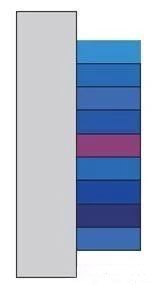
Blue wool references are used to compare fading during light exposure. The source material distinguishes between the 1–8 blue wool series and the L2–L9 series. Both comprise eight reference grades, with each successive grade described as having approximately twice the light fastness of the preceding one. However, the two series use different dyes and manufacturing processes.
The 1–8 series is associated with European exposure conditions described in GB/T 8427 and ISO 105 B02. The L2–L9 series is associated with US exposure conditions in those standards and with AATCC TM 16. For this reason, the series should not be mixed within a test or substituted when interpreting results. The applicable test method should determine which reference set is mounted with the specimen.
Why chamber humidity needs independent checking
A displayed relative-humidity value is useful for operating a light fastness tester, but the source material notes that it does not by itself represent the full moisture condition at the specimen surface. Air temperature, specimen surface temperature, and chamber humidity together influence the moisture condition during exposure. This can affect the fading behavior of humidity-sensitive specimens.
For this reason, the cited GB/T 8427 and ISO 105 B02 procedures use a humidity control standard for routine verification. The described control specimen is a cotton fabric dyed with a red azo dye. It is mounted with a blue wool standard, partly covered, and exposed until the required contrast between the exposed and unexposed portions of the humidity control specimen is reached.
The color change of the control specimen is then compared with the blue wool reference. Where the observed result does not align with the required operating condition, the source recommends recalibrating the controller to maintain the specified blackboard temperature and humidity. This approach supports control of the exposure environment rather than relying solely on the chamber display.
Using Xenon Reference Fabric
The source describes AATCC TM16 Xenon Reference Fabric as a purple polyester fabric used to check whether chamber temperature is operating correctly. The fabric is placed on the sample holder for 20 ± 2 hours. Its discoloration can be compared with the applicable xenon reference standard, or evaluated through instrumental color measurement as specified by the relevant procedure.
Reference fabrics provide a practical checkpoint because they respond to the exposure environment. They should be handled, exposed, and assessed according to the test method in use. Laboratories should avoid transferring acceptance criteria or exposure conditions from one method to another without confirming that they apply.
Handling intermediate light fastness ratings
Some product requirements may specify an intermediate rating, such as 3–4. The source advises performing Method 3 where required, then referring to the Method 1 rating approach when assessing the intermediate result. In the 3–4 example, grade 3 and grade 4 blue wool references provide the comparison points needed to determine whether the specimen falls between those levels.
Because rating conventions are method-dependent, the test report should clearly identify the method, blue wool reference series, and stated product requirement. This makes the result easier to review and helps prevent comparisons between tests run under different exposure conditions.
AFU and exposure duration
AFU means AATCC Fading Unit. The source defines one AFU as one-twentieth of the exposure energy required to fade L4 blue wool to grade 4 on the gray scale for color change. Under that definition, 20 AFU correspond to the energy required for L4 to reach that color-change level.
AFU is an energy-based measure, not a fixed number of operating hours. Exposure time changes with irradiance. The source gives an illustrative calculation using 85 kJ/m² and an irradiance of 1.10 W/m²·nm, resulting in 21.5 hours for 20 AFU under those stated conditions. If irradiance changes, the time needed to reach the same energy target also changes.
Building a controlled testing workflow
A sound light fastness testing workflow starts by confirming the applicable standard and reference series. Mount specimens and control materials correctly, verify environmental conditions with the designated controls, and assess fading against the required references. Record the exposure basis—whether time, radiant energy, or AFU—as well as the selected method and rating result.
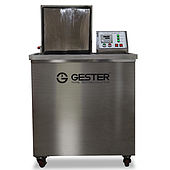
For laboratories evaluating testing equipment, GESTER lists Water-cooled Light Fastness Tester GT-3000 and Light Fastness Tester GT-D02 among its light fastness testing offerings. Equipment selection should be matched to the laboratory’s required test methods, reference materials, and operating controls.