
Light source, standard lamp
Stable, repeatable illumination is a basic requirement in optical inspection, camera evaluation, sensor testing, and laboratory calibration. When the light itself becomes a controlled test condition rather than a simple utility, choosing the right light source and standard lamp matters for measurement consistency, comparison between samples, and reliable setup validation.
This category brings together equipment used to generate defined luminance, illuminance, color temperature, or spectral output for technical testing environments. It is especially relevant for engineers working with imaging systems, display evaluation, optical components, and light-sensitive devices where source stability and uniformity directly affect results.
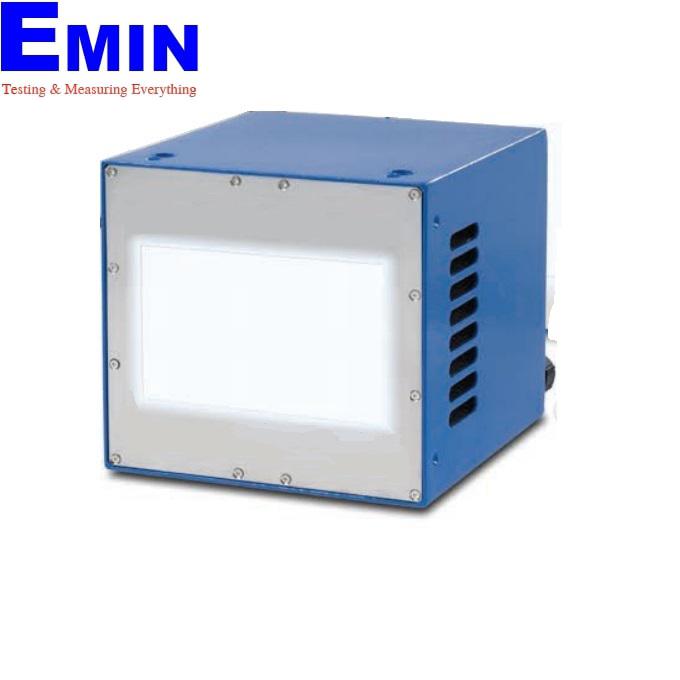
Where controlled light sources are used
In industrial and laboratory settings, a test light source is often used to reproduce a known optical condition. That may include a fixed luminance target for camera evaluation, a specific color temperature for visual assessment, or a multi-channel spectrum for sensor and material response studies. Compared with general-purpose lighting, these devices are designed for better repeatability, more predictable output, and easier integration into a measurement workflow.
Typical use cases include image sensor characterization, lens and aperture testing, visual inspection under standardized lighting, and development of optical systems that must be verified under defined conditions. In many setups, the light source is used together with a light meter or other optical measurement tools to confirm output before testing begins.
Common types of equipment in this category
This product group covers several different approaches to controlled illumination. Some units are built as luminance boxes or surface light sources with a defined emitting area, making them suitable for imaging, uniformity checks, and visual comparison tasks. Others focus on spectral flexibility, infrared output, or simulation of daylight-like conditions.
For example, the Tsubosaka LSB-1010SBW Light Source Box is aimed at controlled luminance generation over a wide range, while the Tsubosaka LU-100SCV-1 Multi-Spectral Light Source is more suitable when spectral tuning is important. For applications that require near-infrared evaluation, models such as the Tsubosaka LSB-0505FB-IR or VLB-10FBW-IR8594 provide dedicated IR output options rather than visible-light-only operation.
Why output stability and uniformity matter
In optical testing, even a small change in intensity or color balance can influence the measured response of a camera, sensor, or lens system. That is why many technical light sources include feedback control, calibration-related functions, and external communication interfaces. These features help maintain a set value and support repeatable operation across multiple tests or production batches.
Uniformity across the emitting surface is another important factor. A source with a controlled light-emitting area can reduce uncertainty during image evaluation, especially when the target fills a significant portion of the field of view. This is particularly useful when comparing device performance over time or when building a fixed inspection station with tightly defined conditions.
Examples from Tsubosaka and Kyoritsu Electric
Tsubosaka is well represented in this category with products covering visible, infrared, and multi-spectral illumination. The VLB-1411FBWC-CRI LED viewer and VLB-10FBC-CRI light source box are relevant where high color rendering and controlled brightness are needed for visual or imaging-related evaluation. The SOL-100-09A27 Artificial Sunlight Illumination is a useful example for applications that need adjustable color temperature and practical sunlight-like lighting conditions.
For broader luminance selection, the Kyoritsu Electric LB-8611A Luminance Box illustrates the role of a standard luminance source in calibration-oriented or reference-based work. Depending on the test objective, engineers may choose between compact LED-based light boxes, larger area sources, or more specialized spectral systems. The right choice depends less on product naming and more on the required optical condition, measurement method, and integration environment.
How to choose the right light source or standard lamp
A practical selection process usually starts with the required optical parameter. Some applications are driven by luminance, others by illuminance, wavelength, or correlated color temperature. If the goal is camera or display evaluation, the emitting area, brightness range, and uniformity may be the main concerns. If the target is a sensor or material response study, spectral composition or IR wavelength selection may be more important.
It is also worth checking how the source will be controlled in the real setup. USB, serial communication, pulse lighting, and software control can make a major difference in automated test systems. If the light source is part of a larger optical bench, compatibility with related equipment such as collimators or camera evaluation tools should be considered early in the specification stage.
- Required output type: luminance, illuminance, visible spectrum, or IR
- Emitting surface size and uniformity requirements
- Color temperature or wavelength selection needs
- Stability, feedback, and calibration workflow
- Communication interface for bench-top or automated use
- Mechanical size and environmental operating conditions
Applications in imaging and optical inspection
Many products in this category are closely related to camera and lens evaluation. A controlled source can be used to check sensor response, compare image quality under repeatable illumination, or create a known target for optical alignment tasks. In that context, equipment such as the Tsubosaka FD-300N Focus Tester and SMD-100T2 Aperture light amount area meter show how lighting devices often work within a wider ecosystem of optical test instruments.
If your application extends beyond illumination alone, it may also be helpful to review related solutions for camera testing or color-related inspection. This broader view is useful when building a complete station for imaging verification rather than selecting a single standalone source.
Visible light, IR, and multi-spectral options
Not all test environments need the same part of the spectrum. Visible LED sources are common in inspection and visual evaluation because they are efficient, stable, and easy to control. Infrared sources are more relevant for NIR camera development, sensor verification, and testing systems that operate outside the visible band. Multi-spectral platforms add another level of flexibility when simulation of different wavelength distributions is required.
Within this category, that difference can be seen clearly across the available examples: the LU-100SCV-1 addresses spectral control, the VLB-3020FBW3-IR8594 and LSB-0505FB-IR support IR-focused testing, and standard luminance boxes support repeatable visible-light reference conditions. Matching the source type to the detector, lens, and test objective is usually the most effective way to narrow down the selection.
Building a more reliable optical test setup
A well-chosen light source improves more than visibility. It helps create a controlled optical environment where results are easier to compare, reproduce, and document. That is especially important in R&D, quality assurance, incoming inspection, and production test lines where measurement conditions should remain stable across operators and time.
When reviewing products in this category, focus on the optical requirement first, then on control method, mechanical fit, and how the source will interact with the rest of your equipment. From compact LED luminance boxes to multi-spectral and IR solutions, this range supports a variety of optical evaluation tasks where dependable illumination is part of the measurement itself.
Get exclusive volume discounts, bulk pricing updates, and new product alerts delivered directly to your inbox.
By subscribing, you agree to our Terms of Service and Privacy Policy.
Direct access to our certified experts
