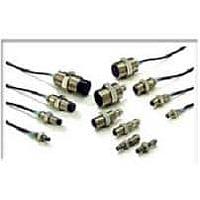
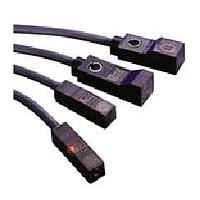
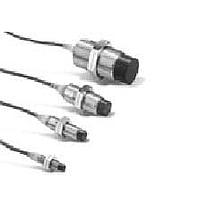
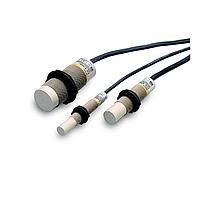
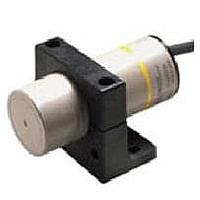
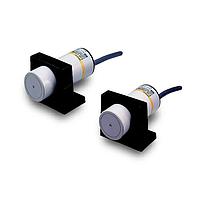
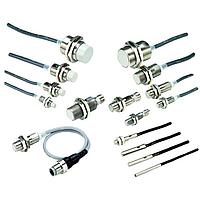
Proximity Sensors
Reliable object detection is a basic requirement in automated machines, handling systems, packaging lines, and industrial assembly. When contact-based sensing is not practical, proximity sensors provide a compact and dependable way to detect the presence, position, or approach of a target without mechanical wear at the sensing point.
This category brings together devices used for non-contact detection across a wide range of industrial environments. Whether the goal is verifying part presence, monitoring machine movement, or improving repeatability in automated processes, choosing the right sensing principle, housing style, and electrical output matters just as much as the sensor itself.
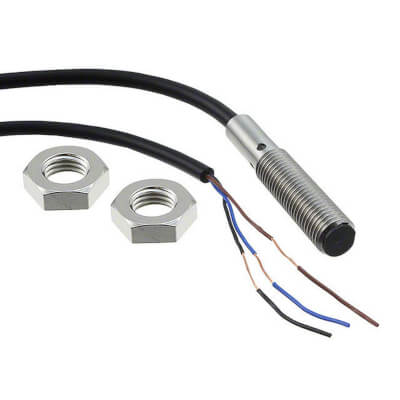
Where proximity sensors are used in industrial systems
In practical applications, these sensors are commonly installed where a controller needs a fast and repeatable switching signal. Typical use cases include part detection on conveyors, end-position feedback on cylinders and slides, counting metal components, confirming tool position, and monitoring moving machine elements.
Because they work without physical contact, proximity sensors help reduce mechanical wear and can improve service life in repetitive operations. They are especially useful where limit switches would be exposed to vibration, contamination, or frequent actuation cycles.
Common selection factors that affect performance
A good selection process starts with the sensing target. Some proximity sensors are optimized for metal detection, while others may be intended for different materials or application constraints. The target size, mounting arrangement, sensing distance, and surrounding metal all influence the actual switching behavior in the field.
Electrical integration is equally important. Buyers typically review supply voltage, output type such as PNP or other switching logic, response speed, connector style, and environmental protection. In machine-building and factory automation, details like flush mounting capability, compact cylindrical design, and IP-rated housing can make installation easier and help maintain stable operation over time.
Inductive proximity sensors in compact industrial layouts
One of the most widely used types in this category is the inductive proximity sensor, which is well suited for detecting metallic targets without contact. These sensors are frequently chosen for machine tools, indexing systems, packaging equipment, and other applications where repeatable metal detection is required in a limited installation space.
A representative example is the BAUMER IFRM 04P15A3/S05L, a compact cylindrical inductive proximity switch designed for industrial integration. With features such as flush mounting, a small form factor, M5 connector interface, and IP67 protection, this type of device illustrates how miniature sensors can still support high switching frequency and reliable installation in demanding equipment.
Leading manufacturers in this category
This range includes products from established sensor and connectivity brands used across industrial automation and OEM design. Depending on the application, buyers may compare solutions from BAUMER, Balluff, Autonics, Banner Engineering, ams OSRAM, and other recognized manufacturers shown in this category.
Each brand may address slightly different priorities such as compact installation, rugged housings, signal stability, or integration with broader automation platforms. For that reason, many engineers shortlist devices based not only on sensing distance and output type, but also on preferred supplier ecosystem, connector standards, and long-term maintenance considerations.
How proximity sensors fit into a broader sensing strategy
Proximity sensing is only one part of a complete monitoring and control architecture. In many systems, it is used alongside pressure, temperature, environmental, or flow measurement devices to provide a more complete view of machine status and process conditions.
For example, applications involving air handling, enclosure monitoring, or equipment condition tracking may also benefit from environmental sensors. In fluid and pneumatic systems, related detection tasks may extend to flow sensors & pitot tubes where process feedback goes beyond simple object presence.
Practical buying considerations for OEMs and maintenance teams
For OEM procurement, consistency across installations is often a priority. That means looking beyond the headline sensing range and checking mounting dimensions, connector compatibility, operating temperature range, indicator visibility, and protection features such as short-circuit and reverse-polarity protection where relevant.
Maintenance teams, meanwhile, usually focus on replacement speed and application fit. A sensor that matches the original housing size, mounting style, and output behavior can reduce downtime and simplify field service. In compact machinery especially, even small differences in body diameter, connector orientation, or detection distance can affect replacement success.
Choosing the right proximity sensor for your application
The best choice depends on how the sensor will be used in the real machine, not just on a specification sheet. Target material, available installation space, control input requirements, ambient conditions, and expected switching speed should all be considered together before final selection.
By comparing industrial-ready options from trusted manufacturers and reviewing the application context carefully, buyers can narrow this category to the most suitable devices for reliable non-contact detection. For machine builders, panel integrators, and MRO teams alike, the right proximity sensor helps support stable automation performance with straightforward integration.
Get exclusive volume discounts, bulk pricing updates, and new product alerts delivered directly to your inbox.
By subscribing, you agree to our Terms of Service and Privacy Policy.
Direct access to our certified experts