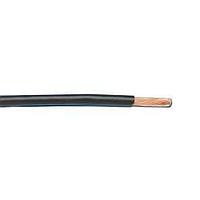
Bus Bar Wire
When electrical assemblies need a clean, direct conductor path, material choice matters just as much as routing and termination. Bus Bar Wire is commonly selected for point-to-point connections, grounding paths, internal panel wiring, and other applications where a solid, non-insulated conductor is preferred for controlled installation environments.
In this category, buyers typically look for the right balance of conductor size, material, spool length, and handling characteristics. The range here focuses on solid, non-insulated bus bar wire options used in industrial, electrical, and equipment-building environments where dependable conductivity and straightforward integration are important.
Where bus bar wire fits in electrical and industrial builds
Unlike general-purpose insulated wire, bus bar wire is typically used where the conductor itself is intended to remain accessible within a protected enclosure or controlled assembly. That makes it relevant for switchboards, control cabinets, instrumentation builds, grounding arrangements, and custom electrical distribution layouts where installers need a rigid conductor that holds its shape.
Because these products are solid and non-insulated, they are usually chosen for applications where spacing, mechanical support, and insulation strategy are already defined at the system level. If your project calls for a more flexible general wiring solution, it may be worth comparing this category with hook-up wire for internal equipment wiring that requires insulation and easier routing.
Common construction features in this category
The products shown in this range are centered around solid conductors with non-insulated construction. This combination supports stable routing and consistent geometry, which can be useful in tightly organized electrical assemblies where conductors need to maintain position instead of flexing like stranded cable.
Another recurring feature is tinned copper or annealed tinned copper conductor material. In practice, tin plating is often selected to support solderability and to help with long-term performance in assemblies where surface condition and termination quality matter. Since the wire is not insulated, users should confirm enclosure protection, spacing, and contact prevention as part of the overall design.
How to choose the right wire gauge and spool length
One of the first selection points is conductor size. This category includes very fine gauges such as 30 AWG and 32 AWG for lighter-duty signal or compact internal routing, along with mid-range sizes like 24 AWG, 22 AWG, 20 AWG, and 18 AWG that may suit a wide variety of control and electrical assembly tasks. Larger sizes such as 14 AWG, 12 AWG, 8 AWG, and 6 AWG are more relevant where higher current capacity or lower resistance is needed.
Spool length is equally important from a purchasing perspective. Shorter 100 ft spools can be practical for prototyping, maintenance stock, or low-volume production, while 500 ft and 1000 ft options are often better suited to recurring builds and higher-throughput manufacturing. Matching the spool size to your consumption pattern can help reduce waste and simplify inventory planning.
Representative options from Belden and Alpha Wire
This category includes products from Belden and Alpha Wire, two well-known names in wire and cable for industrial and electronic applications. Their presence here gives buyers access to multiple gauge and length combinations without moving outside a familiar sourcing ecosystem.
Examples include Belden 8025 0001000 in 30 AWG for fine solid conductor applications, Belden 8019 0001000 in 18 AWG for longer-run stock needs, and Belden 8011 000100 in 12 AWG where a heavier conductor may be required. On the Alpha Wire side, options such as 906 NC005 and 906 NC002 provide 6 AWG solid bus bar wire in 100 ft and 500 ft lengths, while 906 SV001 and 908 SV001 support larger-volume purchasing in heavier gauges.
Application considerations before ordering
Because bus bar wire in this category is non-insulated, system designers should evaluate how the conductor will be mounted, separated, and terminated inside the final assembly. The selection process should account for electrical load, mechanical rigidity, allowable bending radius for solid wire, and whether the installation environment introduces temperature or exposure requirements that affect material choice.
Some products in this range also indicate elevated temperature capability, which can be useful in equipment operating near heat-generating components. Where thermal demands are a key decision factor across the broader wiring system, related options in temperature wire and cable may also be relevant for insulated runs outside the bus bar wire use case.
Bus bar wire in a broader cable management strategy
Selecting the conductor is only part of a reliable installation. In many builds, bus bar wire is paired with clear routing practices, mechanical supports, labeling, and enclosure-based protection to maintain serviceability over time. A well-organized layout makes inspection easier and helps reduce the chance of unintended contact during maintenance.
For panel builders and OEMs, cable management accessories can also support cleaner assembly work. Depending on the design, related products such as cable ties may help organize adjacent insulated runs, even though the bus bar wire itself is typically installed with more deliberate spacing and support methods.
What to review on the product page
When narrowing down options, focus on the details that directly affect installation and fit: AWG size, conductor material, solid construction, outside diameter where listed, spool length, and any stated temperature information. These factors usually have a greater impact on usability than product naming alone.
It is also useful to distinguish between similar listings that differ mainly by pack length or finish description. For repeat procurement, standardizing on a small number of approved sizes can simplify maintenance, reduce purchasing variation, and make future replacements easier across multiple builds.
Find the right bus bar wire for your assembly
The right choice depends on how the conductor will be used inside the equipment, how much current it needs to carry, and how your team prefers to stock material for production or maintenance. With a selection that spans fine to heavy gauges and multiple spool lengths, this category supports both low-volume bench work and larger industrial assembly requirements.
If you are comparing options, start with the conductor size and installation environment, then review spool length and material details to match your application. That approach usually leads to a more practical selection than choosing by model name alone.
Get exclusive volume discounts, bulk pricing updates, and new product alerts delivered directly to your inbox.
By subscribing, you agree to our Terms of Service and Privacy Policy.
Direct access to our certified experts