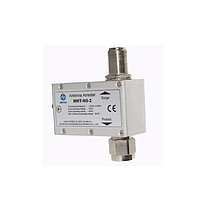
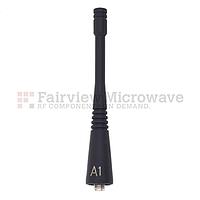
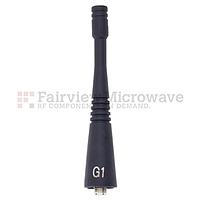
Antenna
Reliable wireless performance starts long before software configuration or network commissioning. In many industrial, embedded, and electronic systems, the antenna is the passive element that directly influences signal strength, coverage stability, and overall communication quality. Choosing the right antenna matters whether the goal is short-range device connectivity, machine-to-machine communication, remote monitoring, or integration into a broader RF design.
On this category page, buyers and engineers can explore antenna options used in electronic assemblies, communications hardware, and connected devices. While antennas are often considered alongside cables, connectors, and active radio modules, their selection should always reflect the operating environment, mounting constraints, target frequency range, and the expected balance between compact design and dependable signal behavior.
Where antennas fit in passive component and RF system design
Although an antenna is part of the passive side of the signal chain, it plays a highly practical role in real-world wireless performance. It acts as the interface between electronic circuitry and free-space electromagnetic transmission, making it essential in systems that depend on consistent send-and-receive capability.
In many designs, antenna choice is closely connected to adjacent components such as RF filters, matching networks, and interconnect hardware. Engineers may also review related categories like inductors when tuning or supporting impedance-related design requirements within the front-end section of a circuit.
Common antenna selection factors
A practical selection process usually begins with the installation scenario. Indoor electronics, control cabinets, compact embedded boards, field-installed equipment, and externally mounted communications devices all create different mechanical and electrical requirements. Size, orientation, connector style, mounting method, and enclosure material can all affect how well an antenna performs once deployed.
Another key factor is the intended wireless application. Frequency band support, radiation behavior, gain expectations, and environmental exposure should be considered together rather than in isolation. For B2B purchasing teams, it is also useful to think about repeatability across builds, compatibility with current assemblies, and whether the antenna needs to support prototyping, pilot runs, or production-scale integration.
Applications across industrial and embedded environments
Antennas are used in a wide range of connected equipment, from embedded development platforms to industrial communications infrastructure. In practical terms, they support wireless links in monitoring devices, gateways, remote sensors, edge systems, data collection equipment, and machine-level electronics where stable connectivity is part of the operating requirement.
Brands such as Advantech are commonly associated with industrial computing and connected systems, where antenna integration can be part of a larger communications architecture. In more compact electronics or prototyping workflows, suppliers such as Adafruit may also be relevant when users are building or evaluating embedded wireless concepts before moving into production-oriented hardware.
Mechanical integration and installation considerations
Many antenna issues are not caused by the RF specification alone, but by how the part is installed. Placement near metal surfaces, internal enclosure constraints, cable routing, and connector stress can all change real operating behavior. This is especially important in industrial settings where the antenna may be installed close to motors, cabinets, structural frames, or other sources of electromagnetic interference.
For this reason, buyers should evaluate the full assembly path rather than selecting by form factor only. Cable and connector ecosystems from manufacturers such as Amphenol, Amphenol RF, and HARTING can be relevant when the antenna must work as part of a complete interconnect solution. A mechanically compatible installation often reduces troubleshooting time later in the project lifecycle.
How antennas relate to other passive components
In a complete design, antennas rarely stand alone. They are often supported by impedance control, filtering, shielding strategy, and PCB-level passive components that influence signal integrity. Depending on the application, engineers may also review categories such as capacitors or matching-related passives to help stabilize or optimize RF front-end behavior.
This broader view is useful because wireless performance is often the result of the entire signal path, not only the radiating element itself. A well-matched antenna integrated into an appropriate circuit and enclosure design typically performs more predictably than a high-priority antenna selected without considering the surrounding passive network.
Supplier and brand context for B2B sourcing
For procurement teams, evaluating antennas is not only a technical task but also a sourcing decision. Brand preference may depend on required documentation, consistency across part numbers, long-term availability, and compatibility with existing design standards. Within this category, recognized names such as 3M, 3M Electronic Specialty, Amphenol, Belden, Banner Engineering, and AMP Connectors - TE Connectivity may be relevant depending on the intended application and integration approach.
When comparing options, it helps to focus on the practical requirements of the project: where the antenna will be mounted, what type of wireless link it supports, and how it interfaces with the rest of the hardware. That approach leads to clearer shortlisting than relying on brand name alone.
Choosing the right antenna for your project scope
The right choice usually comes from balancing electrical performance, mechanical fit, and system compatibility. An antenna that looks suitable on paper may still underperform if the enclosure, cable path, or surrounding components are not considered. For OEMs, panel builders, system integrators, and electronics buyers, this makes early cross-checking between design and purchasing teams especially valuable.
If you are comparing products in this category, start with the target wireless standard or frequency range, then verify mounting conditions, connector compatibility, and environmental constraints. From there, it becomes easier to narrow the field and identify options that fit both the technical design and the commercial requirements of the project.
Antenna selection is ultimately about building a reliable wireless path within the realities of your device, enclosure, and operating environment. By reviewing the category with those factors in mind, teams can make more informed choices and reduce the risk of performance issues later in deployment.
Get exclusive volume discounts, bulk pricing updates, and new product alerts delivered directly to your inbox.
By subscribing, you agree to our Terms of Service and Privacy Policy.
Direct access to our certified experts