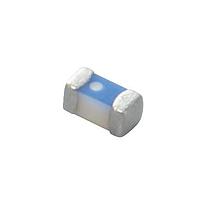
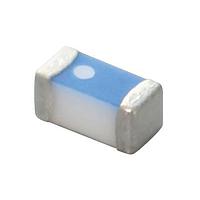
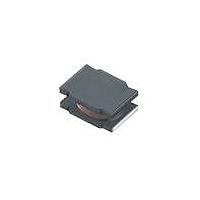
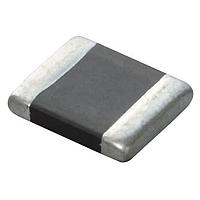
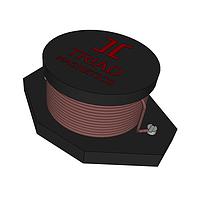
Inductors
Stable power conversion, signal conditioning, and noise control often depend on one small but essential component: the inductor. In modern electronic design, selecting the right part is not just about fitting a value into a circuit. It also involves current handling, frequency behavior, physical size, thermal performance, and the role the component plays in the wider passive network.
Inductors are widely used across power supplies, DC-DC converters, EMI suppression stages, communication circuits, and embedded systems. For buyers, engineers, and sourcing teams, this category is typically where electrical requirements meet practical concerns such as package style, integration level, and supply consistency.
Where inductors fit in electronic design
An inductor stores energy in a magnetic field when current flows through it. That basic behavior makes it valuable in switching regulators, filtering stages, impedance matching networks, and many kinds of signal and power applications. In real designs, the inductor is rarely chosen in isolation; it works alongside other passive parts such as capacitors and resistors to shape circuit response.
In power electronics, the inductor often helps smooth current and reduce ripple. In signal paths, it may support tuning, coupling, or isolation functions depending on the topology. Because of this wide application range, the category covers more than a single component style and is relevant to both high-volume manufacturing and specialized industrial design work.
Common application scenarios for inductors
Many engineers begin their search with the end use in mind. In switch-mode power supplies, an inductor is often selected for energy storage, efficiency, and acceptable temperature rise under load. In communications and interface circuits, it may be used to support filtering, line conditioning, or RF-related functions depending on the design architecture.
Industrial and embedded systems also rely on inductors for power integrity and electromagnetic compatibility. In these environments, designers typically evaluate not only inductance value, but also saturation current, DC resistance, mounting style, and operating conditions. That is especially important when the device must perform reliably in compact assemblies or thermally constrained enclosures.
How to evaluate an inductor category for sourcing
When comparing parts in this category, it helps to look beyond nominal inductance. Buyers and engineers usually review the current rating, resistance, core behavior, and package dimensions as a starting point. These factors directly influence efficiency, thermal performance, and whether a component can remain stable under real operating loads.
Another important point is the intended electrical environment. A power inductor for a regulator stage may be selected very differently from a component intended for signal filtering or EMI mitigation. If the design also includes dedicated filters, the inductor still needs to be assessed as part of the overall network rather than as a stand-alone part.
Key selection considerations in practical design
Current capability is one of the most critical parameters. If the inductor approaches saturation in normal operation, circuit efficiency and stability can degrade quickly. At the same time, low DC resistance may be desirable in many power applications to reduce losses, but it should be balanced against size and cost constraints.
Frequency behavior also matters. The same inductance value can behave differently depending on switching frequency, waveform shape, and the surrounding circuit layout. Mechanical constraints are equally relevant in production environments, especially where low-profile assemblies, automated placement, or ruggedized hardware are involved.
For that reason, procurement teams often benefit from reviewing the inductor in the context of the full bill of materials. Nearby components such as antenna parts or other sensitive signal elements can influence EMI and layout decisions, particularly in compact wireless or mixed-signal designs.
Manufacturer landscape and product ecosystem
This category may include solutions from recognized component manufacturers such as Bourns, Coilcraft, Eaton, and Delta Electronics, Inc. Different suppliers are often chosen for different strengths, such as compact power magnetics, application breadth, or compatibility with established industrial sourcing requirements.
Brand selection should be guided by fit for application rather than name alone. In many B2B purchasing workflows, the main priority is a dependable match between electrical requirements, mounting format, lifecycle needs, and documentation quality. That is why category-level browsing remains useful even when a project already has preferred vendors.
Inductors in relation to other passive components
Inductors are part of a broader passive design strategy. Their performance is closely tied to capacitor selection, resistance in the current path, and the target filtering or conversion topology. In many circuits, changing the inductor value or construction can alter ripple, transient response, and EMI behavior across the whole system.
For users comparing adjacent categories, it is helpful to understand that inductors are often chosen together with parts from the wider passive component ecosystem. If your design requires broader magnetic or energy-storage options, exploring related component groups can help clarify whether a standard inductor, a specialized filter element, or another passive solution is the better fit.
Choosing the right inductor for your project
A good selection process usually starts with the electrical function: energy storage, filtering, suppression, or signal conditioning. From there, the practical criteria become clearer, including allowable footprint, current margin, temperature expectations, and assembly method. This approach helps narrow the field more effectively than searching by inductance value alone.
Whether you are sourcing for industrial electronics, embedded hardware, communications equipment, or power conversion assemblies, a well-structured inductor category makes comparison easier and supports more confident specification decisions. Reviewing application needs, electrical limits, and system-level interactions will usually lead to a more reliable choice than focusing on a single parameter in isolation.
As projects become more compact and performance requirements become tighter, the role of the inductor remains fundamental. A careful review of this category can help teams identify components that align with both design intent and procurement realities, making it easier to build stable, efficient, and manufacturable electronic systems.
Get exclusive volume discounts, bulk pricing updates, and new product alerts delivered directly to your inbox.
By subscribing, you agree to our Terms of Service and Privacy Policy.
Direct access to our certified experts