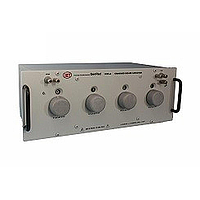
Capacitor
Stable power delivery, noise suppression, timing control, and signal integrity all depend on choosing the right passive components for the circuit. In many electronic designs, capacitors are among the most widely used parts because they support everything from energy storage and filtering to coupling, decoupling, and transient handling.
On this category page, buyers and design engineers can explore capacitor options for different application needs, whether the priority is compact board layout, power smoothing, long service life, or reliable operation in demanding environments. The right selection usually depends on electrical behavior, mounting style, operating conditions, and how the capacitor interacts with related parts such as resistors and inductors.
Where capacitors are used in electronic systems
Capacitors appear in power supplies, communication equipment, industrial control boards, embedded devices, automotive electronics, lighting systems, and many other assemblies. Their role may be simple, such as bypassing high-frequency noise near an IC, or more system-critical, such as stabilizing voltage rails and supporting pulse loads.
In practical design work, a capacitor is rarely chosen in isolation. It is typically part of a broader network that shapes impedance, controls ripple, reduces electromagnetic interference, or improves overall circuit stability. That is why engineers often evaluate capacitors alongside related component groups such as filters when optimizing board-level performance.
Key functions to consider during selection
The most appropriate choice depends on the job the component must perform. For example, a capacitor used for bulk energy storage in a power stage may be selected very differently from one intended for high-speed signal coupling or precision timing. Understanding the intended function helps narrow the available options much faster than comparing part numbers alone.
Common design objectives include energy storage, ripple reduction, DC blocking, AC coupling, smoothing after rectification, pulse support, and local decoupling near active devices. In many applications, performance factors such as capacitance value, voltage rating, ESR behavior, tolerance, leakage characteristics, and thermal stability matter more than simply choosing the highest available value.
Important criteria for capacitor sourcing
For B2B procurement and engineering teams, capacitor selection usually combines electrical requirements with supply and assembly considerations. Beyond capacitance and rated voltage, it is important to review package style, footprint compatibility, operating temperature expectations, and whether the component is intended for general-purpose, high-frequency, or power-focused use.
Reliability in the target environment is another major factor. Equipment exposed to heat, vibration, switching stress, or long operating cycles may require different capacitor technologies than products used in low-power indoor electronics. Buyers also need to consider lifecycle planning, approved manufacturer lists, and consistency across prototype, pilot, and volume production stages.
Technology range and application fit
This category covers a broad capacitor landscape rather than a single device format. Different capacitor types are suited to different electrical behaviors, board constraints, and durability targets. In real-world designs, multiple capacitor technologies are often combined within the same product to balance cost, space, response speed, and stored energy.
Some applications prioritize compactness and fast response near semiconductors, while others focus on smoothing, hold-up support, or specialized performance. For users comparing adjacent passive categories, it can also be useful to review related options such as antenna components in RF-oriented designs, where capacitor behavior can influence matching and signal path stability.
Representative manufacturers in this category
Supplier choice can be just as important as the component specification, especially for industrial production and long-term sourcing. This category includes capacitor offerings associated with recognized manufacturers such as Chemi-Con, Bourns, Eaton, and EPCOS, each relevant in different areas of passive component sourcing and circuit design.
Manufacturer selection should be based on application fit, availability, documentation quality, and consistency in production requirements. In many cases, engineering teams standardize approved sources to reduce redesign risk, simplify qualification, and maintain predictable electrical performance across multiple product revisions.
How capacitors fit into a broader passive component strategy
Capacitors work best when they are chosen as part of a complete passive design approach rather than as standalone line items. Their performance often depends on PCB placement, parasitics, surrounding circuitry, and interaction with other passive parts. A well-balanced design may use bulk capacitors at the power input, local decoupling near controllers, and additional parts to shape response across different frequency ranges.
From a sourcing perspective, organizing capacitor selection alongside adjacent categories can improve purchasing efficiency and technical review. Teams building complete BOMs often compare capacitor choices together with other passive components to align electrical targets, assembly methods, and supplier strategy across the full design.
Practical guidance for engineers and purchasing teams
If you are selecting capacitors for a new design, start with the circuit function and expected operating conditions before narrowing by package or brand. For replacement or maintenance purchasing, confirm the original electrical intent, not just the nominal capacitance value, because voltage class, impedance behavior, and temperature performance can significantly affect results.
For production buyers, it is also useful to evaluate long-term sourcing flexibility. Approved alternatives, manufacturer availability, and application-critical performance requirements should all be reviewed early, especially in designs where capacitor behavior directly affects startup stability, noise control, or service life.
Choosing the right capacitor category for your application
A strong capacitor selection process balances circuit requirements, environmental conditions, assembly constraints, and supply continuity. Whether the need is for compact board-level decoupling, energy buffering, or general signal conditioning, this category provides a practical starting point for identifying suitable options within a wider passive component ecosystem.
By comparing application needs carefully and reviewing relevant passive categories and manufacturers, engineers and procurement teams can make more confident sourcing decisions with fewer redesign issues later in the project.
Get exclusive volume discounts, bulk pricing updates, and new product alerts delivered directly to your inbox.
By subscribing, you agree to our Terms of Service and Privacy Policy.
Direct access to our certified experts