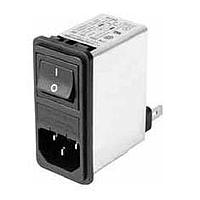
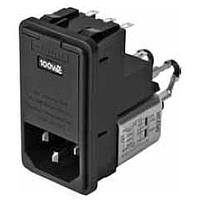
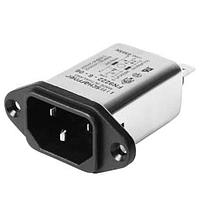
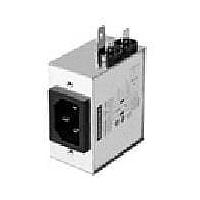
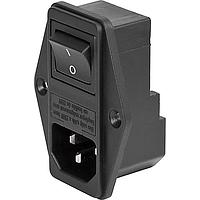
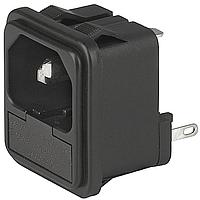
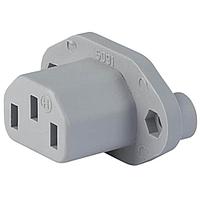
AC Power Connectors
Reliable mains connection starts with components that are easy to integrate, safe to handle, and suited to the electrical and mechanical demands of the equipment. In industrial devices, control panels, test systems, IT hardware, and commercial electronics, the right connector helps maintain stable power delivery while also simplifying assembly, maintenance, and field replacement.
AC Power Connectors are used wherever equipment must connect to line power in a controlled and repeatable way. This category is relevant for OEM design, panel building, retrofit work, and replacement sourcing, especially when engineers need to balance current handling, mounting style, cable interface, safety expectations, and compatibility with the rest of the power chain.
Where AC power connectors fit in a power system
These connectors form the interface between equipment and the AC source, whether that means a detachable inlet on a device, a mating cable-side connector, or a chassis-mounted power entry point. In practice, they are often selected as part of a broader power architecture that may also include protection, conversion, filtering, and downstream distribution.
For many projects, connector choice cannot be separated from the surrounding hardware. If the application also involves external adapters or internal conversion stages, it may help to review related options in power supplies to make sure the connector strategy aligns with voltage conversion, enclosure layout, and serviceability requirements.
Typical applications and selection priorities
AC connectors appear across a wide range of equipment: factory automation cabinets, measurement instruments, communication hardware, medical-adjacent electronics, office equipment, and industrial peripherals. In each case, the connector is expected to do more than just pass power. It also needs to support installation efficiency, secure mating, and long-term reliability under real operating conditions.
Selection usually starts with a few practical questions: Is the connector intended for panel mounting or cable mounting? Will it be plugged and unplugged frequently, or remain fixed for long periods? Is the design space tight, and does the enclosure require a specific orientation or cutout style? These considerations often matter just as much as the nominal electrical rating when narrowing down suitable parts.
Key factors when choosing AC power connectors
A good specification process focuses on the full use case rather than one headline parameter. Engineers typically evaluate mounting format, conductor termination method, current and voltage requirements, available space, and environmental exposure. Mechanical retention is also important, especially in equipment subject to vibration, operator handling, or regular service access.
Another major factor is the surrounding wiring ecosystem. Connector decisions often go hand in hand with cable management and pre-terminated assemblies. When the project requires complete line-side connection paths, it is often useful to consider compatible power cords as part of the same sourcing and design review, helping reduce mismatch risks during installation.
In higher-noise environments, engineers may also consider whether the connector interface is part of a power entry design that works with line filtering or protection components. That is especially relevant in equipment where electromagnetic compatibility, switch-mode conversion, or sensitive electronics are involved.
Manufacturer ecosystems commonly considered in this category
This category commonly includes solutions from established interconnect and power-component suppliers such as AMP Connectors - TE Connectivity, Amphenol, Hirose Electric, and Hirschmann. These manufacturers are frequently evaluated in B2B procurement because connector selection often depends on consistency of form factors, documentation quality, and suitability for industrial integration.
In applications where the AC entry point is part of a wider power-conditioning strategy, buyers may also encounter related component ecosystems from suppliers such as Corcom - TE Connectivity, EPCOS, Delta Electronics, Inc., Eaton Bussmann, and Infineon. While not every project needs all of these technologies, understanding the broader supplier landscape can make it easier to build a more coherent power-input design.
Mechanical and integration considerations
For enclosure-mounted equipment, the connector often influences panel design, internal cable routing, and assembly workflow. Cutout dimensions, rear clearance, termination access, and strain relief should all be checked early in the design process. A connector that looks electrically suitable on paper may still create avoidable production issues if it is difficult to mount or service inside a compact housing.
Connector durability also matters in real-world use. Equipment in laboratories, service environments, or portable systems may see frequent plug cycles, while fixed industrial installations may place more emphasis on secure retention and resistance to accidental disconnection. Evaluating the expected handling pattern helps avoid overdesign in some projects and under-specification in others.
Related power categories that may support system design
AC connector selection is often one part of a larger power strategy. In battery-backed systems, charging infrastructure and input connectivity may need to be considered together, especially when the equipment must transition between mains input and stored energy. In that case, browsing battery charger solutions can help clarify how front-end connection requirements relate to the charging stage.
Likewise, emerging transport and electrified platform designs may involve a mix of mains input, onboard conversion, and energy storage. Although the connector requirements are application-specific, adjacent categories such as e-mobility and energy storage can provide useful context when designing beyond a conventional fixed AC-powered device.
How buyers and engineers can narrow the shortlist
A practical shortlist usually starts with the installation method, then moves to electrical fit, mating style, and service expectations. From there, teams can compare housing format, ease of wiring, available accessories, and supplier consistency. This approach is often more efficient than starting with brand preference alone.
Application context should drive the final decision. A connector for compact commercial equipment may prioritize packaging efficiency and simple assembly, while an industrial system may require a stronger focus on retention, maintenance access, and robust field performance. Looking at the connector as part of the entire power entry path usually leads to a better long-term choice.
Final considerations
Choosing AC power connectors is ultimately about building a dependable interface between equipment and the mains source without creating unnecessary complexity in manufacturing or service. The most suitable option depends on how the device is installed, how it is used, and how the rest of the power system is structured.
For design engineers, buyers, and maintenance teams, this category is best approached as part of a complete power-input solution. By reviewing connector format, integration constraints, and related power components together, it becomes easier to select parts that support both reliable operation and smoother product lifecycle management.
Get exclusive volume discounts, bulk pricing updates, and new product alerts delivered directly to your inbox.
By subscribing, you agree to our Terms of Service and Privacy Policy.
Direct access to our certified experts