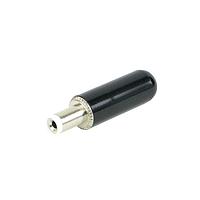
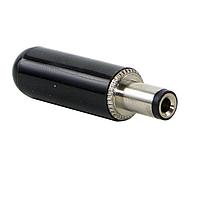
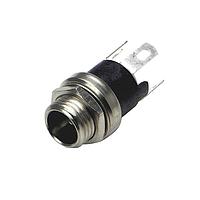
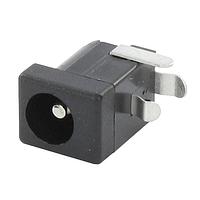
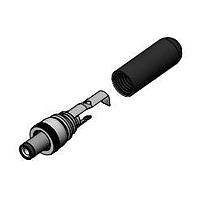
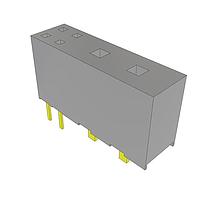
DC Power Connectors
Reliable low-voltage power distribution depends on more than voltage and current ratings alone. In many systems, the connector is the point that determines whether installation stays clean, service remains straightforward, and power delivery stays stable over time. DC Power Connectors are widely used wherever equipment needs a compact, repeatable interface for supplying direct current in commercial electronics, embedded systems, communications hardware, industrial assemblies, and many other B2B applications.
On a category page like this, the goal is usually not just to find a compatible part, but to understand which connector style fits the electrical load, mechanical layout, cable strategy, and service environment. That is why selection often involves both connector performance and the broader power ecosystem around the device.
Where DC power connectors fit in a power system
A DC connector provides the physical and electrical interface between a power source and the equipment being powered. In practical use, it sits between cables, adapters, enclosed electronics, field devices, or integrated assemblies, helping maintain a consistent connection for direct current delivery. In many designs, this interface also affects strain relief, polarity management, and ease of replacement during maintenance.
These connectors are relevant across bench equipment, control panels, portable devices, communication systems, and OEM assemblies. When paired with upstream products such as power supplies or downstream wiring solutions, they become an important part of the complete power path rather than an isolated component.
Key selection factors before choosing a connector
The first step is to match the connector to the application’s electrical requirements. Buyers typically review operating voltage, current handling, contact stability, and the expected duty cycle. Even when a connector appears mechanically compatible, it still needs to support the real load conditions of the system without introducing unnecessary resistance or connection instability.
Mechanical fit is equally important. Mounting style, mating frequency, cable orientation, available panel space, and service access all influence the right choice. In equipment that will be moved, plugged frequently, or used in tighter enclosures, retention and durability can matter as much as electrical performance. Environmental considerations such as vibration, dust exposure, or repeated handling should also be assessed early in the selection process.
Common application scenarios in B2B environments
In commercial and industrial settings, DC power connectors are often used in devices that require straightforward external power input, modular replacement, or field serviceability. They may appear in networked equipment, small control devices, operator interfaces, communications products, embedded boards, and compact instrumentation where direct current input is preferred for efficiency or system architecture reasons.
They are also relevant in mobility and battery-based systems, especially where detachable connections simplify charging, maintenance, or modular assembly. For projects that involve battery-driven designs or charging infrastructure, it can be useful to review related areas such as battery charger solutions or broader e-mobility power applications to understand how connector choices align with the full system.
Connector ecosystem: cable, assembly, and integration considerations
Choosing a DC connector is rarely just about the mating interface. Buyers also need to think about the full cable assembly, including conductor size, insulation, bend radius, termination method, and how the connector will be installed in production. A well-matched connector can simplify assembly workflows and reduce the risk of wiring errors during build or service.
In many projects, the connector must work alongside cable management and AC input components as part of a complete product architecture. For example, a design team may source DC interfaces together with power cords and internal power conversion hardware to keep procurement and integration aligned. This broader view is especially helpful in OEM and contract manufacturing environments where consistency across multiple product lines matters.
Manufacturer options and what they suggest about the category
This category includes solutions associated with established suppliers such as AMP Connectors - TE Connectivity, Amphenol Commercial Products, Belden, ITT Cannon, JAE Electronics, MEAN WELL, PHOENIX CONTACT, Raychem - TE Connectivity, Rosenberger, and Samtec. The presence of these manufacturers reflects the wide overlap between power interconnects, cable assemblies, board-level integration, and industrial connectivity requirements.
Different manufacturers are often chosen for different project priorities. Some buyers focus on board-to-cable integration, while others prioritize field wiring, enclosure interfaces, or compatibility with broader interconnect families already used in the system. For procurement teams, this makes brand filtering useful not as a shortcut to “best,” but as a way to stay consistent with approved vendor lists, technical standards, and existing assembly practices.
How to narrow down the right option for your project
A practical selection process starts with the equipment side: identify the required DC input, available mounting space, cable exit direction, and expected use conditions. Then review whether the connector needs to support repeated mating, field replacement, panel installation, or compact PCB integration. This helps reduce the list quickly without relying only on broad category labels.
Next, consider how the connector interacts with adjacent components in the system. If the product includes energy storage, backup hold-up, or transient power support, related technologies such as supercapacitors may also influence the power architecture and connector selection logic. Looking at the complete electrical path usually leads to better long-term reliability than choosing the interface in isolation.
Why this category matters for sourcing and lifecycle planning
For engineers and B2B buyers, DC connector selection affects more than initial fit. It can influence assembly speed, maintenance access, replacement cycles, and the ease of scaling the same design into multiple variants. Standardizing on the right connector approach can also simplify documentation, spare parts management, and procurement across product families.
That is why this category is best viewed as a functional part of the wider power chain. Whether you are refining a new design, replacing a legacy interface, or aligning approved components across multiple projects, a careful review of DC power connectors helps support safer integration, cleaner wiring, and more predictable system performance over time.
When comparing options, focus on real operating conditions, mating requirements, and how the connector fits into the larger power architecture. A well-chosen DC interface supports not only electrical connection, but also the practical realities of manufacturing, installation, and long-term service.
Get exclusive volume discounts, bulk pricing updates, and new product alerts delivered directly to your inbox.
By subscribing, you agree to our Terms of Service and Privacy Policy.
Direct access to our certified experts