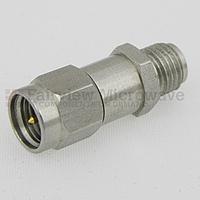
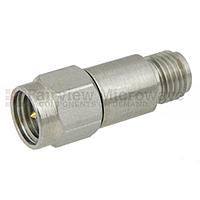
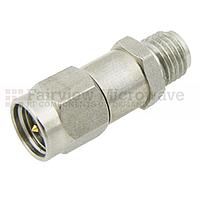
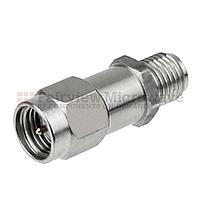
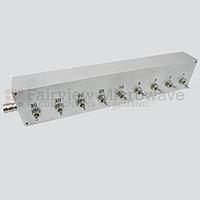
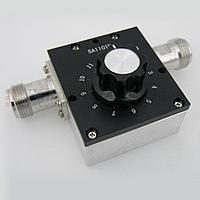
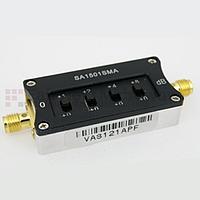
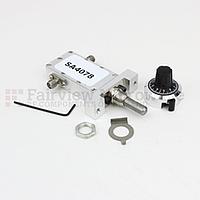
Attenuator
Managing signal level is a basic but critical part of RF design, test, and system integration. When power needs to be reduced without changing the characteristic impedance of the line, attenuators help protect instruments, improve matching, and support more stable measurements across a wide frequency range.
In RF and wireless applications, the right attenuation component can make the difference between a clean, repeatable setup and one affected by overload, reflection, or inconsistent signal behavior. This Attenuator category is relevant for engineers working on lab measurement benches, communication modules, signal chains, and production test environments.
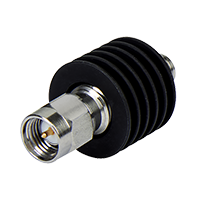
Where attenuators fit in RF and wireless systems
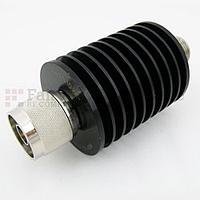
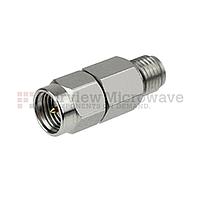
An attenuator is used to reduce signal amplitude by a defined amount while maintaining controlled impedance, commonly 50 ohms in RF environments. This makes it useful in applications such as instrument protection, signal conditioning, calibration setups, and interconnection between active devices with different power levels.
They are often found alongside other RF building blocks such as antenna components, matching elements, and active front-end devices. In practical terms, attenuators help engineers control dynamic range, reduce the risk of receiver saturation, and create more predictable test conditions.
Why attenuation matters in measurement and system protection
In many setups, signal sources, amplifiers, analyzers, and receivers do not operate at the same ideal power level. A properly selected fixed attenuator can reduce excessive input power before it reaches sensitive equipment, helping to protect ports and improve the reliability of measurement results.
Attenuation can also support better impedance behavior in certain RF paths. While it does not solve every mismatch issue, inserting attenuation in the right place can reduce the effect of reflections and smooth out the interaction between connected stages. This is especially useful in benches that include signal generators, spectrum analyzers, network analyzers, or mixed-vendor RF assemblies.
Common selection criteria for attenuators
Choosing an attenuator usually starts with a few core parameters: attenuation value in dB, frequency range, input power handling, and system impedance. These factors should be evaluated together rather than in isolation, because an attenuator that works well at low frequency or low power may not be suitable for broadband or higher-power RF use.
It is also important to consider the application context. For example, a compact in-line attenuator used in a test setup may prioritize bandwidth and connection compatibility, while another installation may focus more on thermal performance or repeatability. In broader signal-chain design, attenuators are frequently considered alongside RF integrated circuits and other components that influence gain, noise, and signal integrity.
Examples from Mini-Circuits for practical reference
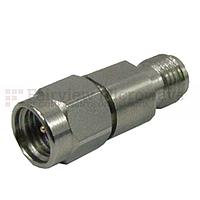
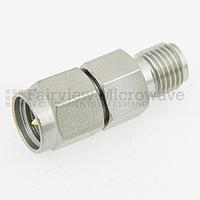
Within this category, Mini-Circuits provides representative options for fixed attenuation in 50 ohm RF systems. The Mini-Circuits BW-S10W5+ Fixed Attenuator is a 10 dB model designed for operation from DC to 18 GHz, with 5 W input power handling. This type of part can be relevant when moderate signal reduction is needed while preserving wideband usability.
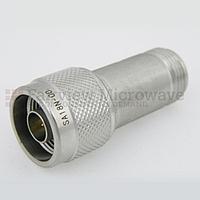
Another example is the Mini-Circuits BW-S40W2+ Fixed Attenuator, which offers 40 dB attenuation from DC to 18 GHz with 2 W input power handling. A higher attenuation value like this may be used when stronger signal reduction is required before a receiver, analyzer, or downstream stage. These examples illustrate how attenuation level and power rating must be balanced against the actual signal environment.
How attenuators support test benches and development workflows
In R&D and validation work, repeatability is often just as important as nominal performance. Attenuators help engineers build controlled signal paths, especially when switching between instruments, DUTs, and accessory modules. They can reduce the risk of accidental overdrive and make it easier to compare measurements under consistent conditions.
This becomes particularly relevant in wireless development, where test configurations may include matching networks, front-end modules, and identification or short-range communication technologies such as NFC/RFID devices. Even when the final product architecture differs from the lab setup, controlled attenuation remains a practical tool during characterization and troubleshooting.
Manufacturers and ecosystem relevance
The attenuator landscape sits within a wider RF ecosystem that includes connector specialists, semiconductor suppliers, and test equipment brands. Companies such as Amphenol, Analog Devices, ANRITSU, Broadcom, Hirose Electric, KEYSIGHT, KYOCERA AVX, Maxim Integrated, Microchip Technology, and Mini-Circuits all contribute to adjacent parts of the RF and wireless workflow, from connectivity and device design to measurement infrastructure.
For buyers and engineers, this matters because attenuator selection is rarely isolated from the rest of the system. Connector format, instrument interface, signal source characteristics, and downstream circuitry all influence what type of attenuation makes sense. Looking at the wider component environment can help narrow down more suitable choices and reduce integration issues later in the project.
What to consider before ordering
Before selecting a part, it is worth confirming the target attenuation, frequency coverage, power level, and impedance of the full signal path. Engineers should also think about where the attenuator will sit in the chain, whether it will be used continuously or only during test, and how much margin is needed for real operating conditions.
If your application involves broader RF passives and related wireless components, it can also be useful to review the wider attenuator range in context with neighboring categories. A careful selection process helps ensure the component supports both electrical performance and practical deployment needs.
Final thoughts
Attenuators play a quiet but essential role in RF systems by helping control power levels, protect instruments, and improve measurement consistency. Whether the goal is broadband lab testing, system integration, or routine signal conditioning, selecting the right attenuation value and power capability is key to dependable performance.
For technical buyers and engineers, this category offers a focused starting point for evaluating RF attenuation options that fit real-world signal chains. Reviewing application needs first, then matching them to attenuation level, bandwidth, and power handling, usually leads to a more efficient and reliable choice.
Get exclusive volume discounts, bulk pricing updates, and new product alerts delivered directly to your inbox.
By subscribing, you agree to our Terms of Service and Privacy Policy.
Direct access to our certified experts