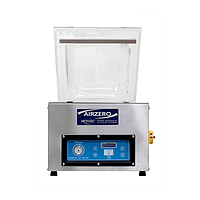
Sorting and Packing line
Modern production and fulfillment operations depend on more than speed alone. What matters is a packaging workflow that can identify products correctly, apply labels consistently, handle cartons efficiently, and support inspection or traceability without slowing the line down. That is where the Sorting and Packing line category becomes useful: it brings together equipment used across end-of-line packaging, product handling, marking, verification, and automated packing processes.
On this page, buyers can explore solutions used in manufacturing, warehousing, logistics, and process industries where packaging quality and repeatability are essential. The category covers a broad ecosystem rather than a single machine type, making it easier to compare equipment for labeling, carton handling, strapping, wrapping, barcode reading, and machine vision within one industrial context.

Where sorting and packing equipment fits in an industrial workflow
In many facilities, the final stages of production involve several connected tasks: products are grouped, inspected, labeled, packed into cases, sealed, and prepared for shipment. A sorting and packing line helps coordinate these steps so that manual intervention is reduced and output remains stable even when throughput increases.
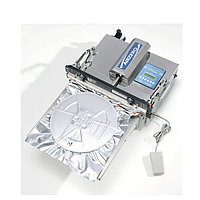
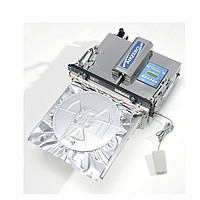
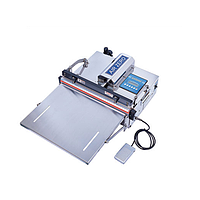
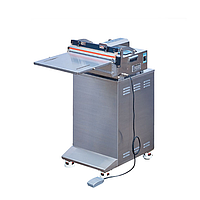
This type of category is especially relevant for companies building or upgrading end-of-line automation. Depending on the application, the line may include carton forming, case packing, sealing, labeling, barcode verification, strapping, wrapping, or vacuum packaging. Some operations also require precise dispensing, tape handling, or machine vision to support quality control and product positioning.
Core equipment groups in the category
The scope of this category is broad because packaging lines are rarely built from one machine alone. Instead, they are assembled from functional modules that solve different process requirements. Common examples include carton sealers, auto case erectors, case packers, labeling machines, strapping systems, stretch wrapping equipment, vacuum packagers, and barcode reading devices.
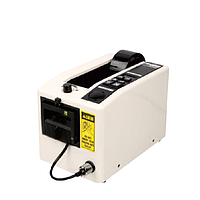
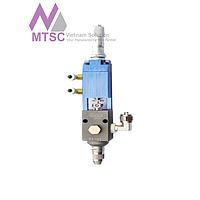
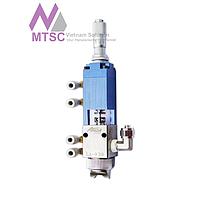
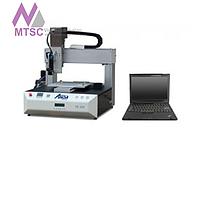
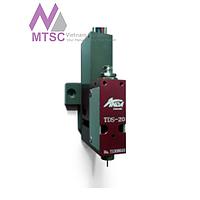
For production environments that need more specialized handling, the category also extends to component packaging equipment, tape cutting machines, and fluid dispensing technologies. Where inspection or dimensional verification is part of the process, 3D camera vision solutions can add another layer of control by helping detect part position, surface variation, or packaging consistency before products move downstream.
Labeling, identification, and product presentation
Label application is often one of the most visible and quality-sensitive steps in a packing line. A poorly dispensed or misaligned label can affect scanning, shipping accuracy, traceability, and even customer perception. Within this category, labeling-related equipment supports consistent presentation across cartons, pouches, trays, and other packaged goods.
Examples from Cab illustrate how different label dispensing formats can support line layout requirements. The Cab VS Label Dispensers are designed for vertical dispensing, while the Cab HS Label Dispensers are configured for horizontal dispensing. In practical terms, this distinction matters when engineers need to match label feed direction to conveyor orientation, product geometry, or available installation space.
For operations comparing equipment around print-and-apply or label handling tasks, it can also be useful to review the broader paper processing machinery range when upstream material preparation or related converting equipment is part of the workflow.
Machine vision and inspection in packing lines
Packaging automation increasingly relies on machine vision to improve consistency and reduce downstream errors. Vision systems can be used to confirm product presence, detect orientation, verify dimensions, support robotic guidance, or inspect whether items have been packed correctly. In more demanding applications, 3D vision provides depth information that standard 2D imaging cannot capture.
Several products in this category highlight that capability, particularly the SICK Ruler3000 series. Models such as the SICK V3DU3-020RM25A, V3DU3-060RM25A, and V3DU3-120RM25A are 3D triangulation-based machine vision devices designed for different working distances and fields of view. That range makes them relevant for both compact inspection zones and larger packaging or material-handling setups where object height, contour, or position must be measured reliably.
For buyers standardizing around one supplier ecosystem, the broader SICK portfolio can provide additional context for sensing, detection, and industrial inspection solutions used around automated lines.
How to choose the right equipment for your line
The right selection depends on the production objective, not just on the machine name. A line built for e-commerce fulfillment may prioritize label readability, barcode confirmation, and carton sealing speed. A line used in industrial manufacturing may place more emphasis on load stabilization, case forming, strapping, and integration with conveyors or robotic pick-and-place systems.
It is also important to evaluate the process sequence. For example, a labeling device should be matched to product orientation and label material. A vision system should be selected according to working distance, inspection area, and required resolution of the target feature. If packaging stability or transport protection is critical after case handling, related downstream equipment such as a heat shrinking machine may also be relevant in the wider packaging environment.
Environmental conditions matter as well. Industrial users often check enclosure protection, power requirements, connectivity, and compatibility with control systems before shortlisting equipment. For inspection hardware, mounting position, lighting behavior, and communication interfaces can be just as important as basic measurement range.
Typical industries and use cases
Sorting and packing systems are used across electronics, consumer goods, food-related packaging processes, logistics, automotive supply chains, and general manufacturing. In each case, the goal is similar: move products from final processing into a shipment-ready state with fewer handling errors and better repeatability.
In electronics and precision assembly environments, packing lines may combine barcode reading, fluid dispensing, selective processing, and compact package handling. In warehouse and distribution settings, the focus may shift toward carton forming, sealing, label application, and outbound sorting. For heavier or bulkier goods, strapping and wrapping become more important to protect loads during transport and storage.
Benefits of building a more integrated packing line
When equipment is selected as part of a coordinated line rather than as isolated machines, the result is usually better throughput control and fewer bottlenecks. Integrated packaging workflows can help reduce relabeling, minimize manual sorting mistakes, improve scan reliability, and support traceability requirements across production and shipping steps.
Another advantage is scalability. Facilities can start with one or two key functions, such as labeling and carton sealing, then add inspection, strapping, or case packing modules as throughput grows. This category structure supports that kind of planning by grouping related technologies in one place, making it easier for engineers, purchasing teams, and system integrators to compare options by function.
Final considerations for buyers
Choosing equipment for a sorting and packing application usually involves balancing product type, line speed, available space, inspection needs, and the level of automation required. A straightforward label dispensing setup may be enough for some operations, while others benefit from combining labeling, barcode reading, vision inspection, and case handling into one controlled process.
Whether you are upgrading a single station or specifying a broader packing line automation project, this category provides a practical starting point for comparing technologies from recognized industrial brands such as Cab and SICK. Reviewing the equipment in context helps identify which functions belong on your line today and which capabilities may be worth adding as production requirements evolve.
Get exclusive volume discounts, bulk pricing updates, and new product alerts delivered directly to your inbox.
By subscribing, you agree to our Terms of Service and Privacy Policy.
Direct access to our certified experts