Saw blade Machine
Cutting operations vary widely from workshop carpentry and fabrication to heavy metal processing, so buyers usually look for equipment that matches both the material and the production workflow. In this category, Saw blade Machine solutions cover compact cutting tools for general shop use as well as larger industrial saw systems designed for repeatable, controlled cutting in demanding environments.
Whether the requirement is straight cuts on wood panels, angle cuts on profiles, rail cutting, or automated metal sawing, the right machine depends on blade type, workpiece dimensions, duty cycle, and the level of operator control needed. This page brings those selection factors into one place to help engineers, procurement teams, and workshop managers compare options more efficiently.
Where these machines fit in industrial and workshop environments
Sawing equipment is used across maintenance departments, fabrication shops, production lines, and material preparation areas. In lighter applications, table saws and mitre saws are often chosen for wood, panel, and general workshop cutting where mobility, ease of setup, and fast operation matter. In heavier industrial settings, band saw systems are more suitable for structural metal, large sections, rails, or repetitive cutting tasks that benefit from stable feeding and controlled blade speed.
This broad scope is reflected in the available examples on this page. Portable and bench-oriented machines from BOSCH sit alongside larger industrial systems from Pilous, making the category relevant for both site work and fixed production environments.
Typical machine groups within this category
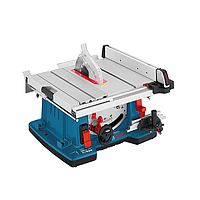
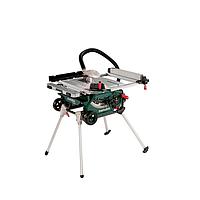
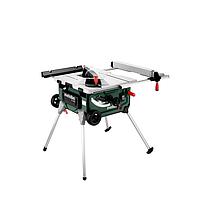
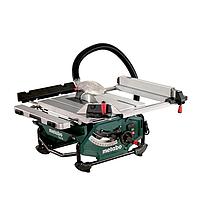
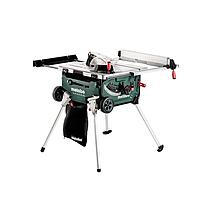
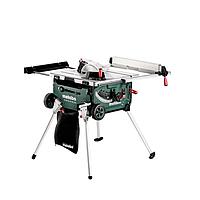
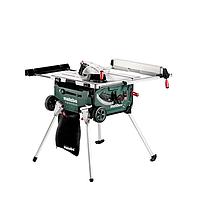
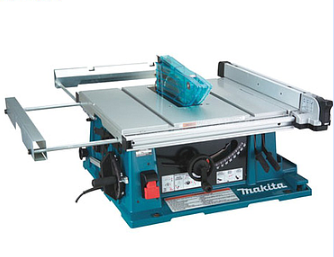
A practical way to understand this category is by the cutting task. Table saws are typically selected for ripping and sizing operations, especially where a flat work surface and consistent feed are required. A model such as the BOSCH GTS 10 XC Table Saw is an example of a compact machine format suited to workshop cutting where accuracy and operator access are important.
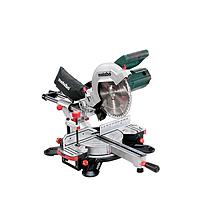
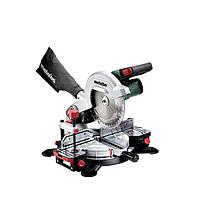
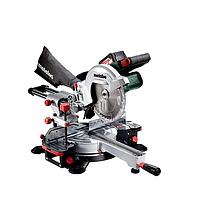
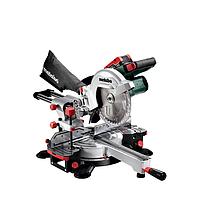
Mitre saws are more focused on cross cuts and angle cuts. The BOSCH GCM 254 Mitre Saw illustrates the type of equipment often used when bevel and mitre settings are part of the job, such as frame work, trim preparation, or repeated length cutting.
For heavier-duty industrial cutting, band saw machines become more relevant. In this category, Pilous machines cover several use cases: the IR 200 Rail bandsaw for rail-related applications, Xpert 3D series machines for cutting 3D printed metal workpieces, and ARG series machines for metal cutting with semi-automatic or CNC automatic operation.
Key selection criteria before choosing a saw machine
The first consideration is always the material and section size. Wood, printed metal parts, rails, and solid or structural metal stock place very different demands on the machine. Buyers should compare not only the nominal blade size, but also the machine’s real cutting capacity, supported cutting angles, and the stability of the workholding arrangement.
The second factor is the required production mode. For intermittent workshop use, a manual or compact machine may be sufficient. For production environments handling larger batches, a machine with semi-automatic or CNC automatic operation can improve throughput and reduce operator dependency, especially where feed control and repeated cuts are required.
It is also important to look at power supply and installation conditions. Some machines are better suited to standard workshop electrical availability, while larger industrial saws may require three-phase power and more floor space. Cooling, hydraulic support, chip handling, and maintenance access should also be considered as part of the total operating environment.
Examples of equipment shown in this category
For general workshop use, the BOSCH GTS 10 XC Table Saw and BOSCH GCM 254 Mitre Saw represent two distinct cutting approaches: one oriented toward table-based sizing and straight feed work, the other toward angle-oriented cutting with adjustable bevel or mitre settings. These are useful reference points for buyers comparing compact saw formats for wood and light fabrication tasks.
On the industrial side, Pilous provides a broader range of band saw configurations. The Pilous IR 200 Rail bandsaw is specialized for rail profiles, while the Pilous Xpert 3.0 3D, Xpert 3.3 3D, and Xpert 5.2 3D are positioned for separating 3D printed parts from printing plates in additive manufacturing workflows. This makes the category relevant not only to conventional fabrication, but also to newer production processes.
For metal processing, the Pilous ARG series includes larger dual-column systems with different levels of automation. Examples such as the ARG 330 DC CF-NC Automat, ARG 520 DC CF-NC Automat, and ARG 720 DC S.A.F. show how machine selection can scale from semi-automatic cutting to more advanced automated production cutting depending on capacity and workflow requirements.
Choosing between workshop saws and industrial band saw systems
If the application involves wood components, trim, panels, or light workshop preparation, a compact saw format is often the more practical choice. These machines are easier to install, generally faster to deploy, and suitable when operators need flexibility for changing cuts throughout the day.
If the application centers on metal stock, heavy sections, repeated production jobs, or specialized cutting tasks, band saw systems usually offer better process control. Their advantages are especially visible where cutting capacity, repeatability, and stable feeding matter more than portability. Dual-column designs are commonly associated with better rigidity in larger cutting operations.
In facilities where sawing is part of a wider production line, support equipment may also influence machine choice. For example, thermal management can matter in some industrial setups, and related categories such as industrial water chillers may be relevant depending on the process environment.
Operational considerations for long-term use
Beyond purchase price, a good saw machine should be evaluated on uptime, ease of blade changes, cleaning requirements, and how well it integrates with the shop’s actual workload. Machines used in batch production benefit from predictable feed behavior and simple maintenance routines, while general-purpose workshop saws benefit from quick adjustment and straightforward daily operation.
Cut quality and blade life are also connected to how well the machine matches the application. Blade speed, workholding stability, and cutting angle setup all influence results. In industrial environments, utilities and supporting systems can also affect reliability, particularly when compressed air, cooling, or auxiliary process equipment are involved. In that context, related solutions such as compressed air treatment equipment may support broader plant performance.
How to compare options on this page
When reviewing products in this category, start with the job requirement rather than the machine name. Define the material, maximum workpiece size, need for angle cutting, target throughput, and whether the machine will be used occasionally or as part of a continuous production process. That approach makes it easier to narrow down whether a table saw, mitre saw, rail bandsaw, 3D print cutting bandsaw, or automated metal band saw is the better fit.
It also helps to compare the level of automation and installation requirements early in the buying process. A compact workshop unit and a large dual-column automatic band saw solve very different problems, even though both belong to the same broad category. Matching the machine to the real workflow is usually more important than comparing headline power figures alone.
Final considerations
This category brings together saw machines for very different cutting tasks, from workshop wood cutting to specialized industrial metal sawing. The most effective selection usually comes from balancing application type, workpiece size, required accuracy, and operating mode rather than focusing on one specification in isolation.
By reviewing the available BOSCH and Pilous examples in context, buyers can identify whether they need a compact machine for flexible daily use or a larger system for controlled industrial throughput. A clear understanding of the material, cut style, and production volume will lead to a more suitable and sustainable investment.
Get exclusive volume discounts, bulk pricing updates, and new product alerts delivered directly to your inbox.
By subscribing, you agree to our Terms of Service and Privacy Policy.
Direct access to our certified experts