
BOLT WELDING MACHINE
Fast, repeatable stud attachment is often critical in metal fabrication, enclosure production, automotive work, and industrial assembly. When the job requires secure fastening points on sheet metal or structural parts without drilling through the base material, a BOLT WELDING MACHINE becomes a practical solution for improving productivity and consistency.
This category is intended for buyers who need equipment for welding bolts, studs, or similar fastening elements onto metal surfaces in a controlled and efficient way. Whether the priority is cleaner workflow, reduced manual rework, or better repeatability in production, choosing the right machine depends on the workpiece material, bolt size range, duty cycle, and the overall process used on the shop floor.
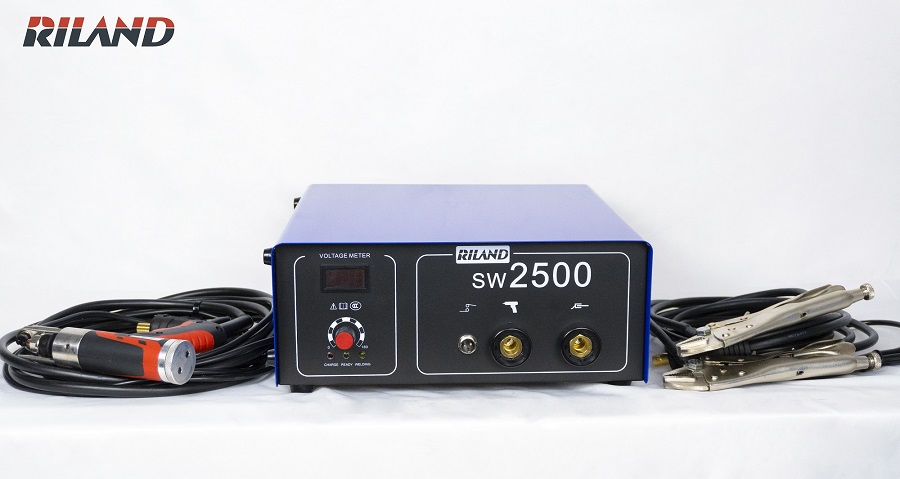
Where bolt welding machines are used
In many manufacturing environments, welded fasteners are preferred because they simplify downstream assembly. Instead of tapping holes, using separate brackets, or relying on mechanical fastening methods alone, welded bolts or studs can create permanent fixing points directly on the workpiece. This is especially useful in panel fabrication, metal cabinets, machinery frames, ducts, and industrial housings.
These machines are commonly selected when production teams need repeatable fastening with stable weld quality across multiple parts. In practice, that can help reduce processing time, improve part uniformity, and support higher throughput in workshops where attachment points must be added quickly and consistently.
How this equipment fits into a welding workflow
A bolt welding process is typically part of a broader fabrication line rather than a standalone operation. The machine is used after the base material has been prepared and before the final assembly or finishing steps. Because of that, buyers often evaluate it not only as a welding tool, but also as part of a larger production system that includes positioning, fixturing, inspection, and handling.
For some applications, bolt welding is chosen alongside other joining methods depending on material thickness, part geometry, and finish requirements. Shops that handle varied jobs may also work with a multi-process welding setup to cover different tasks within the same production area.
Key points to consider before selecting a machine
The first consideration is the type and size of fastener to be welded. Different production requirements may call for different output characteristics, process control levels, and fixture arrangements. It is also important to review the material of the base workpiece, expected weld frequency, and whether the process will be used for batch production or more variable repair and fabrication work.
Another important factor is the required level of process stability. In a high-volume environment, operators usually need equipment that supports consistent energy delivery and repeatable weld formation from part to part. Ease of setup, maintenance access, and compatibility with the surrounding production workflow can also have a major impact on long-term operating efficiency.
Comparing bolt welding with other welding methods
Not every joining job calls for the same equipment. Bolt welding is designed for attaching fastening elements directly to metal surfaces, which makes it different from processes focused on seam joining, plate work, or general-purpose arc welding. That distinction matters when specifying equipment for a workshop or production line.
For example, if the application involves sheet-to-sheet joining rather than fastener attachment, a spot welding machine may be more suitable. If the main requirement is cutting conductive metals before assembly, the workflow may also involve a plasma cutting system upstream of welding operations. Looking at the full process helps prevent mismatched equipment selection.
What buyers usually evaluate in industrial use
In B2B purchasing, machine selection is rarely based on one specification alone. Teams typically compare equipment in terms of output suitability, expected duty conditions, operator usability, and how easily the machine can be integrated into existing fabrication procedures. Reliability in repetitive operation is often more important than headline performance claims.
Safety and handling also deserve attention. Bolt welding applications can involve repetitive work on metal components of different sizes, so cable management, tool ergonomics, grounding conditions, and stable positioning all influence real-world results. For many buyers, the right choice is the machine that supports consistent daily operation rather than the most complex option on paper.
Choosing the right category for your application
If your process focuses specifically on welded fasteners, this category helps narrow the search to equipment aligned with that task. That is useful for procurement teams and technical users who want to avoid sorting through broader welding machine types that serve different production needs.
At the same time, some projects may require comparison with adjacent equipment categories. For heavier conventional welding tasks, users may also review transformer welding machines depending on the power source and application environment. Reviewing process intent first usually leads to a more efficient equipment shortlist.
Why category-level evaluation matters
On industrial purchasing pages, a good category should do more than display products. It should help users understand where a machine fits, what problem it solves, and which technical questions should be clarified before ordering. That is especially important for specialized equipment such as bolt welding machines, where the success of the application depends on matching the tool to the fastening method and production target.
By comparing workflow needs, material conditions, fastener requirements, and expected operating volume, buyers can make a more informed decision and reduce the risk of selecting equipment that does not align with the job. A well-chosen bolt welding machine supports smoother assembly, better consistency, and a more efficient metalworking process overall.
Get exclusive volume discounts, bulk pricing updates, and new product alerts delivered directly to your inbox.
By subscribing, you agree to our Terms of Service and Privacy Policy.
Direct access to our certified experts