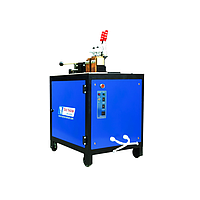
JOINT WELDING MACHINE
In metal fabrication, a reliable joint often depends on applying heat and pressure in a controlled, repeatable way. That is why many workshops and production lines use joint welding machines for tasks such as butt joining rods, wires, blades, frames, and other metal components where alignment and weld consistency matter.
This category focuses on equipment built for practical joining applications, from compact mechanical butt welders to higher-capacity systems for box joints, saw blades, and automated seam processes. If you are comparing machines for workshop use or for a more dedicated production setup, the key is to match the welding method, material size, duty cycle, and level of automation to the actual job.
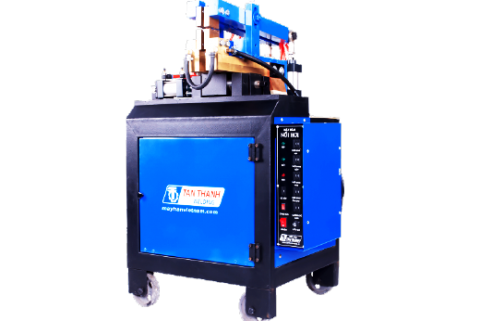
Where joint welding machines are typically used
Joint welding equipment is commonly selected when two metal parts need to be fused end-to-end or connected at a defined contact area with stable mechanical strength. Typical use cases include joining round workpieces, welding thin box sections, repairing or manufacturing saw blades, and handling repetitive seam operations in fabrication environments.
Compared with more general-purpose welding equipment, this type of machine is usually chosen for process consistency. In production settings, that can help reduce variability between operators, improve repeatability across batches, and support better control over weld quality on parts with fixed dimensions.
Main equipment types in this category
The category includes several practical machine formats rather than one single design. Mechanical butt welders are suitable for straightforward joining of round workpieces within a defined diameter range. These machines are often relevant for metal rods, wires, and similar stock where positioning and pressure control are important during the weld cycle.
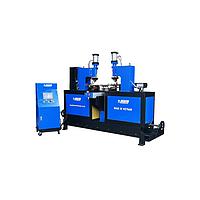
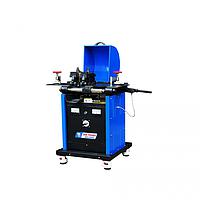
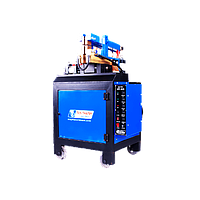
For more specialized applications, there are models designed for box joint welding, saw blade joining, and automated seam welding. A system such as the Tân Thành HÀN BẤM HỘP Joint Welding Machine (100KVA) fits applications involving thin workpieces and pneumatic control, while the Tân Thành HN-LUOICUA Saw blade welding machine (75KVA) is oriented toward blade-related joining tasks. For users evaluating resistance-based joining equipment more broadly, it can also be useful to compare related options such as a spot welding machine when the application involves localized weld points rather than a butt or seam joint.
Representative machines from Tân Thành
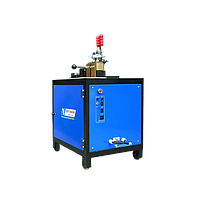
This category features equipment from Tân Thành, with models covering different workpiece sizes and production requirements. For example, the Tân Thành NC8LY mechanical joint welding machine (20KVA) is suited to smaller round workpieces, while the Tân Thành HNC10LY mechanical joint welding machine (20KVA) extends the working range to larger diameters under a similar capacity level.
For heavier joining requirements, the Tân Thành HN10 Butt Welder (20KVA) supports larger round stock within its stated range. On the higher end, the Tân Thành HNH-2 ĐẦU Dual Head Auto Seam Welding Machine (150KVA) is more aligned with automated seam welding, using features such as servo step control, PLC control, and a touch interface to support repeatable production processes. These examples show that machine selection is less about choosing the highest capacity and more about fitting the process to the geometry and throughput of the work.
How to choose the right machine
A practical starting point is the size and shape of the workpiece. Some machines in this category are intended for round materials within a specific diameter range, while others are built for flat, boxed, or blade-type parts. If the machine will be used for a narrow and repetitive task, a specialized unit often makes more sense than a general-purpose welding setup.
The next factor is power configuration and duty cycle. Several models here operate at 20KVA, while others move into higher-capacity ranges such as 75KVA, 100KVA, or 150KVA. Input power also differs by model, with single-phase and three-phase options available in the listed products. For buyers comparing broader power-source architectures, a review of transformer welding machine options may help clarify whether a simpler transformer-based setup or a more application-specific machine is the better fit.
Automation level should also be considered early. A manually oriented or mechanical machine may be sufficient for repair work, low-volume production, or operator-controlled jobs. By contrast, production lines with tighter repeatability targets may benefit from pneumatic control, servo movement, PLC-based control, or water cooling, especially where welding cycles are frequent and part dimensions are standardized.
What matters in real production environments
In daily operation, machine stability is often more important than headline specifications alone. Buyers should consider how easily the machine can be integrated into the workflow, whether the workpiece can be positioned consistently, and how the cooling and control systems support continuous use. Dimensions and machine weight may also affect installation planning, especially in workshops with limited floor space.
Maintenance and operator familiarity are equally relevant. A simpler mechanical welder may be easier to deploy for routine tasks, while a larger automatic seam system may justify its complexity only when the production volume and weld repeatability requirements are high. If your operation also handles cutting before joining, related categories such as plasma cutter equipment can be relevant in the wider fabrication workflow, even though the joining process itself remains the primary focus here.
Matching the machine to the application
There is no single machine that suits every joint welding job. Small-diameter round stock, larger rods, thin box sections, saw blades, and automated seam work all place different demands on the equipment. The most effective approach is to define the material form, target weld result, daily workload, and available electrical supply before narrowing down the selection.
For many buyers, the right solution is the one that delivers stable weld quality with a level of control that matches the production environment. In that sense, this category is best understood as a range of application-specific welding systems rather than a single interchangeable machine type.
Final considerations before ordering
When comparing products in this category, focus on the actual joining method, supported workpiece dimensions, operating power, and control style instead of relying only on capacity figures. A 20KVA mechanical unit may be entirely suitable for one workshop, while another application may require a larger pneumatic or automated system with cooling and programmable controls.
By reviewing the intended workpiece, production frequency, and level of process control needed, it becomes much easier to identify the right joint welding machine for the job. If you are sourcing for fabrication, repair, or semi-automated production, this category provides a focused starting point for selecting equipment that fits the process rather than forcing the process to fit the machine.
Get exclusive volume discounts, bulk pricing updates, and new product alerts delivered directly to your inbox.
By subscribing, you agree to our Terms of Service and Privacy Policy.
Direct access to our certified experts