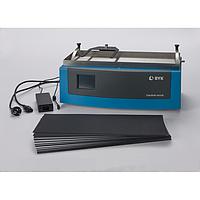
Abrasion Tester
Surface wear is one of the fastest ways a coating, printed part, packaging finish, or engineered material can fail in real service. When a product is exposed to rubbing, scrubbing, sliding contact, or repeated handling, Abrasion Tester systems help quantify that damage under controlled and repeatable conditions, making them essential for quality control, product development, and comparative material evaluation.
In this category, you can explore laboratory equipment used to assess abrasion resistance, scratch behavior, mar resistance, and washability across a wide range of industrial samples. These instruments are widely used in coatings, paints, packaging, plastics, decorative finishes, and other applications where surface durability directly affects product performance.
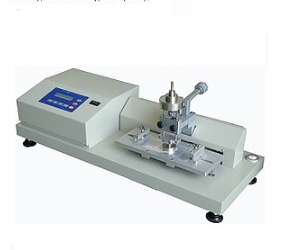
Why abrasion testing matters in industrial quality control
Abrasion testing provides a practical way to evaluate how a surface responds to repeated mechanical contact. Instead of relying only on visual inspection or theoretical material properties, a controlled test allows engineers and QC teams to compare samples under defined loads, speeds, stroke lengths, or abrasive media.
This is especially important for coated panels, printed surfaces, metal packaging, polymer components, and finished consumer or industrial goods. A reliable abrasion resistance test can help identify differences between formulations, verify process consistency, and support decisions during product qualification or failure analysis.
Common test methods covered in this category
Not all wear mechanisms are the same, so abrasion testing equipment is available in several formats. Rotary systems are commonly used when a sample must be evaluated under circular wear paths, while linear and reciprocating methods are useful when the real-world motion is closer to sliding or back-and-forth contact.
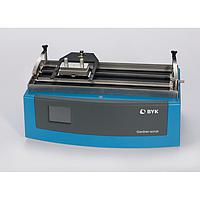
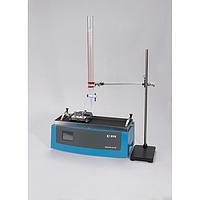
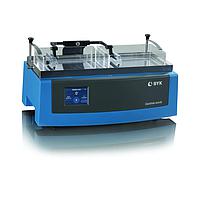
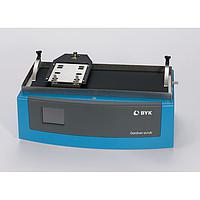
Some instruments in this category also extend beyond basic abrasion into related surface durability tests such as scratch, mar, and scrub resistance. For example, the ELCOMETER ST981700-2 Taber® Rotary Abrasers is suited to rotary abrasion work, while the TQCSheen 5750 Linear Abraser and TQCSheen AB6000 Scrub Abrasion and Washability Tester address different wear patterns and cleaning-related surface stress.
Representative equipment for abrasion, scratch, and washability evaluation
For rotary wear testing, accessories can be just as important as the base instrument. The ELCOMETER 5155 Calibrase® Wheel Set in CS-10 and CS-17 versions illustrates how abrasive action can be adapted to the severity of the test method. In practice, wheel selection influences how aggressively the sample is worn and helps align the setup with the coating or substrate being evaluated.
For more specialized studies, the range also includes systems such as the TQCSheen 6160 Oscillating Abrasion Tester for reciprocating abrasion, the TQCSheen SH0530 Mechanised Scratch Tester for controlled scratch assessment, and the TQCSheen 710 Taber's Multi-Finger Scratch / Mar Tester for multi-point surface damage evaluation. Where can durability is critical, the TQCSheen TB5000 Comprehensive Abrasion Test supports repeatable testing of coated containers under more application-specific conditions.
These examples show that the category is not limited to one test principle. It covers a broader surface durability testing workflow in which abrasion, scratching, marring, and washability may all need to be considered together.
How to choose the right abrasion tester
The most suitable instrument depends first on the failure mode you want to reproduce. If the concern is rotational wear from repeated contact, a rotary abrader may be appropriate. If the issue is one-direction or reciprocating wear, a linear or oscillating tester may provide results that better reflect the actual use condition.
Sample type is another key factor. Flat coated panels, rigid plastics, printed labels, cylindrical packaging, and soft or decorative surfaces often require different fixtures, contact tools, or abrasive media. Test force, cycle count, speed control, and stroke adjustability also matter because they determine whether the method can be aligned with your internal standard or development protocol.
It is also worth considering whether your lab needs only abrasion data or a wider capability set. In many coating and finish laboratories, users compare abrasion performance alongside scratch behavior or environmental durability. In that case, related test categories such as water vapor transmission rate systems may support broader material qualification, depending on the application.
Applications across coatings, packaging, and industrial materials
Abrasion testers are widely used in paint and coating laboratories to compare formulations, assess topcoat durability, or validate curing and process conditions. In these environments, repeatable wear testing helps determine whether a finish can withstand routine cleaning, handling, or contact during service.
Packaging and metal container manufacturers also use this type of equipment to evaluate decorated or coated surfaces that may rub during transport, filling, stacking, or consumer use. For industrial components, abrasion and scratch data can support supplier approval, incoming inspection, and product improvement programs where visual appearance and functional surface integrity are both important.
When the test setup must remain stable and free from unnecessary external influence, supporting lab components such as vibration isolator solutions can also be relevant in the broader testing environment.
Manufacturers and ecosystem context
This category includes solutions associated with recognized names in materials and coating test equipment, including TQCSheen and ELCOMETER. The available product examples reflect different testing principles rather than one single platform, which is useful for laboratories that need to match equipment capability to a specific test standard, sample geometry, or end-use condition.
Other manufacturers in the broader portfolio, such as BYK, Taber, Cometech, DUCOM, KMT, Koehler, Metronelec, and Samyon, provide additional context for buyers comparing instrument ecosystems, accessories, and lab workflows. The right choice is usually based less on brand alone and more on method fit, repeatability needs, and the type of surface damage being investigated.
What to review before ordering
Before selecting a system, it is helpful to confirm the sample dimensions, required test motion, expected load range, and whether consumables or accessories are needed for routine operation. Many abrasion methods depend heavily on contact media, wheels, tips, specimen holders, or replacement parts, so these should be considered as part of the total workflow rather than as afterthoughts.
You should also review how results will be interpreted in your lab. Some teams assess weight loss, others focus on visual damage, film breakthrough, gloss change, or comparative ranking after a fixed number of cycles. Defining the acceptance criteria first makes it easier to choose a tester that supports practical and repeatable evaluation.
Finding the right setup for your test requirement
A good abrasion testing setup should do more than generate cycles; it should reproduce a meaningful wear mechanism in a controlled way. Whether you need a rotary abrader, a linear abrader, a scratch tester, or a scrub and washability system, the best fit is the one that reflects your material, your standard, and your inspection objective.
By comparing the available instruments and accessories in this category, buyers can narrow down solutions for coatings, packaging, and engineered surfaces with more confidence. If your evaluation program also includes other physical test methods, this category can serve as part of a broader mechanical and material durability testing workflow.
Get exclusive volume discounts, bulk pricing updates, and new product alerts delivered directly to your inbox.
By subscribing, you agree to our Terms of Service and Privacy Policy.
Direct access to our certified experts