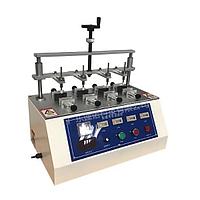
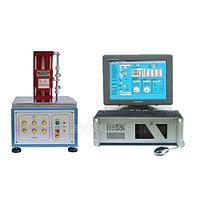
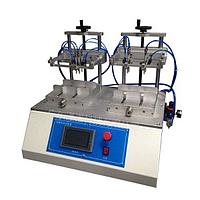
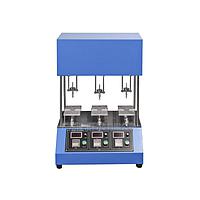
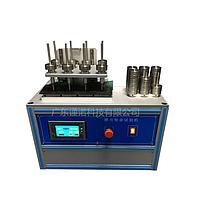
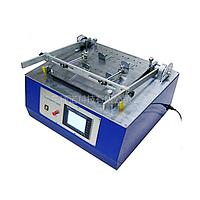
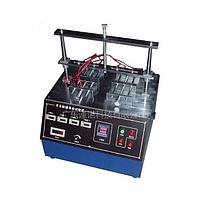
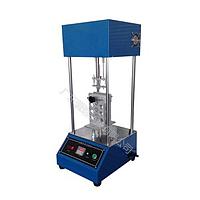
Button Life Testing Machine
Repeated pressing, switching, and tactile operation can reveal wear patterns long before a product reaches end users. In electronics manufacturing, component validation, and product development, a reliable Button Life Testing Machine helps teams evaluate durability, switching consistency, and long-cycle performance under controlled conditions.
This category focuses on equipment used for endurance testing of buttons, switches, silicone keypads, and related input components. These systems are commonly selected when engineers need repeatable motion, adjustable test speed, cycle counting, and stable test conditions for quality control, comparison testing, or design verification.
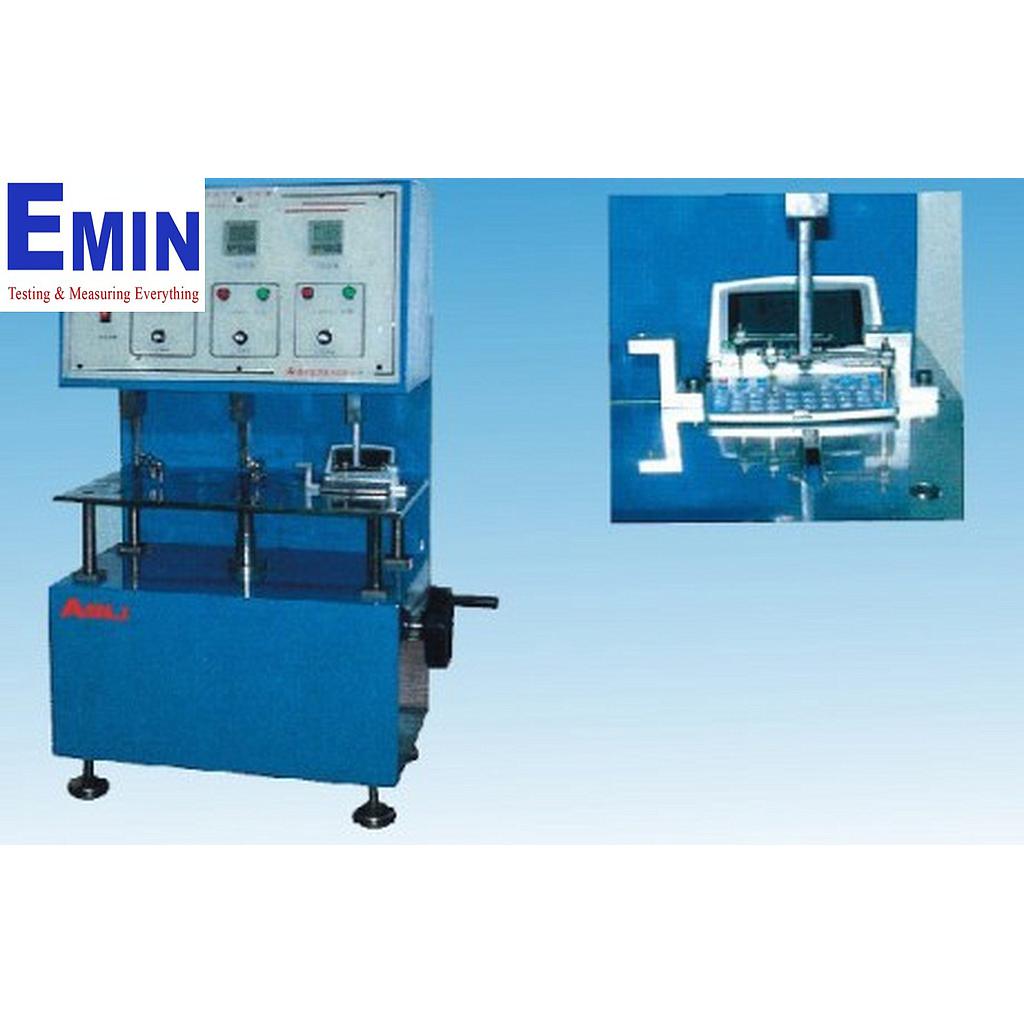
Where button life testing is used
Button and switch endurance testing is relevant across many product types, from consumer electronics and handheld devices to industrial control panels and electronic subassemblies. The goal is not only to see whether a button still works after repeated use, but also to observe how actuation behavior changes over time.
Depending on the fixture and test setup, these machines can support evaluation of membrane keys, silicone buttons, tactile switches, push buttons, and similar components. In some projects, they are also used alongside broader mechanical testing systems to build a more complete product validation workflow across different material and performance criteria.
What these machines typically evaluate
A button life tester is mainly designed to apply repeated press-and-release motion over a defined number of cycles. This makes it useful for checking endurance performance, contact stability, mechanical wear, and consistency between samples. For electronic parts, repeated operation can help uncover drift in feel, failure of contact points, or deformation of the tested structure.
Some systems in this category focus on straightforward endurance cycling, while others are suitable for more detailed feeling and force evaluation. That distinction matters when the test requirement goes beyond pass/fail durability and extends to tactile response, pressing force, travel behavior, or switch actuation characteristics.
Representative equipment in this category
Aikoh is one of the key manufacturers represented here, especially for switch and tactile evaluation applications. For endurance-oriented testing, models such as the Aikoh SR-1, SR-3, and SR-5 are designed for repeated testing of electronic parts including switches and silicone components, with different channel configurations to support varying throughput needs.
For more detailed operation analysis, the Aikoh 1910/1 and 1910/2 Feeling Tester series is suitable for measuring force or torque behavior during operation, while the GT-FL200 and GT-FL500 Switch Feeling Tester models add controlled movement and positioning capability for switch feel evaluation. These products illustrate the difference between simple cycle-life verification and more advanced characterization of tactile performance.
Other examples in the category include the JFM DEC-005 UNIVERSAL S/W ON/OFF and the TONYHK TW-271 Button Endurance Tester. These are relevant when users need repetitive opening/closing or button actuation tests with practical control over speed and test repetition.
How to choose the right button life testing machine
Selection usually starts with the test object itself. The size, shape, operating direction, stroke, and expected actuation force of the button or switch all influence fixture design and machine suitability. A small tactile switch, a silicone keypad, and a mobile-device button do not always require the same type of tester.
The next factor is the test objective. If the main purpose is long-cycle durability, a machine with clear cycle count control, stable repetitive actuation, and suitable multi-station capability may be enough. If engineers also need to study tactile response, force-displacement behavior, or contact point changes, a switch feeling tester may be the better fit.
It is also important to review test speed range, number of test channels, fixture compatibility, and whether the system supports optional software, stages, or accessories. In production or supplier quality environments, ease of setup and repeatability can be just as important as the raw test range.
Endurance testing vs. tactile feeling analysis
Although these applications are closely related, they solve different problems. Endurance testing answers the question of how a button performs after repeated actuation over time. It is commonly used to estimate service life, compare design revisions, and screen samples for early failure.
Tactile or feeling analysis looks deeper into the operating profile of a switch or button. It helps measure how the actuation changes during movement, whether the force response is consistent, and how the user’s perceived feel may shift during use. In many development projects, both approaches are valuable: one confirms durability, and the other supports user-experience and functional consistency.
Key points for B2B buyers and technical teams
For purchasing teams, engineering groups, and test labs, the most useful machine is usually the one that matches the real sample and test method rather than the broadest specification list. A practical review should include sample mounting, daily operating volume, maintenance requirements, and whether the tester fits incoming inspection, R&D, or production validation work.
Buyers comparing options in the wider testing environment may also review adjacent categories such as water vapor transmission rate test systems or furnaces when their projects involve complete material, component, and environmental evaluation workflows. For button and switch applications specifically, however, the focus should remain on repeatable actuation, proper fixture alignment, and the level of measurement detail required.
Why fixture and setup quality matter
Even a capable tester can produce poor data if the sample is not mounted correctly. Alignment between the pressing shaft and the test point affects repeatability, wear distribution, and the validity of cycle-life results. This is especially important for small switches, silicone parts, and products with narrow operating tolerances.
Optional jigs, sample fixing plates, manual X-Y stages, or tilt stages can therefore play an important role in the overall test solution. They help adapt the machine to the real part geometry and allow the operator to position the sample accurately, which is critical for both endurance testing and detailed switch feel analysis.
Supporting more consistent durability evaluation
This category brings together equipment for repetitive button and switch operation testing, from basic endurance testers to more advanced systems for feeling analysis. Whether the task is cycle-life verification, design comparison, or tactile performance assessment, choosing the right setup depends on the sample type, the level of measurement needed, and the intended test workflow.
If you are selecting equipment for electronic parts, keypads, or switch assemblies, reviewing channel count, motion control, fixture compatibility, and evaluation depth will help narrow the right solution. A well-matched button life testing machine can make durability testing more repeatable, more informative, and easier to integrate into real B2B quality processes.
Get exclusive volume discounts, bulk pricing updates, and new product alerts delivered directly to your inbox.
By subscribing, you agree to our Terms of Service and Privacy Policy.
Direct access to our certified experts