Endurance testing equipment
Repeated loading, bending, pressing, sealing, and fastening cycles can reveal weaknesses that a one-time inspection will miss. In production, quality control, and product development, endurance testing equipment helps teams evaluate how parts and assemblies behave under repeated mechanical stress, routine operation, or long-term functional use.
This category brings together equipment used to verify durability, consistency, and mechanical reliability across different applications. Depending on the product being tested, that may involve cyclic bending, torque-controlled fastening, force measurement, airtightness checks, or specialized workbench tools that support repeatable assembly and validation processes.
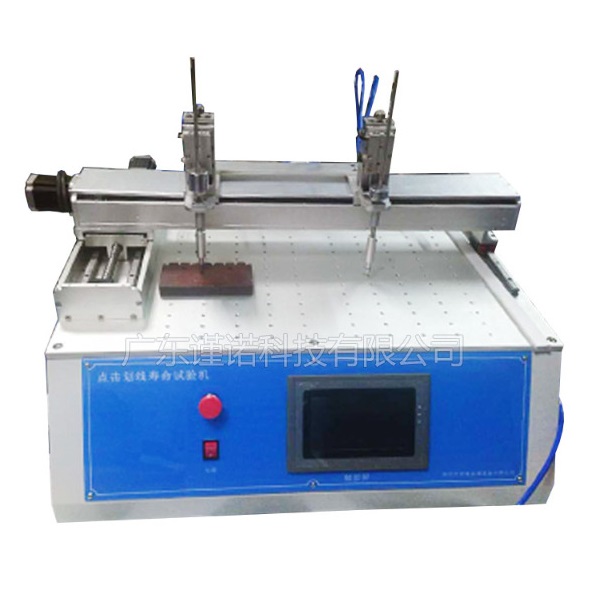
Where endurance testing equipment fits in industrial quality workflows
Endurance testing is not limited to a single industry or one test method. In practice, it covers a broad set of procedures used to assess whether a component can maintain performance after repeated use, mechanical handling, or environmental exposure during normal service conditions.
On a category page like this, the scope is best understood as a mix of durability verification, functional cycling, and supporting tools for repeatable mechanical testing or assembly control. That includes instruments for coated panel deformation, screw fastening under controlled torque, sealing validation, and force-related checks used in precision production environments.
Typical product types in this category
Some equipment in this range is clearly built for formal laboratory or QC testing, while other items support endurance-related validation on the production bench. For example, the TQCSheen SP1830 Conical Bend Test and TQCSheen SP1831 Conical Bend Test are used to evaluate the flexibility and crack resistance of coated panels by bending the sample over a conical mandrel. This type of test is especially relevant when repeated deformation or handling may affect coating integrity over time.
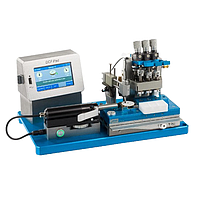
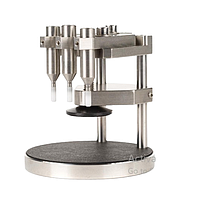
Other products from Roxer illustrate how endurance testing can extend into precision assembly and functional verification. The SMARTROX Airtightness Tester for Smartphone is suited to seal and leak-related checks, while tools such as the PVM Manual Screwing Press, PVE-M Manual Electric Screwing Press, and PVE-A Automatic Electric Screwing Press support controlled opening, closing, or fastening operations where repeatability and mechanical consistency matter.
Examples of endurance-related testing tasks
A common endurance objective is to understand how a product behaves after repeated motion, force, or assembly cycles. In coated materials, that may mean checking whether a surface film cracks, detaches, or loses adhesion after bending. In assembled products, it may involve repeated screwing and unscrewing, press fitting, or verification of closure torque over multiple cycles.
There are also applications where endurance is closely linked to sealing performance. A device may pass an initial assembly check but still fail after repeated handling or mechanical stress if its enclosure loses airtightness. Instruments like the Roxer SMARTROX help evaluate that type of risk in compact electronic products. For force-sensitive operations, the Roxer AMFP Pushers Force Measuring Device supports measurement tasks that can be important when validating repeatable mechanical action during assembly or testing.
How to choose the right endurance testing solution
The best choice depends first on the failure mode you need to investigate. If the concern is coating flexibility or substrate deformation, a conical bend instrument may be more relevant than a torque press. If the main risk is loosening, wear, sealing degradation, or assembly inconsistency, then fastening, closure, or airtightness equipment will be a better fit.
It is also important to consider sample size, force or torque range, cycle repeatability, and how the equipment will be used in your workflow. Some devices are intended for bench use in small-part assembly and inspection, while others are more suitable for standardized material testing. For related material barrier evaluation, users may also review a water vapor transmission rate test system or an oxygen permeation system when permeability and long-term package performance are part of the broader durability question.
Representative brands and application focus
TQCSheen is well known in coating and surface test applications, making it a natural fit when endurance testing involves mechanical deformation of painted or coated panels. The SP1830 and SP1831 models in this category are good examples of practical tools for assessing coating behavior under bending stress.
Roxer, by contrast, appears here through a more specialized set of bench and assembly-focused equipment. Products such as the DCAI Hands fitting machine and screwing dial feet, DPEC Dial feet screwing machine, DIAL FOOT CLOSURE tooling, and workbench supplies show how endurance-related control often depends on precise, repeatable handling tools rather than one generic tester. This is particularly relevant in small-part manufacturing where reliability is built through controlled process steps.
Why repeatability matters as much as the test itself
Useful endurance data depends on consistent test conditions. Even when the goal is simple—such as checking bending resistance, closure torque, or sealing performance—the value of the result comes from applying the same method across samples, operators, and production batches. That is why robust fixtures, stable bench tools, and clearly defined operating ranges are so important.
In many facilities, endurance verification is part of a wider mechanical test strategy rather than a standalone process. Depending on the product, users may complement these tools with equipment such as vibration isolators for stable setups or other physical test systems used to investigate long-term performance under controlled conditions.
Supporting both product development and routine inspection
During development, endurance testing helps identify weak design points before release. Engineers may compare materials, assembly methods, or closure parameters to see which configuration maintains performance after repeated operation. In this stage, flexible bench equipment and application-specific tools can be especially useful because they make iterative testing faster and more practical.
In routine production, the focus shifts toward process consistency and incoming or final quality control. The same category can therefore serve both R&D teams and manufacturing technicians: one group uses it to understand failure mechanisms, while the other uses it to reduce variability and catch defects before products leave the line.
Finding equipment that matches your test method
Because endurance testing covers several mechanical and functional scenarios, selection should start with the actual test sequence you need to run rather than with a broad product label. Think about whether you are validating coating durability, assembly torque, closure performance, sealing integrity, or force application during repetitive operations.
This category is intended to support those different use cases with practical instruments and specialized tools from manufacturers such as TQCSheen and Roxer. If you are comparing options, focus on the sample format, operating range, level of repeatability required, and how easily the equipment fits into your existing QC or production process.
Get exclusive volume discounts, bulk pricing updates, and new product alerts delivered directly to your inbox.
By subscribing, you agree to our Terms of Service and Privacy Policy.
Direct access to our certified experts