
Footwear testing equipment
Reliable footwear quality starts with repeatable test data. In product development, incoming inspection, and compliance verification, laboratories need instruments that can evaluate how shoes and components behave under flexing, compression, puncture, moisture exposure, leakage, and electrical stress. This is where footwear testing equipment becomes essential for manufacturers, material suppliers, and third-party labs working with safety shoes, casual footwear, and performance products.
This category brings together equipment used to assess durability, protective performance, and material behavior across different stages of footwear testing. Whether the focus is upper materials, soles, protective inserts, or finished shoes, the right setup helps teams compare designs consistently and identify failure risks before products reach the market.
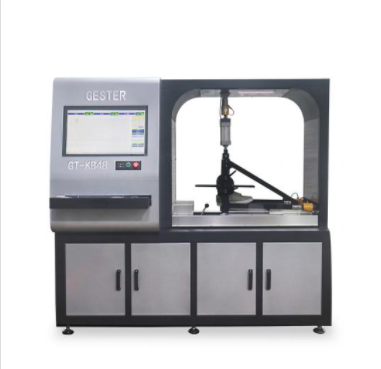
What this category is used for
Footwear testing typically combines mechanical, physical, and electrical evaluation to simulate real use conditions and verify whether a product meets internal quality targets or relevant test methods. Depending on the application, labs may need to measure flex cracking, water resistance during repeated movement, puncture resistance, toe adhesion, or dielectric behavior.
For companies building a broader materials test workflow, this category sits naturally alongside systems for barrier and environmental evaluation such as water vapor transmission rate testing. That wider context is often important when footwear performance depends not only on structural strength, but also on moisture management and material comfort.
Common test areas in footwear laboratories
A complete footwear lab rarely depends on a single instrument. Instead, testing is usually organized around several practical questions: how the upper or sole behaves under repeated bending, whether a safety shoe can resist puncture or compression, whether the finished product can keep water out during motion, and how insulating footwear performs under electrical conditions.
Flex-based methods are especially common because repeated deformation is one of the fastest ways to reveal material weakness. Instruments such as the XHinstruments XHF-145 Footwear Ross Flexometer and the XHinstruments XHF-103 series Demattia Flex Tester are used to examine cracking, fatigue, and durability in materials and components subjected to cyclic movement.
For protective footwear, force-related testing is equally important. The XHinstruments XHF-104 Footwear Compression and Puncture Tester is a good example of equipment designed for evaluating resistance to mechanical hazards. In the same workflow, laboratories may also use the XHinstruments XHF-100 Penetration-Resistant Inserts Flexing Tester to study how protective inserts hold up when repeatedly bent.
Water resistance and leak-related evaluation
Water ingress is a critical quality issue for many types of footwear, especially outdoor, work, and protective designs. Static inspection is often not enough, because leakage may only appear after repeated flexing. Dynamic water resistance testers therefore play an important role in simulating movement while the specimen is exposed to water.
Examples in this category include the XHinstruments XHF-148A Dynamic Footwear Water Resistance Tester and XHF-148B Dynamic Footwear Water Resistance Tester. These models illustrate the kind of setup used to monitor leakage behavior under controlled flexing conditions, helping labs compare constructions, seams, and material combinations in a more realistic way.
Where airtightness or sealing integrity must be checked more directly, the XHinstruments XHF-146 Leak Proofness Tester adds another layer of verification. This can be useful when troubleshooting assembly quality or validating whether a particular design maintains integrity under test pressure conditions. For related packaging or film-style barrier studies in other industries, some buyers also review an oxygen permeation system as part of a broader material evaluation environment.
Electrical and safety-focused footwear testing
Some footwear categories must be tested not only for mechanical durability but also for electrical performance. This is particularly relevant in applications involving insulating or conductive properties, where test procedures help determine whether the product behaves as intended in controlled laboratory conditions.
The XHinstruments XHF-101 Shoe Dielectric Resistance Tester represents equipment used for dielectric resistance checks, while the XHinstruments XHF-147 Electrical Conductivity Tester supports conductivity-related evaluation. Used appropriately, these instruments help labs verify product behavior for specialized footwear programs without relying on visual inspection alone.
In many industrial settings, electrical tests are part of a wider verification process that can include environmental conditioning and heat exposure. Depending on the material system under study, laboratories may also maintain equipment such as laboratory furnaces for sample preparation, conditioning, or complementary materials research.
How to choose the right equipment
The best selection process starts with the actual test objective rather than the instrument name. Buyers should first define whether they are testing finished shoes, soles, upper materials, protective inserts, or adhesive performance. From there, it becomes easier to match the machine type to the sample format, test motion, load range, or electrical requirement involved.
It is also important to review specimen capacity, control method, data readability, and whether the equipment aligns with the standards or internal procedures used by the lab. For example, if the main concern is repeated material flexing, a Demattia-style tester may be more appropriate than a whole-shoe flexing system. If the priority is safety footwear, compression, puncture, and dielectric instruments may be more relevant than moisture-focused testers.
Brand preference can matter as well when standardizing a lab environment. This category may include equipment from manufacturers such as XHinstruments, along with other recognized names listed for comparison including Jinuosh, GESTER, and Lonroy. In practice, most B2B buyers focus on test scope, repeatability, and suitability for their workflow before narrowing by brand.
Typical users and application scenarios
Footwear testing equipment is commonly used by shoe manufacturers, raw material suppliers, certification laboratories, research institutes, and quality control departments. Development teams use it to compare prototypes and material options, while production teams rely on it to detect variation between batches and reduce the risk of field failures.
Safety footwear programs often require a broader mix of tests because they must address both protective performance and long-term durability. A lab may combine compression and puncture testing, insert flexing, water resistance checks, and electrical testing in one validation route. For comfort-oriented or lifestyle products, emphasis may shift toward flex durability, adhesion, and moisture-related performance.
Building a more effective footwear test workflow
Choosing individual instruments is only one part of the process. A more effective laboratory setup also considers sample preparation, operator consistency, maintenance, and how test data will be compared across different product lines. Clear test methods and repeatable conditions are what turn equipment capability into useful quality insight.
When evaluating this category, it helps to think in terms of a complete workflow: flex testing for fatigue, dynamic water resistance for leakage under motion, mechanical resistance for protective areas, and electrical evaluation where required. Taken together, these tools support more informed decisions in footwear design, qualification, and routine quality control.
If your application involves specific shoe constructions, protective requirements, or laboratory procedures, reviewing the available models in this category can help narrow the most relevant test approach for your materials and finished products.
Get exclusive volume discounts, bulk pricing updates, and new product alerts delivered directly to your inbox.
By subscribing, you agree to our Terms of Service and Privacy Policy.
Direct access to our certified experts
