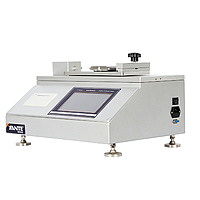
Friction Coefficient Tester
Surface interaction affects everything from packaging performance and printed materials to coatings, films, textiles, and precision mechanical components. When slip behavior, drag, or wear must be measured in a controlled way, a Friction Coefficient Tester helps quantify how two surfaces move against each other and how that behavior changes under load, speed, temperature, or contact geometry.
On this category page, buyers can compare instruments for routine coefficient of friction checks as well as more advanced tribology systems for research, product development, and failure analysis. The available range covers simple incline-style testers, motor-driven friction systems, and high-performance tribometers suited to more demanding laboratory environments.
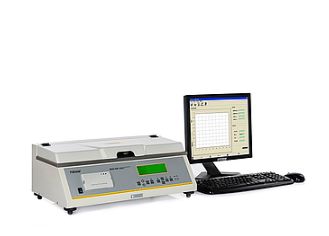
Where friction testing is used
Friction measurement is important wherever material handling, surface finish, or contact reliability influences product quality. In packaging and converting, it is often used to evaluate how films, paper, labels, or laminated sheets slide during feeding, stacking, and transport. In textiles and coated materials, it can support rubbing, slip, and surface durability studies.
For engineering materials, tribology-focused systems go further by examining friction, wear, and contact behavior under controlled movement patterns and environmental conditions. That makes this category relevant not only to quality control teams, but also to R&D laboratories, material scientists, and manufacturers validating new surface treatments or lubricated interfaces.
Different tester formats for different measurement goals
Not every application needs the same type of instrument. Some users need a practical coefficient of friction value for routine acceptance testing, while others need to observe friction response during rotation, reciprocation, heating, or vacuum operation. Choosing the right format depends on the sample type, test standard, and the level of detail required from the result.
Inclined-plane designs such as the Cometech QC-117 and QC-117A are suitable when the test method is based on measuring slip angle. For direct pull-type measurements of static and dynamic friction, systems such as the Karg FP 2260 or NOSELAB ATS SLIP tester are more aligned with packaging and sheet-material workflows. For deeper tribology studies, instruments from Anton Paar and DUCOM support more advanced contact conditions and motion control.
Representative equipment in this category
The product mix illustrates how broad friction testing can be. The HEIDON 94i-II Friction Tester Muse is a compact option for coefficient measurement with a clear focus on practical, routine use. The NOSELAB ATS SLIP tester measures the force required to initiate and maintain sliding, which is especially useful when evaluating slip properties of flat material samples.
The Karg FP 2260 Friction Peel Tester extends capability by combining friction-related testing with peel and pull functions, which can be useful in packaging and flexible material evaluation. For laboratories working on wear and tribology, the Anton Paar TRB³ Pin-On-Disk Tribometer and Anton Paar THT High Temperature Tribometer are designed for controlled friction testing across broader motion and temperature conditions. At the more specialized end, the DUCOM VT-3.0 Vacuum Tribometer supports testing in vacuum and controlled environments where standard bench instruments are not sufficient.
Key factors to consider before selecting a tester
The first step is to define what must be measured: static coefficient, dynamic coefficient, slip angle, rubbing behavior, or friction and wear under simulated operating conditions. That decision usually narrows the field quickly. A packaging lab may prioritize simple sample preparation, repeatable sled movement, and straightforward reporting, while a materials lab may need rotating or reciprocating motion, optional heating, or environmental control.
Sample size and fixture style also matter. Flat sheets, films, and papers are commonly tested with sled-based or angled platforms, while pins, disks, coated coupons, or engineered surfaces may require tribometer geometries. Buyers should also review force range, speed control, stroke or rotation options, and data interfaces when regular documentation or laboratory integration is needed.
In some workflows, surrounding test infrastructure is just as important as the tester itself. Stable mounting and reduced environmental disturbance can improve repeatability, which is why some labs also review related equipment such as vibration isolation solutions for sensitive measurement setups.
From routine quality control to advanced tribology
A basic coefficient check is often enough for incoming inspection or production release, especially when materials and test conditions are well defined. Instruments in this range are typically easier to operate and faster to deploy for repetitive tasks. They support standardized checks on slip properties, friction fastness, or comparative surface behavior between batches.
Advanced tribometers are different in purpose. They are used when friction must be studied as a function of temperature, speed, load, atmosphere, or motion pattern. Systems such as the Anton Paar THT and TRB³, as well as the DUCOM VT-3.0, are more suitable when the goal is to understand contact mechanics and wear mechanisms, not just to generate a single pass/fail value.
Typical industries and material groups
This category is relevant across packaging, plastics, paper, printing, textiles, coatings, elastomers, and industrial materials development. Film and sheet producers often test slip to ensure smooth converting and stacking behavior. Textile and dyed material applications may focus more on rubbing and friction fastness, where controlled repeated contact is necessary.
In industrial research, tribology instruments are used to compare coatings, surface treatments, and material pairs under defined loads and motion profiles. Where barrier materials are being evaluated as part of a broader packaging or material qualification process, users may also look at related methods such as water vapor transmission rate testing or oxygen permeation analysis to build a more complete performance picture.
Why manufacturer choice can matter
Different manufacturers often align with different testing priorities. Cometech provides practical coefficient of friction testers suitable for established routine methods, while HEIDON and Karg are relevant when compact operation or multifunction material testing is needed. NOSELAB ATS addresses slip-property measurement with a dedicated force-based approach.
For research-grade tribology, Anton Paar and DUCOM stand out in this category because their systems are oriented toward controlled motion, load application, and more demanding test environments. The right choice is not only about brand preference, but about matching instrument architecture to the materials, standards, and reporting depth required in your lab.
Choosing the right friction testing setup
If your main task is batch comparison of films, paper, sheets, or packaging materials, a straightforward coefficient of friction tester is usually the most efficient option. If your samples are engineering surfaces, coated parts, or material pairs that must be studied under rotation, reciprocation, heat, or vacuum, a tribometer-based solution will be more appropriate.
This category brings together both ends of that spectrum, making it easier to compare routine QC instruments with advanced tribology systems in one place. Reviewing test method, sample format, force range, motion type, and environmental requirements before shortlisting equipment will lead to a more reliable purchase decision and more meaningful test data over time.
Get exclusive volume discounts, bulk pricing updates, and new product alerts delivered directly to your inbox.
By subscribing, you agree to our Terms of Service and Privacy Policy.
Direct access to our certified experts