Furnaces
Precise thermal processing is a core requirement in many laboratories, R&D environments, and industrial testing workflows. Whether the task involves material heat treatment, sintering, controlled high-temperature experiments, or sample preparation, choosing the right Furnaces category can make a clear difference in process stability, temperature uniformity, and operator safety.
This product group brings together furnace solutions used across technical applications that demand controlled heating profiles, programmable operation, and repeatable results. From compact units for specialized laboratory work to higher-temperature systems for demanding thermal cycles, the range supports users who need dependable equipment for both routine and advanced thermal processes.
Where furnace systems are used
Laboratory and industrial furnace systems are commonly selected for applications such as calcination, ashing, sintering, annealing, thermal aging, and general-purpose high-temperature testing. In practice, the exact furnace type depends on factors such as maximum temperature, chamber geometry, heating rate, sample form, and whether the process requires a chamber or tube-based configuration.
For many users, the goal is not simply to reach a target temperature, but to maintain a controlled thermal profile over time. That is why programmable controllers, thermocouple type, insulation design, and heater construction all matter when evaluating equipment for research, quality control, and production support.
Main furnace types in this category
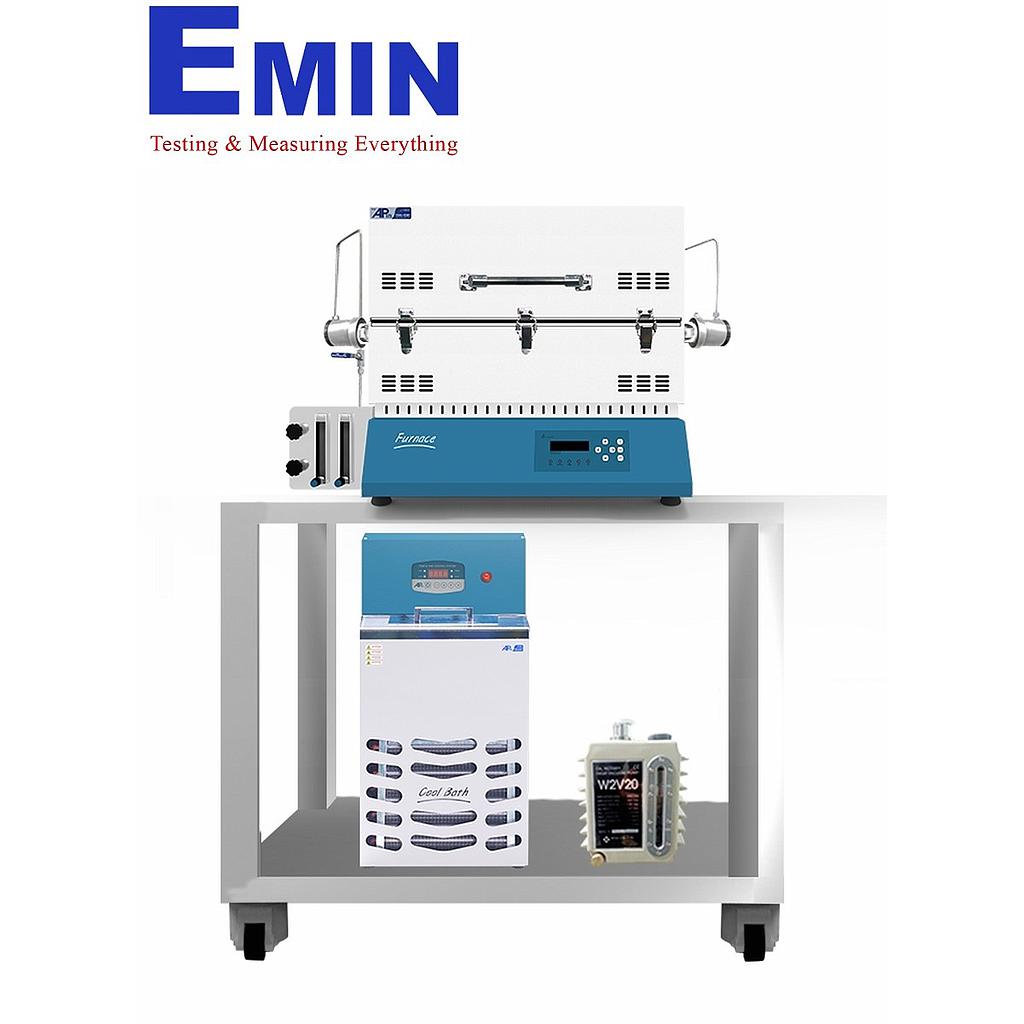
This category includes several practical furnace formats for different workflows. Tube furnaces are often chosen when samples need to be processed inside a defined tube path, making them suitable for thermal experiments where heating length and zone control are important. Models such as the DaiHan FT-1430, FT-1460, and FT-31460 illustrate how single-zone and multi-zone configurations can support different process setups.
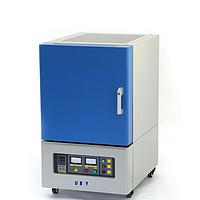
Muffle furnaces are commonly used for chamber-based heating of solids, crucibles, ceramics, and laboratory specimens. In this range, examples like DaiHan DH.FSC02005, DH.FSC02011, DH.FSC02022, and the higher-temperature DH.FSK02002 or DH.FSK02011 show how users can choose according to temperature class and chamber capacity rather than relying on one standard format for every task.
There are also more specialized thermal systems for dental and ceramic workflows. For example, the DaiHan FUR070.S and FUR180.S dental sintering furnaces support very high-temperature treatment in compact formats, while the FUR040.P compact porcelain furnace fits applications where smaller chamber size and precise temperature control are more relevant than large throughput.
How to choose the right furnace for your process
A practical starting point is the required temperature range. If your process involves moderate to high-temperature heating up to around 1,000℃, a programmable tube furnace may be suitable. If the application requires 1,450℃ or 1,650℃ class operation, a high-temperature muffle or sintering furnace becomes more relevant.
The second factor is chamber or tube geometry. Tube furnaces are useful when the sample must be heated along a defined cylindrical path, while muffle furnaces are more appropriate for batch heating in an enclosed chamber. Capacity should be matched to actual sample size and throughput, since oversized equipment may increase energy use without improving process results.
Users should also look at controller capability, heating zones, and safety functions. Programmable PID control, multi-segment profiles, over-temperature protection, over-current protection, and sensor error detection are all important when repeatability and safe operation are part of the purchasing criteria.
Examples from the current range
The current selection highlights several configurations from DaiHan, covering tube, muffle, and specialized furnace formats. For users handling linear heating applications, the FT-1430 and FT-1460 provide single-zone programmable tube furnace options, while the FT-31460 expands this concept with three heating zones for processes that need a more distributed thermal profile.
For chamber-based high-temperature work, the DH.FSC and DH.FSK series represent two useful performance levels. The DH.FSC02005, DH.FSC02011, and DH.FSC02022 are examples of programmable high-temperature muffle furnaces in the 1,450℃ class, while the DH.FSK02002, DH.FSK02005, and DH.FSK02011 extend toward 1,650℃ applications. This makes the category relevant for buyers comparing not only size, but also thermal capability and process intensity.
Specialized users in dental laboratories or ceramic-related work may also consider the FUR070.S, FUR180.S, or FUR040.P, depending on whether the application focuses on sintering or porcelain firing. These examples show that furnace selection is often driven by workflow fit, not just by maximum temperature alone.
Why programmable control matters
In many testing and processing environments, stable heating is only one part of the requirement. The ability to define ramps, dwell times, and staged thermal cycles is often just as important, especially when working with sensitive materials, ceramics, metal treatment, or application-specific thermal recipes. A programmable PID controller helps reduce operator variation and improves repeatability between batches.
This is particularly useful when processes need multiple segments or patterns across a heating cycle. Multi-zone or programmable systems can help users manage heating behavior more consistently, which is valuable in both research settings and production support tasks where the same conditions must be reproduced over time.
Related equipment and broader testing workflows
Furnaces are often part of a wider laboratory or physical testing setup rather than a standalone purchase. Depending on the application, users may also review other thermal or materials-related product groups within mechanical and physical testing equipment, especially when building out a complete testing environment.
In some labs, furnace-based preparation or conditioning is closely linked with downstream barrier, packaging, or material characterization tasks. For that reason, it can also be helpful to explore systems such as water vapor transmission rate test systems or an oxygen permeation system where thermal treatment forms part of a broader sample evaluation workflow.
What to review before ordering
Before selecting a furnace, it is worth confirming a few practical points: required maximum temperature, usable chamber or tube size, sample loading pattern, electrical supply, control needs, and the expected duty cycle. These details help narrow the choice more effectively than comparing only by model name or physical dimensions.
It is also sensible to check whether your application needs compact bench-top equipment, higher power output, or enhanced temperature class performance. For buyers working in regulated or process-sensitive environments, documentation and controller functionality may be just as important as heating capacity.
Find a furnace matched to your thermal application
This category is designed for buyers who need reliable thermal equipment for laboratory and industrial use, from compact porcelain and sintering units to programmable tube furnaces and high-temperature muffle furnaces. By focusing on process temperature, furnace geometry, control method, and operating safety, it becomes much easier to identify a model that fits the real application rather than choosing on specification headlines alone.
If your work involves repeatable high-temperature treatment, sample conditioning, or specialized thermal processing, this furnace range provides a practical starting point for comparing suitable solutions and narrowing the right system for your workflow.
Get exclusive volume discounts, bulk pricing updates, and new product alerts delivered directly to your inbox.
By subscribing, you agree to our Terms of Service and Privacy Policy.
Direct access to our certified experts