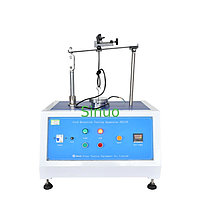
Furniture Testing Machine
In furniture manufacturing and quality control, test equipment plays a central role in verifying whether chairs, mattresses, and related products can withstand repeated use, static loads, impact, and long-term mechanical stress. Choosing the right Furniture Testing Machine helps laboratories, factories, and inspection teams evaluate product performance more consistently and align testing processes with recognized standards.
This category brings together equipment used for durability, stability, impact, and material-related evaluation in furniture applications. It is especially relevant for businesses involved in product development, compliance testing, incoming inspection, and production-line quality assurance, where repeatable test conditions are essential.
Where furniture testing machines are used
Furniture testing is not limited to final certification. In many B2B environments, these systems are used throughout the product lifecycle, from prototype comparison and design validation to routine production checks and failure analysis. A controlled test setup helps teams understand how a product behaves under realistic loading and repeated motion.
Typical users include furniture manufacturers, third-party laboratories, institutional buyers, and QA departments responsible for office seating, mattresses, and other load-bearing products. Depending on the application, the focus may be on durability testing, structural stability, seat and backrest performance, or the behavior of coatings and wood-based components used in furniture construction.
Typical test scope in this category
The category covers equipment for several practical test tasks. For seating products, this often includes backrest endurance, stability assessment, impact testing, and static load verification. For mattresses, testers can be used to evaluate softness and hardness under defined loading conditions, supporting comparative product assessment and design consistency.
Some instruments in the range also support material or surface evaluation associated with furniture production. Examples include tools for coating thickness, adhesion, gloss, hardness, or wood moisture measurement. Although these devices are not structural test rigs in the same sense as chair or mattress testers, they are still relevant within a broader furniture quality workflow because surface finish and material condition can affect both appearance and service life.
Representative equipment in the range
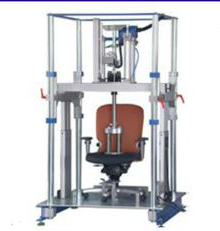
For chair-focused testing, the TONYHK TNJ-006 Chair Backrest Backward Durability Tester is an example of equipment used to simulate repeated backrest loading over extended cycles. This type of machine is useful when evaluating whether a chair maintains function after repeated use conditions similar to everyday operation in offices, institutions, or commercial environments.
Stability is another key requirement, particularly for seating intended for public or professional use. The TONYHK TNJ-046 Chair Stability Test Machine illustrates the role of controlled loading in checking whether a chair remains stable under specified force conditions. For more demanding seating assessments, the TONYHK TNJ-069 Office Impact/Leg Forward Static Load Tester supports impact and static load evaluations that are relevant when testing chair structures exposed to repeated loading and directional stress.
For bedding applications, the TONYHK TNJ-009 Softness and Hardness of Mattress Tester represents a different part of the category, focusing on mechanical feel and load response rather than seating durability. This is useful for manufacturers comparing mattress constructions or monitoring consistency between production batches.
Material and surface testing within furniture quality control
Furniture performance is influenced not only by frame design and load-bearing components, but also by the quality of coatings, panels, and wood-based materials. Instruments such as the TONYHK TNJ-039 Coating Thickness Tester, TONYHK TNJ-038 Coating Adhesion Tester, TONYHK TNJ-034 Pencil Coating Hardness Tester, and TONYHK TNJ-032 Gloss Meter support checks related to finish quality and surface durability.
For wood processing and storage control, the TONYHK TNJ-036 Wood Moisture Meter is relevant where moisture content may affect dimensional stability, finishing quality, or long-term product behavior. In supporting workflows, thermal preparation or conditioning may also matter, which is why some buyers reviewing furniture test systems also look at complementary equipment such as furnaces or laboratory ovens for controlled heating applications.
How to choose the right furniture testing machine
A practical starting point is the test objective. If the goal is compliance-oriented evaluation of seating, focus on machines designed for repeated load, backrest movement, impact, or stability testing. If the priority is process quality in finishing or materials, then coating and moisture-related instruments may be more relevant than large mechanical test frames.
It is also important to consider test method compatibility, load range, cycle control, motion repeatability, sample size, and the type of product being evaluated. Office chairs, domestic seating, and mattresses do not require the same test setup, so selecting by application is usually more effective than selecting by machine format alone. Where vibration during transport is a concern for packaged furniture or components, users may also review related solutions such as vibration isolator products as part of the broader test environment.
TONYHK as a featured manufacturer
This category prominently features equipment from TONYHK, covering both structural furniture testing and supporting instruments used in coating, moisture, and transport-related evaluation. The brand presence in this range makes it easier for buyers to review multiple test functions within a consistent sourcing path, especially when building or expanding a laboratory for furniture QA.
Rather than focusing only on one machine type, it is often useful to think in terms of a complete test workflow. A manufacturer may combine chair durability and stability systems with surface inspection tools, moisture measurement, and thermal conditioning equipment to create a more reliable quality control process from raw material to finished product.
Why this category matters for B2B buyers
In B2B purchasing, the decision is rarely about a single instrument in isolation. Buyers often need equipment that supports documented procedures, repeatable operation, and clear pass/fail interpretation for internal standards or reference methods. A well-matched testing system can reduce uncertainty in product evaluation and support communication between engineering, production, and quality teams.
This is particularly important for suppliers serving offices, hospitality, education, healthcare, or contract furnishing markets, where durability expectations can be higher and product consistency matters over large production volumes. Even when formal certification is not the immediate goal, internal test capability helps identify design weaknesses earlier and improve confidence before products reach the customer.
Short FAQ
What kinds of furniture can be tested in this category?
The range is primarily suited to furniture-related products such as chairs and mattresses, along with supporting instruments for coatings, gloss, adhesion, hardness, and wood moisture checks used in furniture production.
Are these machines only for certification labs?
No. They are also widely relevant for manufacturers, QA departments, R&D teams, and inspection workflows where repeatable mechanical or material evaluation is needed.
Can surface testing tools be considered part of furniture testing?
Yes. Surface quality, coating performance, and material condition can be important parts of overall furniture quality control, especially for finished wood, coated metal, and panel-based products.
For companies comparing test solutions for seating, mattresses, and related furniture quality tasks, this category provides a practical starting point. Reviewing the intended test method, sample type, and quality objective will make it easier to identify the most suitable equipment and build a more complete evaluation process over time.
Get exclusive volume discounts, bulk pricing updates, and new product alerts delivered directly to your inbox.
By subscribing, you agree to our Terms of Service and Privacy Policy.
Direct access to our certified experts