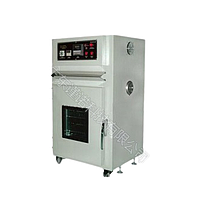
LED Aging Test Machine
Long-term reliability testing is essential when components must keep stable performance under heat, humidity, ozone, steam, or continuous light exposure. In production, incoming inspection, and R&D environments, the right LED Aging Test Machine category helps teams evaluate material degradation, solderability changes, insulation performance, yellowing, and other aging-related risks before products move into real applications.
This category brings together environmental and accelerated aging equipment used across electronics, plastics, rubber parts, insulation materials, and related industrial components. Depending on the test objective, users may need a steam aging chamber, a heat aging tester, an ozone chamber, or a UV accelerated aging system rather than one universal platform.

Why aging testing matters in industrial quality control
Accelerated aging is used to simulate long-term service conditions within a controlled laboratory timeframe. By exposing samples to elevated temperature, humidity, ozone concentration, ventilation, steam, or UV radiation, engineers can observe how materials and assemblies change before failures appear in the field.
For LED-related assemblies and adjacent electronic products, aging tests may support checks on package stability, material discoloration, sealing performance, solderability, adhesive durability, and insulation behavior. This makes the category relevant not only for finished product validation, but also for supplier qualification and process comparison between material batches.
Common equipment types found in this category
The scope of this category typically covers several different test methods. Steam aging chambers are often used where controlled high-temperature steam exposure is required, especially for solderability preparation or moisture-related conditioning. A representative example is the Metronelec Met Steam 4 Steam Ageing, which is designed for controlled steam exposure workflows.
Heat aging testers are selected when the main goal is to evaluate thermal resistance, ventilation aging, or dynamic aging under elevated temperature. In this group, models such as T-MACHINE TMJ-9711A, TMJ-9711B, and TMJ-9711E illustrate how chamber size, temperature range, and test method can vary depending on sample dimensions and test standards.
For elastomers, plastics, cable materials, and components sensitive to oxidative cracking, ozone test systems are important. Equipment such as the NOSELAB ATS ozone chambers and the MultiTech MT-OZ150 support controlled ozone exposure, with some versions also integrating humidity control for broader environmental simulation.
Typical applications across materials and product development
Although the category name points to LED aging applications, the actual use cases are wider. Laboratories and manufacturers often use this equipment for rubbers, plastics, seals, cable insulation, coatings, soldered parts, polymer housings, and other materials that must remain stable over time under environmental stress.
For example, ozone aging chambers can be useful when evaluating cracking resistance in elastic materials, while UV accelerated aging chambers are relevant for surface aging and color stability. The Bonnin BN-UV3 UV Accelerated aging test chamber is a good fit for applications where light exposure, condensation, and programmed test cycles are part of the validation process. For broader material durability workflows, users may also compare related methods such as water vapor transmission rate testing when moisture behavior is part of the overall reliability picture.
How to choose the right aging test machine
The most important selection factor is the aging mechanism you need to reproduce. If the task is solderability conditioning or steam exposure, a dedicated steam chamber is more appropriate than a dry heat oven. If the target is thermal endurance, a ventilation-type heat aging tester may be the better choice. If the failure mode is related to oxidation, cracking, or environmental attack, an ozone chamber is more relevant.
Next, review working volume, temperature range, humidity capability, concentration control, sample motion, and programmability. For instance, some ozone systems in this category provide touch-screen PLC control, rotating sample supports, and long-duration concentration monitoring, while some heat aging testers emphasize air exchange rate and dynamic turntable operation. These differences affect repeatability and determine whether a model suits routine QC, product development, or standards-based testing.
Users should also consider specimen size and throughput. A compact chamber may be sufficient for coupon testing or small parts, while larger internal dimensions are useful for multiple samples, fixtures, or mixed-batch comparison. When elevated temperature testing becomes part of a wider thermal workflow, it can also be helpful to review adjacent equipment such as industrial furnaces for other high-temperature material processes.
Examples of equipment available in this range
This category includes several practical equipment styles rather than a single machine format. On the steam side, ETSP ETSP-STH Steam Aging Chamber and Metronelec Met Steam 4 are suitable references for controlled steam exposure. On the dry and ventilation heat aging side, the T-MACHINE series and Ludatest 401A Aging Experiment Box show how users can choose between different chamber sizes and thermal test conditions.
For ozone aging, the NOSELAB ATS automatic ozone chamber range includes versions with different chamber volumes and humidity options, while the MultiTech MT-OZ150 provides another solution for controlled ozone concentration testing. For UV-related aging and yellowing studies, the Bonnin BN-UV3 and TONYHK HTE-004 represent different approaches to exposing materials to light and thermal stress under repeatable laboratory conditions.
From a sourcing perspective, buyers often start with established brands in this segment such as Metronelec, Bonnin, ETSP, NOSELAB ATS, MultiTech, and T-MACHINE, then narrow the shortlist according to test method and chamber configuration rather than brand name alone.
Features that improve repeatability and lab efficiency
In aging tests, consistency matters more than headline specifications. Useful design elements often include stable temperature regulation, uniform airflow, controlled humidity, reliable sealing, safe door locking, programmable cycles, and clear visual monitoring of the specimens during the test. These factors help reduce operator variability and improve confidence in comparison testing.
For more advanced applications, communication ports, programmable controllers, rotating fixtures, and filtration systems can make a meaningful difference. When a test requires long-duration exposure or repeated product qualification cycles, these features support better traceability and more efficient lab operation. In facilities where test equipment must be integrated with other reliability setups, mechanical protection around the installation can also be relevant, especially when vibration control is needed through solutions such as vibration isolators.
Who typically uses LED aging and environmental aging equipment?
This category is relevant for electronics manufacturers, LED and lighting suppliers, cable and wire producers, polymer material developers, third-party test laboratories, universities, and industrial R&D teams. It is especially useful where material aging behavior must be documented before product release or when a production issue requires comparison between different process settings or raw materials.
It also supports qualification work tied to customer standards, internal reliability procedures, and application-specific testing plans. Because the available machines cover multiple aging mechanisms, buyers can build a more targeted test strategy instead of relying on a generic thermal chamber for every evaluation task.
Final considerations before selecting a system
Aging test equipment is most effective when the chamber type matches the real failure mode you want to study. Before choosing a system, define the stress factor, sample format, required control range, test duration, and reporting needs. That approach makes it easier to compare options across steam, heat, ozone, and UV exposure platforms without overbuying or selecting a chamber that does not reflect the intended test method.
Within this category, users can find equipment suited to both routine screening and more demanding laboratory programs. A well-matched setup helps improve product reliability decisions, supports clearer quality documentation, and creates a more consistent basis for material and component evaluation over time.
Get exclusive volume discounts, bulk pricing updates, and new product alerts delivered directly to your inbox.
By subscribing, you agree to our Terms of Service and Privacy Policy.
Direct access to our certified experts