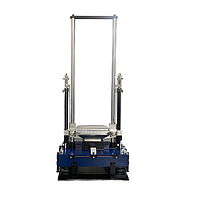
Mechanical Shock Tester
Sudden impact events during transport, handling, launch, deployment, or field use can damage assemblies long before failure is visible. For engineering teams that need to verify packaging durability, product ruggedness, or component survivability, a Mechanical Shock Tester provides a controlled way to reproduce high-acceleration shock pulses and evaluate how a device, subsystem, or packaged product responds.
This category focuses on mechanical shock test systems used in laboratory and industrial environments where repeatability, payload capacity, pulse shape, and velocity change all matter. It is especially relevant for manufacturers and test labs working with electronics, aerospace hardware, automotive components, military equipment, medical devices, and shipping validation programs.
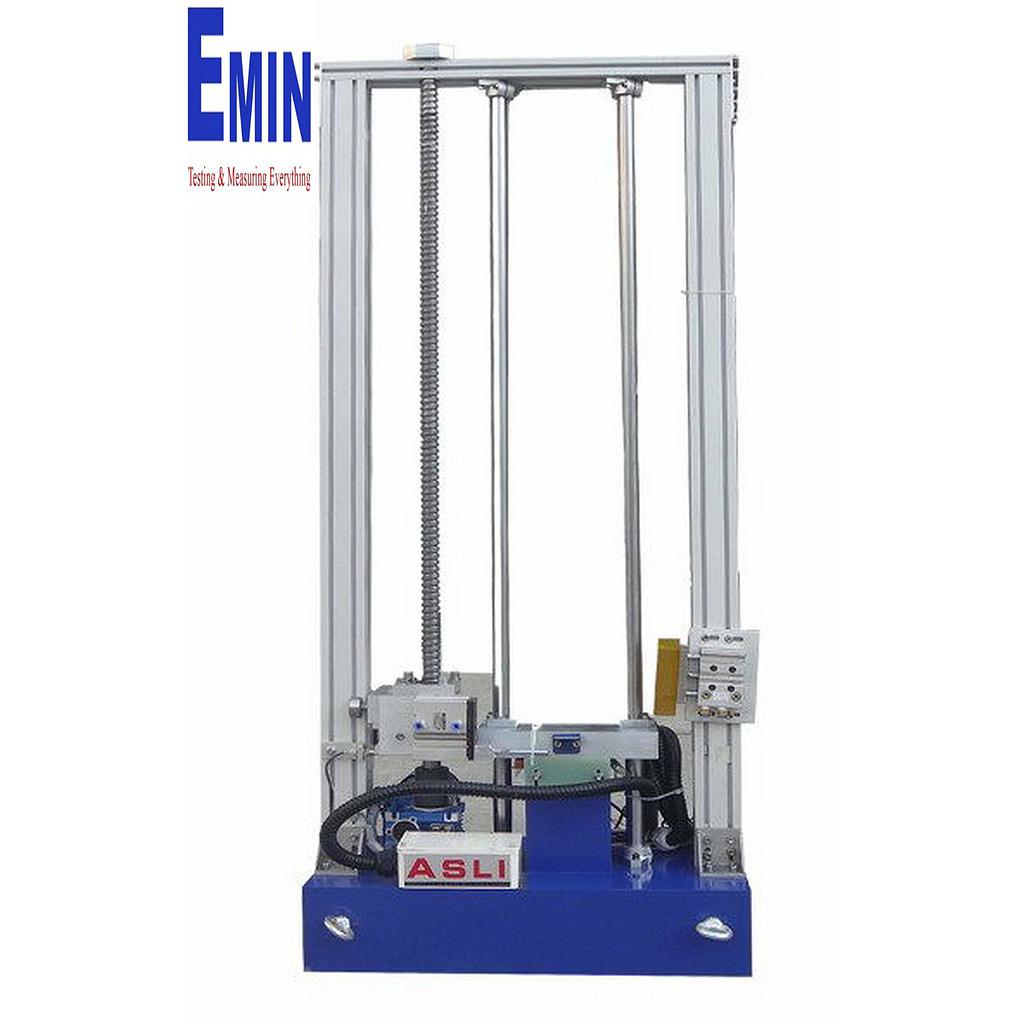
Why mechanical shock testing matters
Real-world shock events are short in duration but often severe in effect. A drop, impact, or abrupt deceleration can generate high peak acceleration that stresses solder joints, connectors, housings, mounted assemblies, batteries, and internal mechanical structures. Controlled shock testing helps teams identify weak points early, compare design revisions, and document performance under defined test conditions.
In many projects, shock testing is not only about pass or fail. It is also used to understand response behavior, verify fixture design, and correlate laboratory conditions with shipping or service environments. When combined with supporting infrastructure such as a vibration isolator, the test setup can better control external influence and improve measurement consistency.
Typical applications across industries
Mechanical shock systems are used wherever products may encounter sudden acceleration or deceleration. Common use cases include package testing for logistics, qualification of embedded electronics, evaluation of mounted instruments, and survivability checks for mission-critical assemblies. Teams may also use these systems during development to compare materials, fastening methods, cushioning concepts, or enclosure designs.
For packaged goods, the goal is often to simulate handling abuse or transit events. For components and finished devices, the emphasis may shift toward structural integrity and functional continuity after impact. In more advanced programs, shock testing is one part of a broader mechanical validation workflow that can also include thermal exposure with furnaces or other environmental and physical test methods.
How to evaluate the right shock test system
Choosing the right platform starts with the test profile. Engineers typically look at peak acceleration, pulse duration, pulse waveform, velocity change, and payload mass. Table size and mounting orientation are equally important because the fixture and test item must be supported safely without compromising the intended pulse.
Another practical factor is the type of utilities required by the system. Depending on the machine, shock testers may require plant air or high-pressure nitrogen, along with single-phase and three-phase power. Facility limitations, safety procedures, and fixture handling should therefore be considered as early as the specification stage, especially for larger payloads or high-g systems.
Product range examples in this category
This category includes systems suited to very different DUT sizes and test severities. At the compact end, the Lansmont P23 Performance shock test system and Lansmont P30 Performance shock test system are relevant for smaller payloads where higher acceleration levels are needed. These formats are often considered for electronics, subassemblies, and compact hardware requiring short-duration shock pulses.
For broader table dimensions and heavier payload requirements, larger systems such as the Lansmont P55 Performance shock test system, Lansmont P65/81 Performance shock test system, and Lansmont P95/115 Performance shock test system provide more fixture space and capacity. Where especially large articles or heavier test setups are involved, models such as the Lansmont P122 Shock Test System or Lansmont 152 Shock Test System illustrate the upper end of the category in terms of table area and supported mass.
If the test program focuses on repetitive events with smaller payloads, the Lansmont HC18 High cycle shock test system and Lansmont HC23 High cycle shock test system represent a different use case within the same ecosystem. These are suitable examples of how shock testing needs can vary between general product qualification, package testing, and high-cycle durability studies.
Leading manufacturers and platform considerations
Lansmont is a key reference point in this category, with systems covering a wide span of payloads, table sizes, and acceleration ranges. The available examples in this category show a progression from compact high-g systems to larger shock platforms designed for heavier test items and more demanding fixture arrangements.
King Design is also included as a manufacturer context for buyers comparing suppliers in the mechanical shock testing space. In practice, brand evaluation should not be based on name alone. Engineering teams usually compare machine architecture, controllable pulse options, footprint, utility requirements, operator workflow, and compatibility with their fixture and instrumentation strategy.
What to consider before ordering
Before selecting a system, it helps to define the DUT envelope, total mounted weight, required acceleration range, and target waveform. A mismatch between payload and system capability can limit usable pulse performance, while an undersized table may complicate fixturing or restrict the test orientation. It is also wise to account for future projects if the lab expects changing product sizes or more stringent qualification requirements.
Buyers should also review how the shock tester will fit into the full validation environment. Instrumentation, data acquisition, fixture design, operator safety, and floor space can all influence the final choice. For some labs, adjacent categories such as gas cylinder test and maintenance equipment may also be relevant from a facility planning perspective, particularly where compressed gas handling is part of the overall test infrastructure.
Mechanical shock testing in a broader quality workflow
A shock test result is most useful when it is linked to a wider verification plan. Development teams often combine impact testing with vibration, environmental exposure, packaging assessment, and post-test inspection to understand not only whether failure occurred, but why it occurred. This approach supports stronger root-cause analysis and more practical design improvements.
For procurement and engineering users browsing this category, the main value lies in aligning shock severity, payload, fixture space, and facility conditions with the intended application. Whether the requirement is a compact high-g platform or a larger system for heavier assemblies, the right configuration depends on the actual test objective rather than on headline numbers alone.
Find a suitable mechanical shock tester for your test program
The systems shown in this category are intended for controlled impact simulation across a broad range of engineering applications. By comparing payload capacity, table dimensions, acceleration capability, and utility requirements, buyers can narrow the shortlist to machines that fit both their current DUTs and their long-term validation plans.
If you are building or expanding a physical test lab, this category provides a practical starting point for selecting a mechanical shock testing solution that matches your product type, test method, and facility setup. A well-chosen system helps make shock qualification more repeatable, more informative, and easier to integrate into day-to-day engineering work.
Get exclusive volume discounts, bulk pricing updates, and new product alerts delivered directly to your inbox.
By subscribing, you agree to our Terms of Service and Privacy Policy.
Direct access to our certified experts