plastic testing equipment
Material behavior often changes long before a visible failure appears. In plastics manufacturing, packaging, compounding, and product development, reliable test data helps teams understand flow, curing, thermal response, permeability, and long-term performance before material reaches production or final use. That is why plastic testing equipment plays a central role in quality control and R&D environments.
This category brings together instruments used to evaluate how plastic materials behave under defined process and laboratory conditions. Depending on the application, testing may focus on viscosity, gel time, heat exposure, barrier performance, or other physical properties that influence process stability and finished product quality.
Why testing matters in plastics processing
Plastics are rarely judged by appearance alone. A resin, compound, adhesive, or thermoset formulation may look acceptable while still showing poor flow behavior, inconsistent curing, or unstable response to temperature. In practical terms, this can lead to uneven molding, coating defects, shortened pot life, or variation between production batches.
Using dedicated instruments allows engineers and lab personnel to compare materials under repeatable conditions. The goal is not only pass/fail inspection, but also a better understanding of processability, product consistency, and how a formulation responds when temperature, shear, or time changes during manufacturing.
Common test objectives in this category
Plastic testing can cover a wide range of material properties, from rheological behavior to thermal resistance and barrier performance. For many users, the right equipment depends on whether they are validating incoming raw materials, optimizing formulations, or troubleshooting a production issue.
- Viscosity and flow behavior for compounds, resins, gels, and reactive systems
- Gel time measurement to understand curing or setting behavior
- Temperature-dependent material response during heating or controlled conditioning
- Quality comparison between batches, suppliers, or formulation revisions
- Support for lab documentation, traceability, and repeatable test routines
Where barrier performance is important for films, containers, or multilayer packaging, related methods may also be relevant, including water vapor transmission testing and oxygen permeation analysis. These adjacent categories are often considered alongside core plastics material testing in packaging and materials labs.
Representative equipment for rheology and gel time evaluation
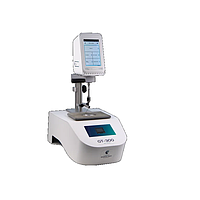
A strong example within this category is the range of gel timer and viscometer systems from Lamy Rheology. The listed GT-300 PRODIG and GT-300 PLUS models are designed for rotational measurement with touch-screen operation, making them suitable for workflows where viscosity trends, shear-related behavior, and curing time need to be monitored in a controlled way.
Several configurations are available for different temperature conditions. Examples in this category include the GT-300 PRODIG Gel Timer for controlled testing up to +150°C, room-temperature variants, and models intended for narrower controlled ranges such as +15°C to +60°C. This makes the platform relevant for laboratories working with temperature-sensitive formulations, reactive materials, or routine comparative testing.
How to choose suitable plastic testing equipment
The first selection step is to define the property that actually influences your process or product. If the concern is mixing, pumping, coating, or dispensing, rheological behavior may be the key parameter. If the issue is curing or usable working time, gel time measurement becomes more relevant. For heat-sensitive materials, temperature control and sensor range are important decision points.
It is also useful to think about the full test workflow rather than only the instrument headline. In many labs, factors such as operator access control, data export, software compatibility, disposable measuring accessories, and connectivity to USB, Ethernet, or RS232 can improve consistency and documentation. These details matter especially in B2B environments where results must be traceable across shifts, projects, or production sites.
Temperature control and repeatability in plastics labs
Many plastic and polymer systems behave very differently across temperature ranges. A material that appears stable at room temperature may thin, thicken, or transition rapidly as heat is applied. For this reason, equipment with integrated temperature sensing and controlled heating options can be important when comparing formulations or simulating real process conditions.
The featured GT-300 series illustrates this need well, with versions for room-temperature work, moderate controlled ranges, and higher-temperature applications. In addition to broad speed control and torque measurement, the availability of programmed or non-programmed configurations can help users align the setup with either routine QC or more development-oriented test sequences. The practical advantage is better repeatability when evaluating changes from one sample to the next.
Typical applications across industries
Plastic testing equipment is used in more than traditional polymer production. It can support manufacturers of packaging materials, masterbatch, coatings, adhesives, sealants, elastomer-related compounds, and thermoset systems where flow and gel behavior affect downstream performance. Laboratories may use these instruments for supplier approval, batch release, comparative formulation studies, or customer-specific technical validation.
In some cases, plastics testing also intersects with broader thermal and physical evaluation. For example, heat exposure studies may be supported by related equipment such as laboratory furnaces, while setup stability and sensitive measurement environments may benefit from solutions like vibration isolation equipment. These links are especially relevant for labs building a more complete material testing workflow.
What to look for when comparing models
When reviewing products in this category, buyers typically compare measurement range, temperature capability, operating interface, and the level of control required during the test. A simple room-temperature gel timer may be enough for routine checking, while more advanced work may require programmable temperature stages, broader thermal coverage, and integration with software for data handling.
It is also worth considering sample handling and consumables. Some systems support disposable cups or hooks, which can be useful when working with reactive, sticky, or contamination-sensitive materials. In regulated or multi-user labs, features related to operator identification and locked test conditions can support more standardized test practice.
Supporting consistent material decisions
Choosing the right plastic testing equipment is ultimately about matching the instrument to the material question you need to answer. Whether the task is monitoring gel time, checking viscosity under controlled shear, or understanding how temperature affects a formulation, the right setup helps reduce guesswork and improve consistency from development to production.
For teams working with plastic materials, compounds, and related formulations, this category provides a focused starting point for selecting test systems that support reliable data, clearer comparison between samples, and better-informed process decisions.
Get exclusive volume discounts, bulk pricing updates, and new product alerts delivered directly to your inbox.
By subscribing, you agree to our Terms of Service and Privacy Policy.
Direct access to our certified experts