Protective and Mask Testing Equipment
Reliable verification is essential whenever masks, respirators, and other protective products need to be assessed for performance, consistency, and compliance. In laboratory, quality control, and product development environments, the right test setup helps teams evaluate how materials behave under pressure, stress, permeability, and repeated use before products move into real-world applications.
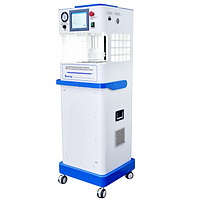
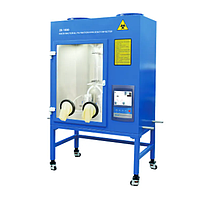
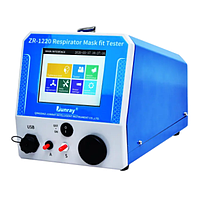
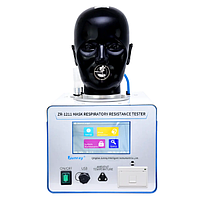
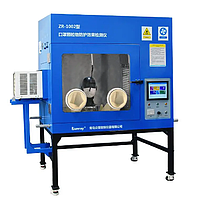
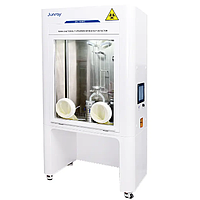
Protective and Mask Testing Equipment supports these evaluation tasks with instruments used to examine physical properties and functional behavior of protective materials and assemblies. This category is relevant for manufacturers, test laboratories, R&D teams, and technical buyers who need dependable tools for structured testing workflows rather than generic inspection alone.

Where this equipment is used
Testing requirements for protective products often extend beyond a simple visual check. Materials used in masks and related protective items may need to be evaluated for strength, deformation behavior, resistance under pressure, and other performance indicators that affect product quality and end-use suitability.
Because of that, this category is commonly relevant to textile and material laboratories, PPE manufacturers, contract testing facilities, and production sites building controlled quality assurance processes. In broader lab environments, these workflows may sit alongside other mechanical and barrier-property methods such as water vapor transmission rate testing or an oxygen permeation system when material characterization needs to be expanded.
What buyers typically evaluate in this category
Selection usually starts with the test objective. Some users need to measure bursting or pressure-related behavior of flexible materials, while others are focused on repeatability, sample handling, throughput, or compatibility with existing laboratory procedures. The correct choice depends less on the product name alone and more on whether the instrument matches the material structure and the required method.
For B2B procurement, practical factors also matter: installation footprint, operating utilities, pressure range, measurement resolution, reporting needs, and operator workflow. When comparing options, buyers should look for equipment that supports stable testing conditions and produces results that can be reproduced across batches, shifts, or development cycles.
Representative equipment in this range
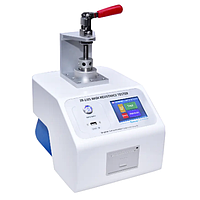
A relevant example in this category is the James Heal portfolio, which is well known in textile and material testing environments. One representative solution is the James Heal TruBurst Pneumatic Bursting Strength Tester, designed for controlled evaluation of bursting strength and distension in materials where pneumatic testing is appropriate.
This type of instrument is useful when teams need to understand how a specimen responds to increasing pressure until failure or a defined limit. In the context of protective materials, that information can help support development, incoming inspection, comparative testing, and routine quality checks, especially when material integrity is a key concern.
Why bursting and pressure-related testing can matter for protective materials
Protective products often rely on layered or engineered materials that must maintain integrity during handling, fitting, transport, and use. While not every mask or protective item is evaluated with the same method, pressure-based testing can be valuable for understanding the mechanical response of nonwoven fabrics, coated structures, laminates, and similar components.
Bursting strength assessment is particularly relevant when a material may be stressed in multiple directions at once rather than in a simple linear pull. That makes it a useful complement to other mechanical tests in laboratories that need a more complete picture of material behavior.
How to choose the right system
The best approach is to begin with the sample type, applicable standard or internal protocol, and the kind of result your team needs to report. If the main goal is development work, flexibility and measurement visibility may be priorities. For routine production quality control, repeatability, ease of use, and efficient sample turnover are often more important.
It is also worth considering how the instrument fits into the surrounding lab ecosystem. Some facilities combine mask and protective material evaluation with thermal processing, conditioning, or specialized mechanical setups. In those cases, related equipment such as laboratory furnaces or a vibration isolator may support a more stable or expanded test environment, depending on the application.
Key considerations for technical teams
When reviewing available equipment, technical teams usually compare several operational points:
- Measurement range and resolution appropriate to the material under test
- Sample positioning and fixture suitability for repeatable results
- Utility requirements such as power supply and compressed air
- Bench space, installation conditions, and laboratory workflow
- Data consistency for qualification, validation, and batch comparison
These factors are especially important in regulated or specification-driven environments where results may be used to support supplier approval, product development decisions, or ongoing production monitoring.
Supporting a more complete testing workflow
Protective and mask testing rarely depends on one instrument alone. In many labs, users build a broader workflow that combines mechanical testing, permeability analysis, environmental control, and sample conditioning to better understand how materials perform under expected conditions.
This is why category-level selection should focus on the role of each instrument in the overall process. A well-matched testing setup can improve decision-making for material qualification, reduce variation in routine checks, and help teams move from basic inspection toward a more structured quality assurance program.
Final thoughts
Choosing protective and mask testing equipment is ultimately about matching the method to the material, the workflow, and the level of control your operation requires. Whether the priority is R&D, routine QC, or comparative evaluation of protective materials, a carefully selected system can provide clearer performance insight and more reliable test outcomes.
For technical buyers and laboratory teams, this category offers a focused starting point for identifying instruments suited to protective material assessment, including pressure- and strength-related applications illustrated by solutions such as those from James Heal.
Get exclusive volume discounts, bulk pricing updates, and new product alerts delivered directly to your inbox.
By subscribing, you agree to our Terms of Service and Privacy Policy.
Direct access to our certified experts