
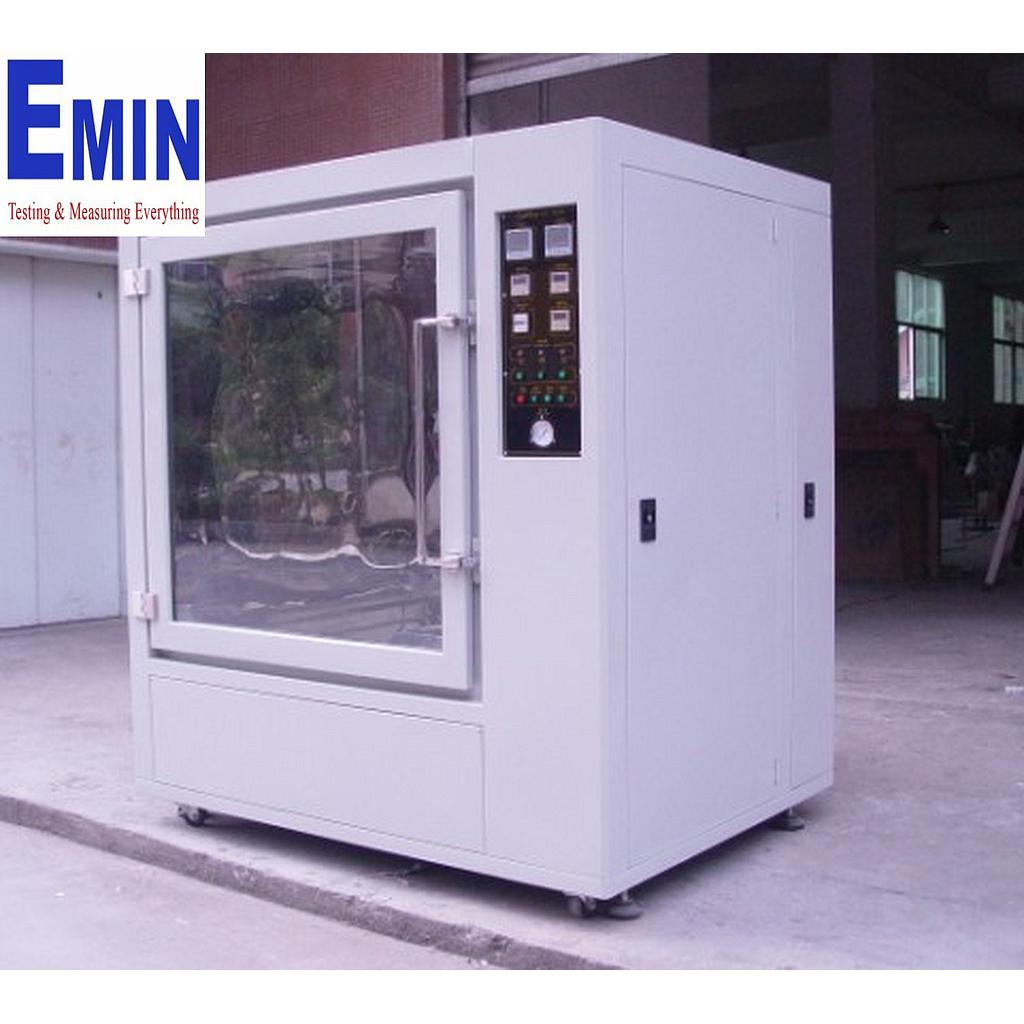
Sand and Dust Test Chamber
When products are expected to operate outdoors, on vehicles, in industrial plants, or in exposed electrical installations, resistance to airborne particles becomes a critical part of validation. A Sand and Dust Test Chamber helps manufacturers evaluate how enclosures, components, and assembled devices respond to controlled dust circulation under repeatable laboratory conditions.
These systems are commonly used during product development, design verification, and compliance-oriented testing. For buyers in technical and industrial environments, the category is relevant wherever ingress protection, durability, and functional reliability must be checked before equipment reaches the field.
Why dust testing matters in product qualification
Fine dust can enter housings through joints, cable entries, seals, and ventilation paths. Once inside, it may affect moving parts, insulation, contacts, optics, sensors, or thermal behavior. In many applications, the issue is not only visible contamination but also gradual performance loss over time.
A controlled chamber makes it possible to expose samples to defined dust concentrations, airflow conditions, and test durations. This supports more consistent comparison between prototypes, production revisions, or competing enclosure designs. In broader environmental validation workflows, dust exposure is often evaluated alongside other lab processes such as thermal treatment in industrial furnaces or barrier-property analysis for packaging materials.
Typical standards and test approaches
Many buyers look at this category in connection with IP5X and IP6X enclosure testing, as well as automotive and industrial dust exposure methods. Based on the products in this range, common references include IEC 60529 and JIS D0207, with different test conditions used depending on the required severity and application context.
Not every project needs the same chamber setup. Some tests focus on fine circulating dust for enclosure ingress evaluation, while others use float dust conditions with specific concentration levels and exposure timing. The key benefit of a dedicated chamber is the ability to reproduce these conditions with better control over airflow, agitation, and chamber environment.
What to consider when selecting a sand and dust chamber
Selection usually starts with the sample itself: overall dimensions, weight, cable routing, and whether the specimen must remain powered during the test. Chamber volume should allow realistic placement without interfering with dust circulation, while access ports and specimen outlets are important when energized testing is required.
Buyers should also review the intended test method, target dust concentration, airflow adjustment, controller type, and monitoring functions. Features such as programmable control, pressure and flow management, and test timing can make a significant difference in repeatability. If vibration is part of the wider qualification plan for the same product, it may also be useful to review related equipment such as vibration isolator solutions used in test setups.
Representative products in this category
The range includes solutions for different test philosophies and chamber configurations. The MultiTech MTDI-1000 IP5X and IP6X Dust Cabinet is suited to users looking for a programmable chamber with a larger internal workspace and support functions such as specimen power outlet, vacuum-related components, and controlled fan cycling for enclosure testing.
For applications aligned with JIS D0207 or mixed industrial test requirements, the T-MACHINE TMJ-9723C and TMJ-9723F illustrate two useful directions. The TMJ-9723C is positioned around C1 and C2 dust conditions with adjustable airflow, while the TMJ-9723F addresses F1, F2, and F3 float dust conditions. These examples show how chamber choice often depends less on brand preference and more on the specific test regime that must be reproduced.
The ETSP ETSP-DC Dust Chambers provide another practical reference point, especially where flow and pressure control, timer-based test management, and a stainless steel interior are relevant to routine laboratory use. Rather than comparing models by size alone, it is usually more useful to match them to the required method, specimen format, and documentation process.
Common application areas
Dust ingress testing is relevant across a wide range of B2B sectors. Typical examples include electrical enclosures, connectors, control panels, vehicle components, lighting products, field instruments, and industrial devices that must perform reliably in dusty or sandy environments.
In qualification laboratories, these chambers may support development engineering, incoming design verification, supplier comparison, and failure analysis. In production-oriented environments, they can also be part of periodic validation programs for enclosures or subassemblies where sealing performance is a key quality factor.
How these chambers fit into a broader test ecosystem
Environmental and physical testing is often most useful when results can be connected to a wider validation plan. A dust chamber can be one step in a sequence that also includes thermal exposure, mechanical testing, or packaging barrier evaluation depending on the product being developed.
For example, organizations working with sensitive packaging, films, or material permeability may also review systems for water vapor transmission rate testing or oxygen permeation measurement. While these are different test domains, they reflect the same procurement need: selecting equipment that delivers repeatable laboratory conditions and useful decision-making data.
Practical buying guidance for technical teams
Before choosing a chamber, it helps to define the exact standard or internal method, the largest specimen size, whether the sample must be powered during test, and the level of automation expected by the lab. This avoids selecting a chamber that is either oversized for routine work or too limited for future projects.
It is also worth checking how the chamber will be integrated into the test workflow: operator interface, maintenance access, dust handling, timing control, and test repeatability. For most B2B users, the right choice is the one that aligns with actual qualification tasks and makes day-to-day testing easier to manage, document, and reproduce.
Choosing the right sand and dust testing setup is ultimately about matching chamber capability to the real operating risks of the product. A well-selected system supports reliable ingress evaluation, clearer development decisions, and more consistent verification across industrial and environmental test programs.
Get exclusive volume discounts, bulk pricing updates, and new product alerts delivered directly to your inbox.
By subscribing, you agree to our Terms of Service and Privacy Policy.
Direct access to our certified experts
