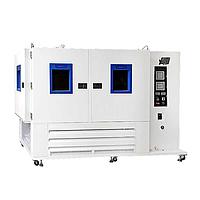
Tester for motor vehicle
Reliable vehicle development and quality control depend on repeatable test data. In automotive manufacturing, service, and component validation, the right tester for motor vehicle helps teams measure operating force, durability, environmental resistance, and functional performance before products move into production or field use.
This category brings together equipment used for checking different vehicle systems and parts, from steering and pedal effort to door movement, wheel fatigue, fuel injection service, and lamp condensation performance. It is relevant for automotive OEMs, component suppliers, test laboratories, maintenance workshops, and engineering teams that need practical tools for inspection and verification.

Where motor vehicle testers are used
Automotive testing is rarely limited to one measurement. A single vehicle platform may require force measurement on driver controls, durability checks on moving parts, load verification for vehicle weighing applications, and environmental simulation for exposed components. That is why this category covers a broad range of test purposes rather than one narrow instrument type.
Typical use cases include production-line validation, incoming inspection, R&D benchmarking, endurance testing, and maintenance-related diagnostics. For buyers comparing equipment, the key is to match the tester to the exact part, motion, and parameter that must be measured, whether that is torque, displacement, operating force, temperature-humidity exposure, or test cycle repeatability.
Common test areas in this category
One important group focuses on driver control force measurement. Systems such as the Sushma ATS-P201 Steering Effort Testing System, Sushma FS-102 Steering Effort Measuring System, Sushma ATS-P203 Pedal Force Testing System, and Sushma ATS-P204 Gear Lever Effort Testing System illustrate how automotive testers are used to quantify the effort required for steering, pedal operation, and gear shifting. These measurements help engineering teams evaluate ergonomics, consistency, and compliance with internal performance targets.
Another group is built for durability and motion testing. Equipment such as the KMT KTE-300 car steering wheel and horn tester, KMT KTE-600 Steering wheel & Sun Visor Durability Tester, and KMT KTE-200 Car Wheel Torsional Fatigue Durability supports repeated-cycle testing on components exposed to long-term mechanical stress. This is especially useful when assessing fatigue behavior, movement stability, and wear under controlled test conditions.
There are also testers designed for specific automotive subsystems. The MStech MSTSP1000 Spoiler & Door Tester is an example of equipment used for repeated opening and closing or actuator-related evaluation, while the KOCU EAST-8H Fuel injection tester for car Ultrasonic cleaning fits maintenance and service workflows where injector checking and cleaning are required. For environmental simulation, the T-MACHINE TMJ-9812 Car Lamp Condensation Tester is relevant when evaluating lamp assemblies under controlled temperature, humidity, and light exposure conditions.
How to choose the right tester for your application
Selection should start with the test objective. If the requirement is to measure operator interaction, a force or effort testing system is usually more relevant than a durability rig. If the goal is to validate lifecycle performance, then cycle count, load capability, motion profile, and control method become more important than display features alone.
It is also useful to review the test environment. Some applications require ambient-condition measurements, while others need operation under wide temperature ranges or combined stress conditions. For example, environmental chambers and condensation-oriented systems are more suitable for lamp or exterior component evaluation than general-purpose force testers.
Buyers should also confirm the expected sample size, fixture compatibility, data storage needs, and reporting workflow. In B2B environments, integration into a broader quality process matters just as much as the instrument itself. Teams often compare whether a standalone tester is sufficient or whether a more comprehensive setup is needed alongside related equipment such as vibration isolation solutions for stable measurement conditions.
Representative manufacturers and solution styles
Sushma is well represented in this category with systems for steering effort, pedal force, gear lever testing, and vehicle weighing applications. This makes it a relevant reference point for buyers looking at operational force measurement and workshop or plant-level automotive testing tasks.
KMT appears more strongly in component durability and repeated mechanical loading applications, particularly around steering wheel, horn, sun visor, and wheel fatigue testing. These examples are useful for teams focused on endurance validation and repetitive-use simulation.
MStech, KOCU, and T-MACHINE add further context to the category through door or spoiler test rigs, fuel injection service equipment, and car lamp condensation testing. Together, these manufacturers show that motor vehicle testing is not one uniform purchase category; it is an ecosystem of specialized tools chosen according to the subsystem being evaluated.
What technical buyers usually compare
In practical sourcing, decision-makers often compare force range, load capacity, motion control method, test speed, cycle capability, environmental range, and accuracy. A steering effort tester, for example, is usually judged by repeatability and data handling, while a durability tester may be assessed more heavily on actuator design, cycle performance, and fixture robustness.
Control architecture can also affect usability. Systems based on servo control, digital displays, touch-screen interfaces, or PC monitoring may support different levels of automation and traceability. The right choice depends on whether the equipment will be used in R&D, quality assurance, production verification, or service operations.
For facilities that run broader material or package barrier studies in parallel with automotive testing, related categories such as water vapor transmission rate systems or oxygen permeation systems may also be relevant in the wider test lab environment, even though they serve different measurement purposes.
Examples of equipment covered in this category
This category includes equipment for several distinct automotive testing tasks. Examples include steering effort measurement, pedal force evaluation, gear lever effort testing, vehicle weighing scale solutions, spoiler and door durability testing, wheel torsional fatigue testing, steering wheel and horn endurance testing, fuel injection testing with ultrasonic cleaning, and car lamp condensation simulation.
Products such as the Sushma ATS-P206 Vehicle Weighing Scale / Vehicle Platform Loadcells and the T-MACHINE TMJ-9812 Car Lamp Condensation Tester show how varied the application range can be. Some systems are intended for direct functional verification, while others are used to recreate operating conditions and reveal long-term reliability issues.
Choosing for long-term value
The most suitable motor vehicle tester is usually the one that fits the real testing workflow, not simply the widest specification list. In many cases, a focused system designed around one component or motion pattern delivers more meaningful data than a generic setup with limited repeatability.
When reviewing options in this category, it helps to consider the component under test, the parameter to be measured, the expected throughput, and the level of documentation your process requires. With that approach, buyers can narrow the selection more effectively and identify equipment that supports both current validation tasks and future automotive quality requirements.
Get exclusive volume discounts, bulk pricing updates, and new product alerts delivered directly to your inbox.
By subscribing, you agree to our Terms of Service and Privacy Policy.
Direct access to our certified experts