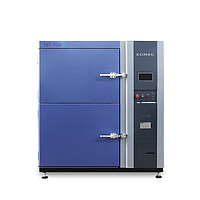
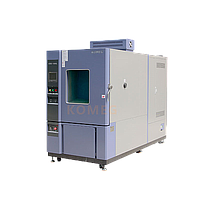
Thermal Shock chamber
Rapid temperature change can reveal failures that conventional environmental testing may miss. When a product moves quickly between hot and cold conditions, differences in material expansion, solder fatigue, seal weakness, and dimensional stress can appear in a short time. That is why a Thermal Shock chamber is widely used in reliability labs, incoming inspection, R&D, and qualification testing across electronics, automotive, aerospace, and material development.
This category brings together thermal shock chambers designed for controlled high-to-low temperature transitions, helping users evaluate product durability under repeatable and severe conditions. Whether the goal is early-stage design validation or routine production testing, the right chamber should match the sample size, temperature profile, cycle speed, and operational requirements of the test program.
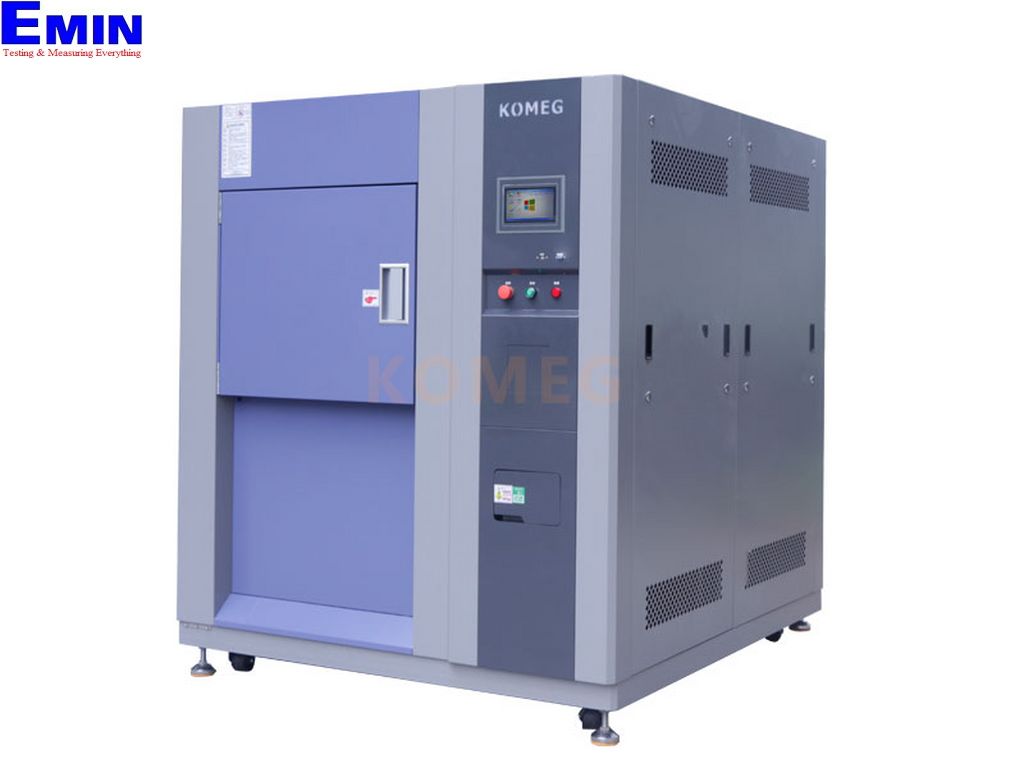
Why thermal shock testing matters in industrial quality control
Many components perform normally in stable conditions but fail when exposed to sudden thermal transitions. Printed circuit boards, connectors, batteries, sensors, molded parts, coatings, and bonded assemblies can all be affected by repeated expansion and contraction. A thermal shock test helps identify these risks before products are deployed in the field.
Compared with gradual temperature cycling, thermal shock testing is intended to create a more abrupt change between temperature zones. This makes it useful for detecting cracking, delamination, leakage, contact instability, and mechanical distortion in products that must survive demanding operating environments. In broader test workflows, these chambers are often used alongside supporting equipment such as vibration isolators to improve installation stability in laboratory settings.
How a thermal shock chamber works
The basic principle is simple: the specimen is exposed alternately to hot and cold environments within a controlled chamber system. Depending on the design, this may be achieved by moving the test basket between zones or by redirecting airflow in a multi-zone chamber. The objective is to apply a fast thermal transition while maintaining repeatable chamber performance.
Common configurations in this category include 2-zone and 3-zone systems. A 2-zone design typically switches the sample between hot and cold sections, while a 3-zone design adds a dedicated test area and uses dampers or airflow management to control exposure. Recovery time, temperature range, and chamber volume all affect how closely the test can reflect the required method and product load.
Key selection criteria before choosing a chamber
One of the first points to check is working volume. Small electronic parts may fit comfortably in compact chambers, while assemblies, fixtures, or multi-sample batches may require larger baskets or test spaces. In this category, available examples range from compact 27L systems to larger 125L and 130L class equipment, making size selection an important practical step.
Temperature capability is equally important. Some applications require transitions around standard reliability windows, while others need deeper low-temperature exposure or higher hot-zone limits. You should also consider recovery time, load mass, utility requirements, and whether the test method favors basket-moving or damper-type operation. For high-temperature processes outside thermal shock validation, users may also review related industrial furnaces depending on the broader lab setup.
Representative chamber types and product examples
Several products in this category illustrate the available chamber approaches. From ETSP, the ETSP-TSD 50, ETSP-TSD 100, and ETSP-TSD 150 are damper-type 3-zone thermal shock chambers offered in 27L, 64L, and 125L capacities. These models are suitable for users who need a dedicated test area with controlled hot and cold zone switching and a practical range of chamber sizes.
For basket-moving designs, ETSP also offers the ETSP-TS 50, ETSP-TS 100, and ETSP-TS 150, again covering compact to mid-size workloads. On the other hand, T-MACHINE provides 3-zone systems such as the TMJ-9709A, TMJ-9709B, and TMJ-9709C, with test space sizes from 500 x 400 x 400 mm up to 700 x 600 x 600 mm and temperature ranges extending to –60℃~180℃ depending on configuration. For another example of chamber architecture, the ACS CST 130/2T Air Thermal Shock Chamber represents a larger air thermal shock solution with a substantial basket capacity.
Applications across electronics, automotive, aerospace, and materials
In electronics manufacturing, thermal shock chambers are often used to assess solder joints, packaged semiconductors, control boards, connectors, and sensor modules. Rapid transitions help reveal weaknesses caused by thermal mismatch between metals, polymers, ceramics, and composite materials. This is particularly useful during design verification and process improvement.
Automotive and aerospace programs use these chambers to evaluate parts exposed to outdoor climate shifts, engine compartment heat, transport conditions, or altitude-related temperature extremes. Material laboratories also use thermal shock testing to study dimensional stability, bonding behavior, and crack initiation. Where barrier materials and packaging performance are part of a wider validation process, related systems such as water vapor transmission rate test systems may complement thermal durability testing.
Manufacturers and ecosystem considerations
This category includes products and brand references from established environmental test equipment suppliers such as ACS, JEIOtech, ETSP, and T-MACHINE, while the broader manufacturer portfolio also includes names such as ESPEC, Aralab, KMT, JFM, JSR, and MStech. In practice, brand selection should be based on chamber configuration, local support, sample size, operating range, and how the equipment fits into existing qualification procedures.
Accessories and replacement parts can also matter over the equipment lifecycle. For example, the JEIOtech TST-2065H Temperature Shock Test Chamber is supported in this category together with the JEIOtech TS510-12S Controller for TST-2065H, showing that controller and maintenance-related items may be relevant for long-term operation, service planning, or restoring an installed chamber to working condition.
Practical buying guidance for B2B users
Before placing an order, it is worth defining the test standard, sample dimensions, fixture load, target dwell times, and the required number of cycles per batch. These details often determine whether a smaller 27L or 64L chamber is sufficient, or whether a 125L to 130L class system is more appropriate. Power supply, installation footprint, cooling method, and maintenance accessibility should also be checked early in the project.
For procurement teams, the best choice is usually the one that aligns with actual test objectives rather than the highest specification on paper. A properly matched chamber supports repeatable testing, more reliable failure analysis, and better control of development and quality assurance costs. If you are comparing different designs, focus on chamber type, usable workspace, transition performance, and serviceability instead of relying only on headline temperature values.
Conclusion
A thermal shock chamber plays an important role in verifying how products respond to abrupt hot-to-cold or cold-to-hot exposure. By choosing a system that matches the sample size, chamber architecture, and thermal performance required by your application, it becomes easier to build a reliable test process and identify hidden durability issues before they become field failures.
From compact ETSP models to larger ACS and T-MACHINE solutions, this category supports a range of industrial testing needs. If your team is selecting equipment for product qualification, reliability screening, or lab expansion, reviewing chamber type, temperature capability, and operational fit will lead to a more effective long-term investment.
Get exclusive volume discounts, bulk pricing updates, and new product alerts delivered directly to your inbox.
By subscribing, you agree to our Terms of Service and Privacy Policy.
Direct access to our certified experts